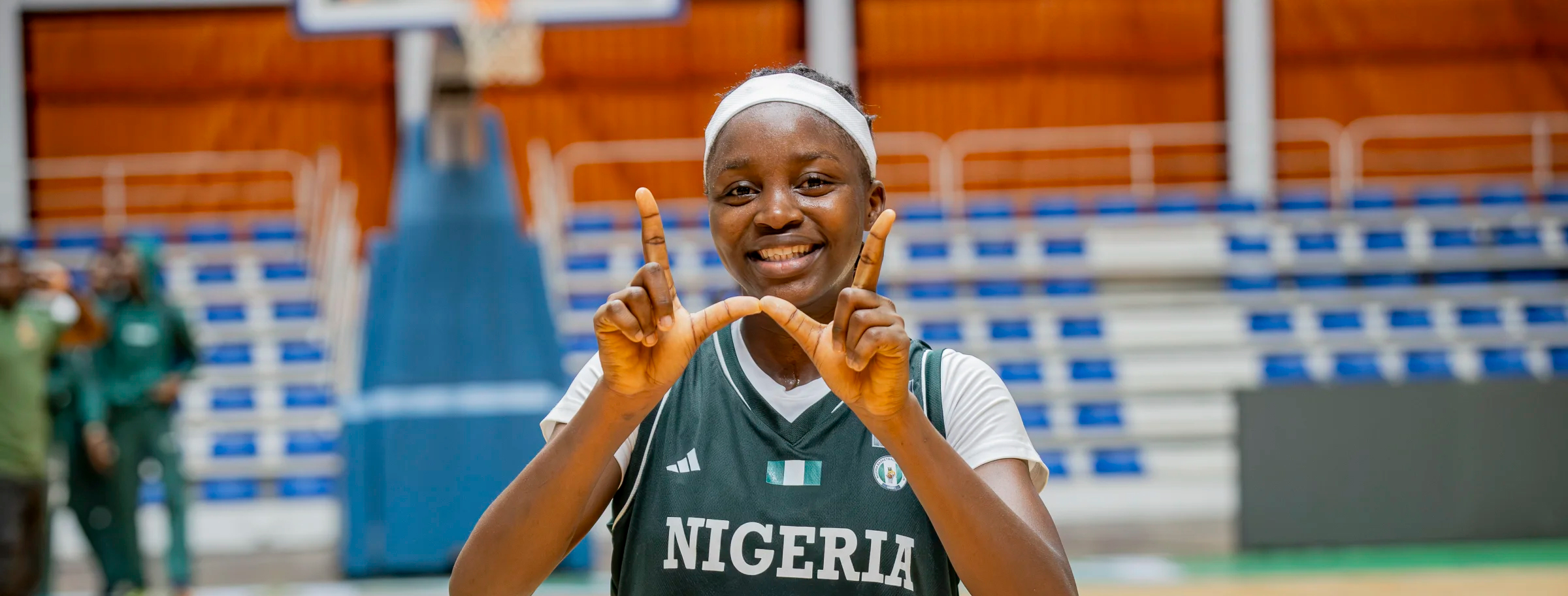
FAVOUR Joy Anari and her teammates walked away from the FIBA U18 Women’s AfroBasket 2026 with a silver medal around her neck and a ticket to next year’s FIBA U19 Women’s World Cup in her pocket. However, she is not satisfied.
Speaking to The Big Tip Off, Anari reflected on Nigeria’s World Cup qualification, her journey in Malawi and the experiences that continue to shape her as a young player.
A Ticket Worth More Than Gold
Nigeria fell 77–68 to Mali in the final in Abidjan, Côte d’Ivoire. A result that extended Mali’s record in this competition to ten titles. But the defeat did not erase what the tournament gave Anari and her teammates: qualification for the U19 Women’s Basketball World Cup in Chengdu, China, and a place among the continent’s best young players.
“To me personally, I would say I didn’t really play my best,” Anari said of her tournament, in which she averaged 14.5 points, 5.0 assists and 5.2 steals for Nigeria. “Dropping 14 points I feel like if I had played my best, I would have done more than that.”
Those numbers were good enough for the tournament’s All-Star Five. For Anari, they are a starting point.
Nigeria’s run to the final secured the country’s place at the U19 World Cup — an opportunity the previous Nigerian generation, who finished 12th in 2025, used to break a long absence from the tournament. Anari knows what is at stake next year.
“Being in the finals, I was just thinking: we have a ticket to the World Cup next year, so it’s either we win or lose we are still in the game,” she said. “We were actually happy because we had a ticket. The game against Mali didn’t turn out the way we wanted, but we still played our best.”
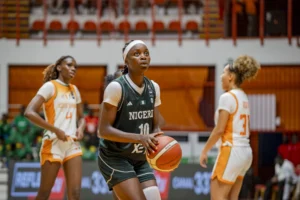
Her ambitions for Chengdu are clear but measured. “The last set that went didn’t even get to the quarterfinals. So we hope we are going to beat that even to get to the finals.”
It is a significant target, but not an empty one. Anari was Nigeria’s best player in their six games in Abidjan, leading the team in scoring, assists and steals, and her 15 points, 6 steals, 6 assists performance in the semifinal was, in FIBA’s assessment, the kind of all-round display that decides tournaments.
The Honest Truth About Home
Still on the court, Anari is direct about the difficulties of pursuing basketball in her home country. “Basketball in Nigeria, I would say we are actually struggling,” she said. “At the moment opportunities are few and far. So we are actually struggling, but we still hope that one day it will work out.”
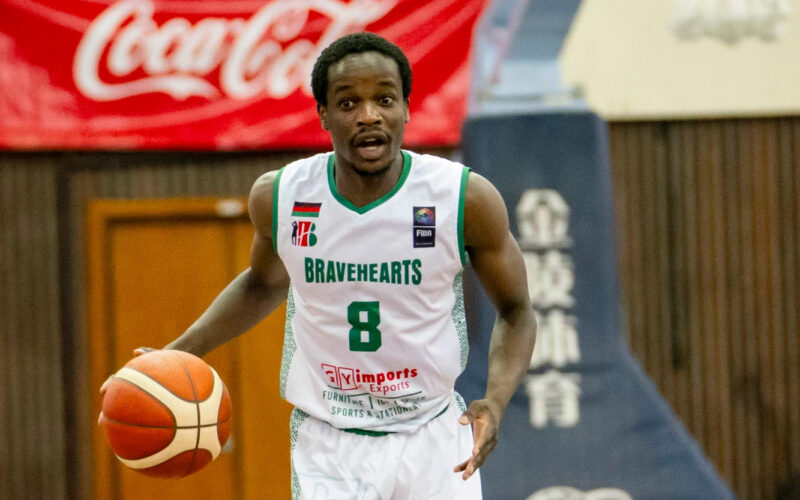
That reality is part of why her current situation matters. Anari plays her club basketball in Malawi, on a scholarship with Bravehearts, a Lilongwe club with five national titles and a growing reputation in African competition. In 2025, they became the first Malawian team to advance past the first round of the Women’s Basketball League Africa qualifying phase.
“I’m not going to lie, I miss home so much,” she said. “But you’re working somewhere you’re not just stagnant. It’s worth it.”
It means combining senior club basketball with a diploma in early childhood development. The schedule is demanding.
“We go to school in the morning, then we come back in the afternoon, then we go for training. You will not be able to rest, once I’m home, I just try to sleep. But it’s not really that bad. Once you set your goals, you just balance everything up.”
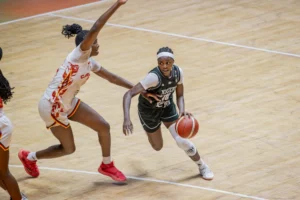
Her next test comes in the FIBA Women’s Basketball League Africa qualifiers, her first campaign with Bravehearts in the competition. Her goals for the team are straightforward: Improve on last year’s showing and learn.
“The exposure, every game I play, I learn from it. Then I go to another place to play a game again and I learn from it. Putting everything together, you just get mature in the game.”
Finding a Way Through the Language Barrier
Anari’s route to Abidjan included a stop that tested her differently. At a FIBA regional youth camp last October, she found herself among players she could not talk to.
“It was kind of tough for me because I was not able to mingle with the other players from other countries,” she recalled. “They don’t really understand English and I don’t understand French.”
She went to a coach and explained how she felt. His advice was simple: go to them.
“Before the end of the camp, I actually made a lot of friends. And I learned some things. I feel like if you are not performing well, it’s not the coach’s fault. You just have to stay locked in, be ready for whatever is coming, because you don’t know who you are going to play against.”
Following Number Zero
Every young player needs a reference point, and Anari’s is close to home. Amy Okonkwo, captain of D’Tigress, back-to-back AfroBasket MVP and now playing in the WNBA with the Portland Fire, is the player she studies most closely.
“She’s number zero. I like the way she plays, she inspires me so much,” Anari said. “There was a game where she got an MVP, I watched the game, I was like, I want to be like her. Everything she does, I was like, I can do this. Once I get to this stage, I know I can even do more than her.”
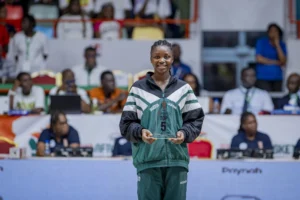
The senior national team is a long-term goal, not an immediate one. “Yes, I will gladly represent the team when I get to it.”
The journey continues
For now, Anari is focusing on the present: her studies, her club and a World Cup in China. She doesn’t lack motivation or a reason.
“It’s just God, because I’m not really there yet,” she said when asked what keeps her focused. “He is trying to make sure I’m focused on everything I do.”
And beyond that? “I just want to play in the U.S. That’s actually my dream.”
At 17, with a continental silver medal, an All-Star Five selection and a World Cup ahead of her, she has given herself every chance of deciding how that dream turns out.

Sign up for our monthly newsletter for all the latest feature stories and previews of events on the African continent.