
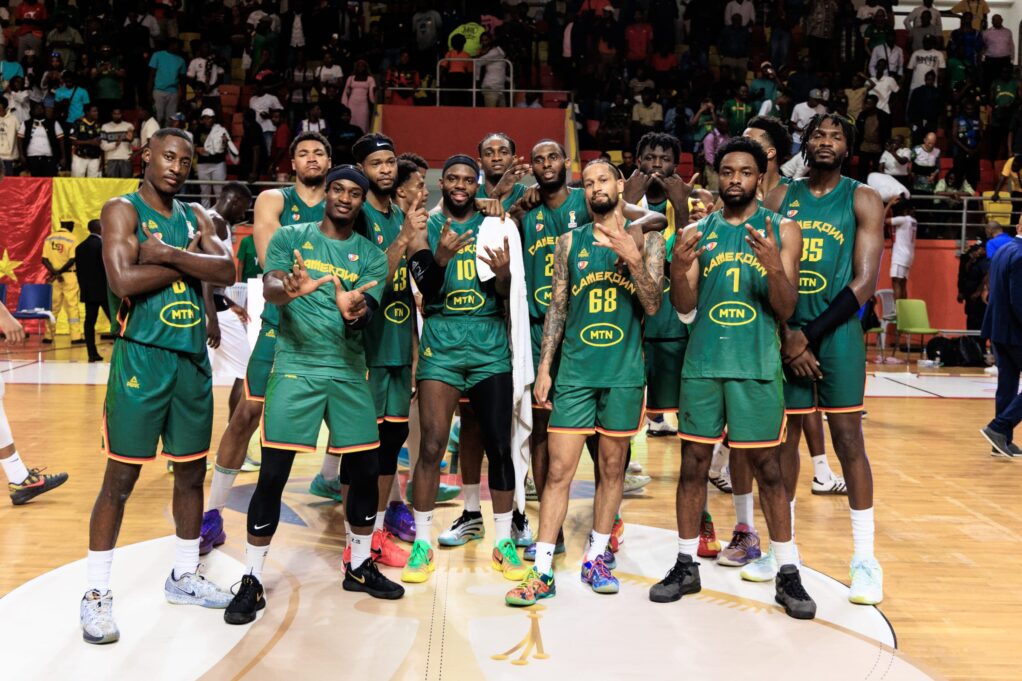
In recent years, Cameroon has developed and trained some of Africa’s top basketball talent, producing players such as Joel Embiid, Pascal Siakam, Yves Missi, and Ulrich Chomche, who have made significant strides, including reaching the NBA. Cameroon’s challenge is to prove that their basketball talent pool can lead the country to sustained success.
This sets the stage for Cameroon’s current campaign in the FIBA Basketball World Cup 2027 qualifying rounds, which is particularly intriguing. The team has entered this major international window with a solid defensive identity, an NBA player eager to return home, a coach skilled at nurturing elite talent, and a core group that has spent the past two years on the brink of making an impact on the biggest stages.
However, they have always stuttered or stumbled just before or at the final step. A crucial question now surrounds the Cameroon team: Can they transition from consistently coming close to booking their ticket to the next level?
The NBA is coming home
Yves Missi has been announced as a member of the roster representing Cameroon this week in Tunisia. His decision to play for his national team carries significance beyond his role as a centre for the New Orleans Pelicans. This choice marks an important development in African basketball. For NBA players like Missi, international competition can be challenging due to a demanding schedule, extensive travel, and the importance of designated international windows. Historically, African national teams have had to adapt to the reality that their most talented players may not always be available.

However, this current window presents a different scenario. A notable number of current and former NBA players are opting to represent African national teams, providing the continent with opportunities to see how national programs perform when more top players make themselves available. Missi has already demonstrated this commitment by playing for Cameroon in AfroBasket 2025 and is returning for the World Cup qualifiers. When a player of his calibre joins the team, he doesn’t just add another name to the roster; he transforms the team’s potential.
During last year’s AfroBasket, Missi averaged 13.2 points, 7.3 rebounds, and 2.7 blocks in 27.6 minutes per game, showcasing elite efficiency with shooting percentages of 62.5% from the field and 65.1% from two-point range. Missi can have a significant impact on both ends of the floor. Perhaps most importantly for Cameroon, Missi aligns perfectly with the direction the team has taken under coach Alfred Aboya.
Alfred Aboya has given Cameroon an identity
Cameroon is not only talented but is also gaining recognition in the world of basketball. Under Coach Alfred Aboya’s guidance, the team has become one of the most defensively challenging squads in African basketball. His experience at NBA Academy Africa, where he worked with high-level young prospects, gave him valuable insights into talent development and adaptability. As a result, Cameroon has established a clear team identity: physical, defensive, aggressive, and difficult to score against. The statistics from the first round of World Cup qualifying reinforce this identity.
Landry Nnoko is currently averaging 7.7 rebounds per game, with 2.5 of those being offensive rebounds. Jordan Bayehe contributes 7.2 rebounds, including 3.0 offensive rebounds. Tamenang Choh adds an impressive 1.8 steals and 1.7 blocks per game, while Samir Gbetkom averages 3.3 steals in his three qualifying appearances. Additionally, Aboya can now integrate Missi, who averaged 2.7 blocks at AfroBasket. This strength is not just about size; it reflects a solid defensive structure. Cameroon can apply pressure on the ball, knowing they have height to back it up. The team contests shots at the rim and creates extra possessions through offensive rebounds. These factors can make opponents uncomfortable and may pave the way for the team’s qualification.
Jeremiah Hill is a crucial part of this strategy, providing what defence alone cannot accomplish. While defence keeps a team competitive, winning often requires an offensive leader. Cameroon has found that leader in Hill. The guard has been the team’s offensive driving force throughout the first round of qualifiers, averaging 15.8 points, 5.8 assists, and 4.3 rebounds per game. Hill attempts an average of 5.2 three-pointers per game, successfully making 37.3% of them. He can stretch the floor, create his own shots, and facilitate for his teammates, and when he has a hot hand, he can change the course of a game, making him the team’s X-factor.

Hill’s presence in the Cameroon set-up is further strengthened by the addition of Missi. With both players on the court, Cameroon creates a unique challenge for opposing defences. If two defenders focus on Hill, Missi can drive to the basket. Conversely, if Missi is closely guarded, Hill will find more space to create. If help defence comes from the weak side, Cameroon can take advantage by finding open shooters.
Can Cameroon Learn From The Past?
The first round of qualifying has made the formula increasingly clear: Hill creates opportunities, the big players finish plays and secure rebounds, and the defence generates second chances.
While this style of basketball may not be the most visually appealing, it is effective. Tournament basketball often relies on an established identity. One which can endure when shots aren’t falling, when possessions slow down, and when physicality dictates games rather than rhythm. Something that Cameroon has found.
However, there is a reason this team cannot simply be labelled a contender based solely on paper. Cameroon has been in this position before, most recently a year ago at the 2025 FIBA Men’s AfroBasket, where they convincingly reached the semi-finals against Angola.
With a place in the final within reach, a late foul call sent Aboubakar Gakou to the free-throw line – it led to Cameroon’s loss by just one point. The final was within their grasp, and once again, they were left feeling so close yet so far from achieving their goal.
The team now has experience, but it also carries higher expectations. Cameroon is no longer just an underdog content to participate; they have more established players, a deeper talent pool, and have proven they can compete deep into continental tournaments.
They have earned the right to expect more. The pressing question now is whether Cameroon can finally turn their near-misses into actual success.

From Producing Talent to Building a Program
Cameroon’s resurgence in basketball is more than just a matter of one qualifying window. The country is beginning to showcase the essential elements of a thriving basketball ecosystem. It is producing players who are capable of reaching the NBA, and these players are increasingly willing to return home. Another positive is the coaching expertise available to help nurture their development. A distinct national team identity is emerging, accompanied by a generation of players who have collectively experienced the highest levels of African basketball.
This progression is significant. The long-term potential for African basketball extends beyond merely exporting talent to the NBA; it involves creating national programs strong enough to provide meaningful opportunities for these players upon their return.
Missi’s decision to play for Cameroon is pivotal for this development, as is Aboya’s commitment to enhancing the programme and the increasingly competitive results the team is achieving. Cameroon is proving that its basketball ambitions can go beyond producing individual stars; the focus is also on building a cohesive team around them.

Sign up for our monthly newsletter for all the latest feature stories and previews of events on the African continent.


