Author name: Sindiswa Mabunda

Avid fan of basketball. Former Wits University basketball player and contributor on The Big Tip Off.
Konaté, JCA to prove their worth in BAL debut

AS the Basketball Africa League’s Sahara Conference begins on Friday, a blend of new talent, well-known players, and pivotal moments will take centre stage. It will also be the setting of an historic moment. For one individual in particular, this occasion signifies the continuation of a journey that has already unfolded across multiple chapters.

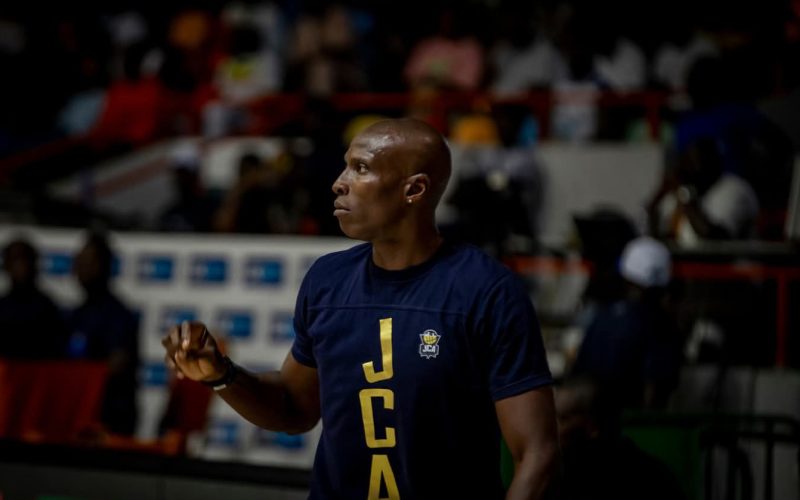
Stéphane Konaté, who previously played for the ABC Fighters, returns to the BAL, but this time in a different role –é as head coach of Côte d’Ivoire’s JCA Kings.

This transition showcases how competing in the league can lead to leadership opportunities, influencing not only his own career path but also the direction of the team he now oversees.

Understanding the BAL as a Player

Before stepping into the role of a coach, Konaté gained valuable experience as a player in the Basketball Africa League (BAL). That experience continues to influence his approach to the game today. He views the BAL as the highest level of club basketball on the continent, a platform where ambition, preparation, and performance converge.

His participation in the BAL was crucial as he neared the end of his playing career. It represented not only an opportunity to compete but also a chance to immerse himself in the experience. 

“The BAL is the biggest club competition in Africa. To participate in this competition as a player was an accomplishment for me,” he stated. “I was told my career was ending, but I wanted to take part in this competition.”

What stood out most to him during this time was the importance of mindset. He emphasises that his focus was on enjoyment rather than pressure. 

Stephane Konate BAL 2026 APRIL
Stéphane Konaté has enjoyed a meteoric rise in his coaching career. Pictures: BAL

“My biggest challenge was to enjoy the experience… Doing well both on and off the court. I truly enjoyed it as a player,” he reflected. “As a coach, I encourage my players to enjoy every moment and to be happy playing in those conditions. When you do, everything falls into place.”

This philosophy now guides how he leads from the sidelines.

From the Court to the Sidelines

Konaté’s journey in the BAL will come full circle this week as he transitions from player to coach. This change brings not only personal pride but also significant responsibility as he takes on his new role on the sidelines. Embracing this change, Konate gains a renewed perspective that reflects the evolving landscape of African club basketball.

“An African competition is still a competition,” he stated. “So we have to compete and fight.”

With his unique background, Konaté understands the demands of the game and the mindset required for success, drawing heavily from his experiences on the court. Konaté’s lived experience gives him an advantage, especially in navigating the intensity of the BAL, where a high volume of games in a short period leaves little room for error.

Each game serves as both a lesson and a test, providing immediate feedback while exposing vulnerabilities that could be exploited on the court of play.

For him, this moment represents not an endpoint but rather the next chapter in his relationship with basketball in Africa. Transitioning from player to coach involves more than just knowledge of the game; it requires the ability to translate past experiences into valuable guidance for younger players.

“It is a great joy and pride to be the first to play in the BAL and to return to the competition as a coach. It is a great opportunity for me as well,” he said, highlighting the significance of his journey.  “I draw inspiration from all the experiences I’ve acquired during my career,” he explained.

With this foundation, he aims to motivate his players to give their best and navigate the challenges of high-level competition.

Shaping JCA After the Road to BAL

When Konate took over JCA, the situation was far from straightforward. With only a short time to prepare before the season began, he had to quickly establish structure, identity, and belief within the group. Despite the limited preparation, the team responded well, ultimately winning the national championship and successfully navigating the Road to BAL, which led to their qualification through the Elite 16 West Division.

In the months since the Road to BAL, JCA’s focus has shifted to maintaining sharpness and momentum during the extended break, which can often be a challenge for teams with limited time to adjust to the demands of the BAL.

“Since the Road to BAL, this team has remained united, strong, and disciplined,” he said. “The preparation has gone well, and the management has implemented the necessary means to ensure everything runs smoothly.”

Konate is particularly encouraged by the balance within the squad, which combines experienced players with young talent. He believes this mix is essential to their identity.

“This team is doing well,” he said. “We have a blend of experienced players and several young players, and it’s working effectively.”

For him, the key aspect is not just individual talent but the collective chemistry among the players. “The strength of this team lies in its chemistry,” he said.

JCA Kings APRIL 2026
Stephané Konaté wants his team to savour their BAL debut.

A Young Team On A Big Stage

With four tickets to Kigali available, JCA have as good a chance as any to book their place in the next phase. For a young group, many of whom are experiencing this level for the first time, the learning curve will be steep.

Coming in as debutants, however, also offers a subtle advantage. With no established expectations weighing on them, JCA have the freedom to define themselves on their own terms, playing with expression, belief, and the identity that carried them through qualification.

Konate is realistic about the demands ahead, but he frames them as an opportunity rather than a limitation. Pressure exists, but so does belief.

“All I wish for this young team is to give the best of themselves, and not regret it afterwards,” he shared.

He acknowledges the difficulty of competing at this level, particularly for inexperienced players, but sees it as part of their development.

“There’s always pressure,” he says. “We are a young team with a lot of young players who are participating for the first time in such a competition in a very high conference, it’s normal.”

Still, his message remains anchored in confidence: “But we believe in it,” he said. “This is an opportunity for these young people to prove what they’re worth.”

For Konate, it’s what the BAL represents at its core, not just competition, but transition, growth, and opportunity. From player to coach, his journey continues, now shaped by the responsibility of guiding others through the same path he once walked himself.

Konaté, JCA to prove their worth in BAL debut Read More »

Nigeria, Mali in tricky World Cup groups

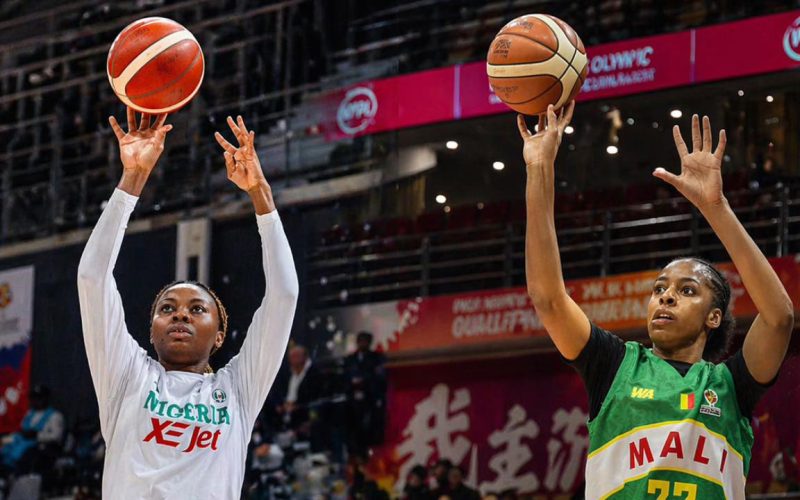
THE 2026 FIBA Women’s Basketball World Cup draw has outlined two distinct paths for Africa’s representatives, Mali and Nigeria. However, one reality remains consistent: there are no easy games at this level.

Considering their rankings adds further context to the challenge ahead. Mali, ranked 18th in the FIBA World rankings, and Nigeria, ninth, now have clarity on their paths as they prepare for the Women’s World Cup in Berlin, Germany.

As we enter the next Women’s Basketball World Cup cycle, let’s examine the trajectories of Nigeria and Mali.

Mali in Group A: A Development Curve Under Pressure

Group A: Spain (6), Japan (10), Germany (11), Mali (18)

Mali’s arc has been more developmental but increasingly structured. Their surprise participation in the 2022 World Cup – stepping in late and finishing 11th – exposed the scale of the gap at the global level, but it also accelerated the exposure of a young core.

Since then, their AfroBasket performances have shown incremental progress rather than breakthrough dominance, competitive stretches against stronger African sides, but without yet converting that into title contention. Unlike Nigeria, Mali have not had Olympic exposure in this cycle, meaning their international reference points remain largely continental and qualification-based.

In the most recent World Cup qualifying windows, they have continued to operate as a developing side, capable of flashes, but still building the consistency required to survive against elite non-African opposition.

Nigeria Women's team World Cup Qualifiers 2026
Nigeria’s D’Tigress have struggled against elite nations. Pictures: FIBA

That context makes this draw particularly unforgiving. Spain brings structure and elite execution, while Japan introduces pace, spacing, and perimeter volume.

Germany sits just ahead of Mali in the rankings – yet they operate with a level of physicality and tactical consistency that Mali is working to reach – an edge further strengthened by home-court advantage and strong national support.

For Mali, this group is less about outcomes and more about resistance: staying defensively disciplined against Spain’s half-court precision, containing Japan’s speed without conceding the three-point line, and competing physically and tactically with Germany over 40 minutes of basketball.

It demands sustained execution, not just isolated moments, because progress will not be judged solely on wins, but on competitive margins, decision-making under pressure, and the ability to remain structurally sound deep into games. Group A demands rapid learning and growth in real time.

Nigeria in Group B: A Window, not a Guarantee

Group B: France (2), Nigeria (8), Korea (15), Hungary (19)

For Nigeria, the past four years have been a blend of both affirmation and disruption. After missing the 2022 World Cup due to administrative issues despite qualifying, they responded emphatically on the continental stage, reclaiming dominance at the FIBA Women’s AfroBasket, with their continued run of titles, which stands at seven, reinforcing their status as Africa’s benchmark programme.

Mali Women at FIBA Women's World Cup 2026 Qualifiers.
Mali is among the national teams which could be a surprise package.

Their presence and performance at the 2024 Paris Olympics cemented their reputation as a physically intense, defensively elite unit capable of troubling top-tier opposition, even if consistency against the global elite is a bridge too far. Most recently, their World Cup qualifying campaigns have reflected that same duality: comfortably superior within Africa, but still navigating fine margins when matched against Europe and the Americas in high-pressure qualification windows.

France is the clear benchmark in the group; elite in depth, structure, and execution, and that matchup will test Nigeria’s ability to score efficiently against top-tier defensive systems. Beyond France, however, opportunity emerges. Korea brings speed and shooting but lacks Nigeria’s physical edge, while Hungary presents a game that Nigeria has the potential to win.

This is where expectations shift: Nigeria are positioned to advance; however, can they translate defensive intensity into controlled, efficient offence, limit perimeter damage against shooting-heavy teams like Korea, and execute in late-game situations where composure defines outcomes? Unlike Mali, Nigeria’s challenge is not exposure but conversion.

This group offers a clear pathway to the knockout stages, while also removing any ambiguity around expectations.

Two Teams, Two Timelines

The contrast between Nigeria and Mali is clear. Nigeria comes in as a recognised continental powerhouse, carrying a sense of expectation but still seeking complete stability on the global stage. In contrast, Mali is a work in progress, gaining exposure, accumulating experience, and striving for sustained competitiveness at this level. This difference ultimately shapes their respective outlooks: Nigeria must demonstrate that it can translate its status into consistent results when it truly matters, while Mali needs to turn opportunities into meaningful progress.

Nigeria, Mali in tricky World Cup groups Read More »

Gonçalves, Gakou and Dundão fuelling Petro’s success

GERSON Gonçalves, Aboubakar Gakou, and Childe Dundão; three names that have become synonymous with excellence across the Basketball Africa League. Shooting, playmaking, defensive intensity, control, and that unmistakable Angolan flair, but none of this was guaranteed.

In another life, they are a doctor. A chemical engineer. A civil engineer.

Structured paths. Certain futures. Instead, they chose a different kind of pursuit; one that demanded just as much discipline, precision, and intent. Stepping into an institution already rich in history at Petro de Luanda, they have become central to the club’s evolution.

It is within that balance, between legacy and reinvention, that this Petro core has defined itself. And during the recently concluded Kalahari Conference, The Big Tip Off caught up with the group to unpack what sustains their dominance: the spirit, the system, and the shared understanding that continues to set them apart.

A culture that sustains itself

Across Africa, soccer dominates as the continent’s most popular sport, but in Angola, basketball has long held the spotlight. The country has produced a string of stars, cultivated a storied tradition of excellence, and built a reputation for teams and players who consistently compete at the highest levels. You can feel it in packed arenas, neighbourhood courts, and the rhythm of every street game, a pulse that runs through the nation.

To understand Petro is to understand that environment, where basketball is more than a sport; it is a standard, a language, a way of life.

“Basketball is the most important sport in Angola,” Gakou explained. “Young people grow up loving the game.” It is a culture built not only on success, but also on aspiration, visibility, creating opportunities, and excellence, inspiring the next generation.

Every practice, tournament, and street pickup game carries echoes of the players who came before, and the influence of decorated figures is tangible.

Childe Dundao the BAL April 2026
Childe Dundão is the on-court brain of the Petro team. Picture: The BTO

The standard and the target

Sustained success inevitably shifts perception. Petro de Luanda are no longer chasing – they have become the standard.

“Yes, of course,” Gakou said when asked if they are the team to beat. “If other teams want to be great in the BAL, they have to beat Petro first. That’s why we have a target on our backs.”

That awareness doesn’t come with discomfort – it comes with clarity. Petro knows exactly where they stand within the league, and more importantly, what that position demands. Having competed in every BAL season without fail, played more games than any other club, and reached the semi-finals in each of the first five editions, winning the championship once, finishing second twice, claiming bronze, and taking fourth, they are the standard by which others measure themselves.

Pressure, in that sense, is not an exception to their experience; it is part of it. “In basketball, there is always pressure,” Gakou explained. “Every night we step on the court, there is pressure. But we are used to it.”

Rather than resist it, Petro has absorbed pressure into their process. The expectation to win has become routine, and it, in turn, has become their advantage. “Every practice is about being ready for the game,” Gonçalves added. It is this consistency in preparation, rather than moments of brilliance, that has allowed them to maintain their dominance across seasons.

Being the team everyone targets brings constant pressure: intense scrutiny, high expectations, and the need to prove your excellence again every single night. For Petro, that is not a burden; it is part of the standard they set, and one they uphold.

Living the legacy

What makes Petro’s current moment unique is that the past is not separate from the present; it exists alongside it. For this Petro core, that connection is deeply personal. “We grew up watching players like Carlos Morais,” he shared. “That’s what shaped us.”

Morais himself was a key part of Petro de Luanda until the end of the BAL’s fourth season, helping the club secure the championship. Throughout his career, he has achieved success – securing four AfroBasket titles, a FIBA Africa Clubs Champions Cup, and a BAL title; a legacy of excellence that continues to set the standard for the current core.

“I grew up watching those players,” Gakou reflected. “Now we are in the same locker room. I didn’t dream of that.”

Alongside Morais, Olimpio Cipriano, now part of the coaching staff, brings his own decorated legacy, with four AfroBasket medals and five FIBA Africa Clubs Champions Cup titles. Together, they are not just symbols of the past; they are active contributors to the present.

“It means a lot,” Gonçalves shared. “We have a big responsibility to be here and to do great things.”

These standards are not merely remembered; they are actively lived and reinforced each day by those who helped establish them. “That’s why our mentality is tough,” Childe Dundão added.

For this group, legacy is not something to reflect on later; it is something they are actively participating in now, a continuation of a culture that sustains itself and defines what it means to be the best.

Gerson Goncalves BAL 2026 Season 6
Gerson Goncalves provides calm during the storm for Petro.

When winning means more

If the Season 4 BAL title validated Petro’s status, last August’s AfroBasket reshaped their perspective. After 12 long years without a continental crown, Angola reclaimed the AfroBasket title, winning it for the 12th time and cementing its place as the country with the most championships. That 12-year gap made this victory particularly elusive, a reminder that even the most prolific teams face moments of challenge, expectation, and the weight of history.

In a fairytale run, the national team went undefeated at home, playing in front of packed arenas every night. The roar of 12,000 fans made it feel like every opponent was facing the full weight of the nation, not just the 12 players on the court. The energy, the expectation, and the pride intertwined, creating a stage that elevated every play, every defensive stop, every fast break.

“For our generation, we hadn’t won anything with the national team,” Gonçalves explained. “So it meant a lot, for us and for the whole country.”

The difference was not just in the result, but in the context in which it occurred. Playing at home transformed the experience into something collective, a shared triumph that extended far beyond the players themselves. It was about connection, between teammates, fans, and the nation.

“We saw the people supporting us,” he said. “At a time when the country wasn’t doing so well, we were able to give them joy. To make them believe.”

That moment reframed what winning meant. It shifted from a personal or team achievement to something deeper: a responsibility to inspire, to lift spirits, and to leave a mark beyond the court. It was a reminder that basketball, at its best, is not just about trophies – it can also lift a nation’s morale.

And when they returned to Petro, they carried that shift with them. “We came back with the same energy, the same focus,” he said. “To do the same thing.”

Growth in parallel

For Childe Dundão, the evolution of Petro de Luanda mirrors his own. “When I was young, I was just trying to play,” he shared. “But when I grew up, my goals changed. I started to take the game more seriously, to become a better professional.”

His path wasn’t guided by early certainty, but shaped through a gradual process of realisation. “I don’t think it’s what I imagined,” he admitted when asked about whether he had thought he would become AfroBasket MVP and now lead as captain. “But I’ve grown into it.”

Standing at 5 ft 6, Dundão’s success has not always been a given; it has been built through repetition, consistency, and an environment that demands progression without forcing it. That growth is now evident in his production.

During the Kalahari Conference this season, he averaged a team-high 18.8 points per game, along with five assists and 2 steals, a significant leap from Season 5, where he averaged 6 points, 4.8 assists, and 1.2 steals per game.

Time, continuity, and simplicity

The nature of the BAL means that compressed conference windows leave little room for adjustment, and a byproduct of this is that time and chemistry become currency, and few teams possess both quite like Petro does.

“We’ve been together for more than six years,” Gonçalves shared. “That chemistry is the key.”

In a league where roster turnover is common and continuity rare, that stability has become their greatest asset. For Petro, chemistry is not an abstract concept that they have ever had to scramble to build, and it has been evident in their on-court decision-making, spacing, and trust.

“We know where to find each other,” he explained. “We know everyone’s spots, I know that Abou will be in the corner. Everything is already understood.”

That understanding removes hesitation. It allows Petro’s players to play instinctively, to move without overthinking, and to trust without second-guessing. It also explains why Petro can translate domestic success into continental performance, a challenge which can be a stumbling block for many teams.

And yet, despite everything they have achieved, there is no sense of reinvention. “Not much has changed,” Gakou reflected. “The base is still here, and we know that if we defend well, we will win,” he said.

This philosophy strips the game back to its essentials, removing complexity in favour of execution. And in that simplicity lies their strength.

Aboubakar Gakou Petro BAL 2026
Aboubabakar Gakou is a two-way threat for Petro de Luanda.

What they leave behind

For all the systems, structure, and success, the question of legacy remains central. What has Petro de Luanda truly built? Internally, the answer has always been clear.

“It’s the spirit of the team. We are very united, and we play as a team. That’s our identity,” shared Gonçalves. “We don’t play to separate; we play together. Everyone plays for each other.” From the outside, Petro’s dominance appears to be a result of consistency. However, from within, it is something far more deliberate, something constructed with patience.

When asked how they wanted the Petro group to be remembered, the answer came without hesitation: “The most consistent team in the BAL,” shared Dundão with conviction, while Gakou added, “The best team of all time.”

It is an ambitious statement, but it is not an empty one. For Petro, this has never been solely about winning in the moment. It has always been about building something that lasts.

Gonçalves, Gakou and Dundão fuelling Petro’s success Read More »

All to play for in the Kalahari Conference

WITH three game days remaining, the BAL Kalahari Conference has begun to separate, but not entirely settle. Through the opening stretch, identities have taken shape, margins have emerged, and for some, urgency is already unavoidable.

While a team like the RSSB Tigers Rwanda has created an early distance at the top, much of the table remains defined by fine margins, inconsistent execution, and the pressure of what’s still to come. What follows now is less about discovery and more about response.

Control established at the Top

The RSSB Tigers Rwanda have not only taken the top spot but also redefined what early momentum can look like. Stepping in as late replacements for APR BBC just weeks before the conference tipped off. Their presence alone came with uncertainty. And yet, three games in, they remain undefeated. Their rise has not been built on reputation, but on daily progression; layer by layer, game by game.

If it takes 21 days to build a habit, then the Tigers are living proof of that process in real time. What has emerged is a team that has built cohesion under pressure, finding rhythm not before the tournament, but within it. The Tigers’ +25 point differential highlights their growth, structure, discipline, and rising confidence.

 They are no longer a surprise. They are the standard.

Petro de Luanda in action BAL Season 6 April 2026
Petro de Luanda have looked steady in the Kalahari Conference. Pictures: The BTO

Close behind, but not secure

Both Petro de Luanda of Angola and Dar City of Tanzania sit at 2–1, but their trajectories continue to offer different insights into their potential.

Petro’s +37 point differential, the best in the conference, highlights a team capable of dominance. At their best, they create separation with ease, controlling tempo and imposing themselves physically. But beyond the numbers, there is context behind their edge.

With players coming off an AfroBasket title in August, Petro are playing with a level of confidence and continuity that few teams can replicate. That winning experience, combined with the presence of reigning AfroBasket MVP Childe Dundão, has translated into composure in key moments and an ability to dictate stretches of play.

Their ceiling remains one of the highest in the conference, but as their record shows, sustaining that dominance consistently remains the next step. DarCity’s record suggests stability, but beneath that are structural concerns that could become decisive.

Their offensive flow is built on cohesion, with players like Nisre Zouzoua key to creating quality looks within the system. Their lone loss exposed a key vulnerability: a lack of depth. When Zouzoua found himself in foul trouble and David Micheneau effectively contained, their offensive options narrowed significantly.

In those moments, much of the burden fell on Michael Foster, underscoring the imbalance in the roster beyond their import players. While they have been exceptional, the drop-off beyond that core has limited their flexibility. Against more physical or well-prepared opponents, that lack of comparable support becomes easier to exploit. Sitting with a 2-1 record, they remain firmly in position, but their margin for error is thinner than it appears.

A Work in Progress

Few teams present as intriguing a case as Al Ahly Ly Libya. On paper, their ceiling rivals anyone in the conference. With two former BAL MVPs anchoring the roster, alongside impactful pieces like Majok Deng and Mohamed Sadi, the expectation is clear. And yet, through three games, that potential has only appeared in flashes. Much of that was because of circumstances.

Late arrivals in Pretoria disrupted their ability to build early chemistry, and at times, the disconnect was prevalent in their execution. But if their most recent performance is any indication, those early gaps may be closing.

There were signs of rhythm, of alignment, of a team beginning to understand itself. If that continues, Al Ahly may shift from chasing the standings to comfortably booking their ticket to Kigali.

Nairobi City Thunder BAL Season 6 Kalahari Conference
Nairobi City Thunder need find consistency.

Caught Between Contention and Urgency

The Nairobi City Thunder of Kenya remain difficult to define. With a 1–2 record and a -26 point differential, their campaign has been a tale of inconsistency, moments of promise undercut by lapses in execution. The gap between their best and worst stretches within games remains significant, particularly on the defensive end.

And yet, they remain within reach, and their path is still open, but it demands a level of control and composure that has so far been elusive.

Searching for a Response

For the Joburg Giants in South Africa, the urgency is immediate and personal. A winless start at home, combined with a -49 point differential, reflects a campaign that has yet to find stability. And with two difficult fixtures ahead, the margin for recovery continues to shrink.

There have, however, been some good signs, particularly in their performance against the Tigers. While the result did not shift, the competitiveness did. Players like Nkosinathi Sibanyoni, Nino Dim, Joshua Ozabor, and Jakobi Heady showed glimpses of the consistency and edge the team has been searching for.

What remains a concern is the form of Captain Pieter Prinsloo. Averaging just 4 points per game, he has yet to impose himself in the way he has in previous BAL campaigns, where he often carried the offensive load. His struggles have mirrored the team’s broader challenges in finding rhythm and leadership on the floor. For the Giants, the question is no longer about potential; it is about response.

What Will Decide the Final Spots

With the standings still unsettled below the top, the final three game days will come down to the smallest details:

  • Late-game execution and decision-making
  • Turnover control and shot selection
  • Defensive consistency across four quarters
  • Depth and the ability to withstand foul trouble or defensive adjustments

For some teams, those advantages are already clear. For others, they remain unresolved.

Johannesburg Giants BAL Season 6 2026
The Giants have had a winless run at the Kalahari Conference.

Nothing is set in stone

The Kalahari Conference is nearing conclusion. The Tigers have turned uncertainty into control. Petro de Luanda, backed by a championship pedigree, and Dar City, balancing cohesion with underlying limitations, remain firmly within striking distance. Behind them, Al Ahly Ly are beginning to align at just the right time. With three game days remaining, the margins are no longer theoretical – they are defining.

And in a conference shaped by both preparation and adaptation, the final stretch will reveal which teams have truly built something sustainable and which will leave Pretoria still searching!

All to play for in the Kalahari Conference Read More »

Sky is the limit for Zouzoua and DarCity

THE Kalahari Conference has highlighted the BAL’s depth of talent across every position. However, based on the opening stretch of games, Nisre Zouzoua has already made a strong case to be recognised among the standout performers of the opening leg.

The Ivorian guard, now in his second BAL campaign with Dar City, has played a central role in the East African side’s early success. Notably, he stands out as the only player on the roster with prior BAL experience, a distinction that has quietly shaped both his influence and responsibility within the group.

Adding to Zouzoua’s experience is a DarCity coaching staff with a proven track record at the highest level of the competition. Head coach Pabi Gueye, the 2023 BAL Coach of the Year, previously led AS Douanes to the finals, while assistant coach Nabil Kabalan was part of the staff that guided Al Ahli Tripoli to the Season 5 title.

Zouzoua’s journey with Dar City, however, began before the main stage. After featuring for FUS Rabat last season, he joined the club ahead of the Road to BAL qualifiers. Although Dar City fell short in the semi-finals, a wildcard would guarantee their entry to the continental showpiece. While much of the local core remained intact, Zouzoua emerged as the only import to carry that journey through, from qualification to this season’s BAL. It’s a decision that would come to define both his role and his connection to the team.

Finishing What They Started

For Zouzoua, returning was not a foregone conclusion. After a campaign that would end short of qualification, there were different paths he could have taken following his first experience in the Basketball Africa League. Instead, he chose continuity, committing himself to a Dar City side still in the early stages of its journey, and one that had only just begun to show what it could become.

“When I first got there, I didn’t really know what to expect,” he shared. “But honestly, just developing the bond that I got with the guys that were there, the coaching staff and the president, I felt like I just wanted to finish what we started.”


Nisre Zouzoua BAL 2026 Season 6 March
Nisre Zouzoua has been impressive for DarCity at the Kalahari Conference. Pictures: The BTO

At just three years of existence, the East African club is still defining its identity. For Zouzoua, that presented something more compelling than certainty: the opportunity to be part of a story in progress. That decision reflects the belief in the project and a desire to be part of something larger than a single season.

“Just a chance to honestly do something for the first time in that country, to help them qualify for the BAL would be something special to me,” he added. “To be a part of history.”

Responsibility and Trust

Being the only returning import has naturally expanded his role within the group.  Beyond his production, he has taken on the responsibility of anchoring a group still finding its rhythm, serving as a point of connection between new imports, the local core, and the realities of the Basketball Africa League.

That role is not only about experience, it is also about translation: of expectations, of style, and of the demands that come with competing at this level.

“I’ve had to take on more responsibility,” he explained. “But my teammates encouraged me, my coaches encouraged me, it’s honestly just been fun being able to help the other imports and give them expectations of what it’s going to be like.”

In many ways, his relationship with head coach Pabi Gueye reinforces that responsibility, giving structure to his role while still allowing room for expression.

“He’s hard on me. He holds me accountable,” Zouzoua said. “But he also gives me the freedom to be me on the basketball court.”

It is within that balance, accountability on one end and trust on the other, that Zouzoua has found clarity. Clarity in how he plays, in how he leads, understanding when to assert himself and when to operate within the flow of the team.

Chemistry by Design

On the court, that sense of connection and trust has translated into production, most notably in Zouzoua’s partnership with David Benoit. In a short space of time, the two have developed a rhythm that feels both natural and deliberate, with an ability to shift responsibility depending on the moment.

In the opening game, Benoit’s all-around performance, 27 points, 9 assists, and 5 steals,  complemented Zouzoua’s 35-point display, balancing creation and scoring. That dynamic shifted in the next outing, with Benoit taking on a heavier scoring load (39 points), as Zouzoua adjusted, contributing 20 points and five rebounds and helping with the playmaking duties. Even in their first loss, that structure remained evident, despite Zouzoua’s rhythm being disrupted by early foul trouble.

For Zouzoua, that balance is not accidental. It is rooted in a mindset that prioritises decision-making over individual output and ensuring that he doesn’t get too high or too low.

“I’m just trying to make the right play on each possession,” he said. “I try not to get overly high in those moments,  just take everything possession by possession.”

When asked about nearing a single-game scoring record, he paused and laughed at the idea of chasing it.

“I figured it out with like four minutes left but I didn’t want to start forcing it,” he added. “If it’s supposed to happen, it’ll happen.”

Nisre Zouzoua BAL Season 5 2025
Nisre Zouzoua played for FUS Rabat in his first BAL in 2025.

A Culture That Travels

Beyond tactics and rotations, Dar City’s identity has been shaped by its culture, one that extends beyond the players on the floor and into the way the group carries itself as a collective. In a league like the Basketball Africa League, playing in a city like Pretoria, crowd support is rarely guaranteed, especially against the home team. Yet, in those moments, Dar City has managed to create something of a home away from home.

“It means everything to us,” Zouzoua said. “That just goes to show the type of culture we have,  the family culture that they’ve built.”

Teammates not on the 12-man roster still travelled, still showed up, still invested in the outcome, reinforcing a sense of unity that has become central to the team’s identity. Even in an away environment, that presence carries weight.

“In a game versus Johannesburg, they have the home court advantage, but to look back and see people behind our bench rooting for us, it means a lot.”

Lessons and Margins

This culture is more than just a feel-good story to Zouzoua. It is the foundation for sustained success in a league as competitive as the Basketball Africa League. Having previously played for FUS Rabat, he knows how fine the margins can be.

“I really admired how those guys played together. There wasn’t a team full of huge egos,” he reflected. “Just learning to play together, be together.”

That lesson has carried into this Dar City group, shaping how he and the team approach each game.

“I feel like the teams that stay together, those are the teams that advance,” Zouzoua said. “Basketball is a game of runs, and with so many games in a short time, that’s a lot of runs.” Off-court preparation is equally critical. With a strong start behind them and the playoffs within arm’s reach, the focus remains internal.

“I believe we’re capable of achieving anything,” he said. “As long as we take everything one game at a time, the sky’s the limit.”

For Zouzoua and Dar City, the story is still unfolding. However, if the early signs are anything to go by, the conversations about them are no longer just about potential. They instead shift to a team, and a player, intent on finishing what they started, united by a culture that makes every teammate, every supporter, and every possession count.

Sky is the limit for Zouzoua and DarCity Read More »

Mpoyo, Tigers set on keeping BAL trophy in Rwanda

THE last time Axel Mpoyo stepped onto the floor at SunBet Arena in Pretoria, South Africa, he delivered one of the defining performances of Season 5 of the BAL; an electric 8-for-9 shooting display from beyond the arc to secure APR BBC and Rwanda’s first-ever BAL podium finish.

It was a masterclass that had Tracy McGrady on his feet on the sidelines, as the arena buzzed with an energy that felt far bigger than a third-place game. For a moment, it felt as though Rwanda had won it all.

But beyond the spectacle, it signalled something deeper: a nation beginning to understand how to compete, and succeed, on this stage.

In an interview with The Big Tip Off, Mpoyo shared that his recent performance was more than just about the numbers. He said, “That game was one where I found a great rhythm, and everything was going in. I have to thank my teammates for getting me the ball in the right spots.”

He added, “It meant a lot for Rwanda. We showed that we can play at a high level. It gave our fans hope that we can make an impact in this tournament.”

This moment set the stage for a season in which APR BBC could get closer to the number one spot, building on last year’s progress and proving that Rwanda can compete at the top level.

A Season Built for One Goal

Coming into the new season, APR BBC appeared to be a team with unfinished business. Fresh off a Rwandan league title, the organisation made significant signings, moves that pointed clearly toward one ambition: to win the Basketball Africa League and bring the trophy home to Kigali. But just weeks before that vision could materialise, everything changed. APR BBC withdrew from the competition.

Axel Mpoyo BAL Season 5 2025
Axel Mpoyo delivered a shooting exhibition in last year’s BAL third-place game. Pictures: The BTO

In its place came the RSSB Tigers; a new identity, but with familiar faces. Head coach James Maye transitioned into the Tigers’ setup, alongside a core of APR players, including Mpoyo. The sudden shift raised questions. About continuity. About preparation. And disrupted momentum. For Mpoyo, the experience was as abrupt as it was challenging. “It wasn’t easy, it caught me off guard, but it was out of our control,” said Mpoyo. Yet, within that uncertainty, there was clarity.

“In this sport and in life, things happen. You’ve got to be ready to adjust and stay ready,” he intimated.

Representing Rwanda

When the opportunity arose to remain in the Basketball Africa League through the RSSB Tigers, the decision for Axel Mpoyo and several of his former teammates was rooted in something deeper than circumstance.

“First and foremost, representing Rwanda was a big part of our decision, and getting the chance to play in the BAL… We don’t take that for granted.”

It speaks to a broader sense of purpose, one that extends beyond club allegiances. For APR’s core, this served as a way for Rwanda to preserve continuity, identity and ambition, which is crucial as the BAL continues to grow exponentially and pivots towards establishing franchises.

“This league is going to be one of the best in the world.” And Rwanda is intent on growing with it.

Shared Foundations, Aligned Vision

Despite the team change, much of APR’s influence remains embedded within the Tigers. The carryover is not just in personnel, but in mindset. “We just bring that championship mentality, that intensity, that togetherness,” said Mpoyo.

That foundation, built through APR’s run to a podium finish last season, has helped accelerate RSSB’s adjustment to the BAL stage. It has also shaped how the group approaches pressure, preparation, and expectations.

Equally important has been the blend of leadership on the sidelines. Former APR head coach James Maye has joined forces with RSSB’s Henry Mwinuka, creating a dual-coaching dynamic that has, so far, delivered balance rather than friction.

“They complement each other well; they both understand the game at a high level and can relate to players,” he says. It’s a partnership that mirrors the team itself, with different backgrounds and a shared vision.

Axel Mpoyo at the BAL 2026 Season 6
Axel Mpoyo has given the Tigers quality minutes coming off the bench.

Chemistry Under Pressure Silencing Doubt

Perhaps the most impressive aspect of the RSSB Tigers’ start is how they quickly fused and find themselves 2-0 in the Kalahari Conference. With limited preparation time, their cohesion has had less to do with structure and focused more on shared understanding. “The chemistry is growing every day. We didn’t have a lot of time, but we’re all on the same page,” said Mpoyo.

In a short time, the team has established an identity rooted in trust, resilience, and accountability. “We’ve got each other’s backs, there’s no pressure. We’re going to make mistakes, but we pick each other up.”

That internal clarity has created freedom on the court and an environment where players are encouraged to play instinctively and without hesitation.

“When everybody can be themselves and play freely, it helps the team go further.”

And that freedom has translated directly into performance, which was evident in the statement win over Petro de Luanda, where the Tigers battled until the final moments to secure an 82–78 victory, an indicator of both their resilience and collective belief. If there were any lingering doubts about Rwanda’s presence in Season 6, RSSB’s opening games have answered them emphatically with two wins, built on cohesion and collective execution, from a team that looks far more settled than its circumstances would suggest.

Adaptability as Identity

For Mpoyo, the approach to the season is measured, his goals simple and grounded. “I’m just taking it game by game and trying to be as consistent as I can,” he said. “Everybody has the same goal: to keep the trophy in Kigali.”

It’s a goal tied to something bigger than basketball, a sense of pride that runs deeper than the court. “It’s been a blessing to represent Rwanda, and I don’t take it for granted.” Those early performances have only reinforced the belief within the group. “It felt really good and showed us what we can do if we play together,” reflected Mpoyo. “It gave us confidence. We know we have a lot more work to do, but we have the potential to make a run.”

Through the highs of last season and the uncertainty of this one, Mpoyo has discovered something fundamental, not just about the game, but about himself: “I’ve learned that I can adjust to multiple situations.”

In a tournament defined by change, that adaptability has become both his and the team’s defining identity.

Mpoyo, Tigers set on keeping BAL trophy in Rwanda Read More »

The evolution of floor general Dundão

OVER the past two years, you cannot speak about Angolan basketball without mentioning Childe Dundão. During this period, he has become a key figure in the sport, essential to the country’s ongoing success and competitiveness. His leadership and consistent contributions were felt at every level of the game.

At the club level, Dundão has been integral to Petro de Luanda’s achievements in the Basketball Africa League (BAL). His influence was particularly evident during the club’s championship-winning campaign in 2024. His composure, defensive intensity, and game management were crucial throughout the tournament. As the BAL elevates its competitiveness, the focus shifts to whether Dundão can once again lead Petro to the pinnacle of success.

His Development into an Elite Point Guard

Dundão’s career trajectory has been anything but straightforward, highlighting the importance of the current season. Between 2021 and 2024, he established himself as a high-impact two-way guard for Petro, averaging 10-11 points per game. While in the 2021–22 and 2022–23 seasons, he showcased his most effective form, characterised by active defence, confident scoring, and effective management of the team’s offensive flow.

However, the latest season presents a contrast. A decrease in scoring efficiency coincided with an increase in assists, suggesting that Dundão adjusted his role rather than experiencing a decline in effectiveness. Rather than focusing on scoring, he embraced the importance of facilitating for his teammates. In a deep roster such as Petro’s, this shift is a necessity.

Childe Dundao in action at the 2025 BAL
Childe Dundao has transformed his game over the years. Pictures: The BTO

Even within a strong team, Dundao plays a crucial connecting role. While Petro can distribute scoring across multiple players, his unique ability to organise the offence, disrupt opponents on defence, and control the tempo is difficult to replace. His impact may not always appear in the box score, but it is essential to the team’s function.

Growth Amidst Instability

Throughout the past three seasons, Dundao’s fluctuating role, from starter to bench player and back again, has likely affected his rhythm. Consistency is crucial for a point guard, as it influences decision-making, confidence, and overall team leadership. This instability can explain why his offensive progression has not followed a steady upward trajectory.

Nevertheless, this variation may also have expanded his skill set. During his time with Angola’s national basketball team, Dundao has embraced a more prominent role.

His performances at AfroBasket and in the World Cup qualifiers highlighted his growing willingness to take on greater responsibility. He emerged as a more assertive scorer, a decisive playmaker, and a player capable of maintaining confidence under offensive pressure.

International Leadership

Dundao played a critical role in guiding Angola to its 12th AfroBasket title, showcasing composed performances against all competitors. His contributions earned him the MVP award, solidifying his status as one of Africa’s premier guards. This strong performance continued during the recent FIBA World Cup 2027 qualifiers at the end of February, where he demonstrated leadership, composure, and versatility.

The difference in his roles is noteworthy. At Petro, he often adapts to a structured system, while with the national team, he is expected to be the core of that system. This duality, functioning as a facilitator at the club level and a primary driver at the international level, has enhanced his basketball IQ and leadership capabilities.

A Decade of Dundao

Dundao’s story is one of longevity and growing within the structures. He first represented the Angolan national team in 2016 at the FIBA U18 AfroBasket, contributing to the team’s run to the championship. Many of his teammates from that tournament now play at the senior level, strengthening Angola’s teamwork and competitive edge. Over a decade, Dundao has evolved from a promising youth player into a seasoned floor general, with an influence that extends well beyond statistical contributions.

Childe Dundao at the 2027 World Cup Qualifiers
Childe Dundao is a key player for the Angola national team.

Significance of the Current BAL Season

This season marks a pivotal moment for Dundao, as his dual roles are expected to merge. He enters the BAL equipped with three significant advantages:

  • Continuous high-level play through the Angolan league
  • Momentum from national team duty, where he has accepted greater responsibilities
  • Experience across various roles, enhancing his adaptability and leadership skills

While Dundao may not need to be the leading scorer, he is a reliable decision-maker on the court. If he can bring the assertiveness demonstrated with the national team – striking a balance between aggression and playmaking – he can transform Petro into a cohesive unit capable of winning a championship. This convergence makes this season particularly significant for Dundao and Petro de Luanda.

The evolution of floor general Dundão Read More »

Can Senegal emerge from the shadows in Puerto Rico?

SENEGAL women’s national basketball team – commonly known as the Lionesses – have qualified for eight FIBA Women’s Basketball World Cup tournaments. Ahead of their qualifying campaign in San Juan, Puerto Rico, the question is whether the West African side can secure a ninth appearance at this year’s tournament in Germany.

However, the Lionesses appear to be a shadow of the team that once dominated African basketball, winning the FIBA Women’s AfroBasket title 11 times and last qualified for the global showpiece in 2018.

At the most recent AfroBasket, Senegal narrowly lost their semi-final clash to Nigeria Women’s National Basketball Team, 75–68, before falling 66–65 to South Sudan Women’s National Basketball Team in the bronze medal game. Despite those setbacks, reaching the 2025 semi-finals automatically secured Senegal a place in the 2026 World Cup qualifying tournaments. The Lionesses head into the qualifiers as one of Africa’s most experienced teams.

Senegal appointed Dr Cheikh Sarr as head coach in early 2026 to lead the Lionesses. Sarr is a renowned African coach; he led the Senegalese men’s team at the 2018 FIBA World Cup and to third-place finishes at AfroBasket 2013 and 2015. He takes over from Otis Hughley Jr., who coached the team at last year’s Women’s AfroBasket.

Dr Cheikh Sarr led Senegal’s women to the 2018 Women’s World Cup. Pictures: FIBA Africa

Key Players & Team Strengths

Yacine Diop (Forward): A veteran swingman, Diop averaged 9.0 ppg in Abidjan, with her ability to hit midrange jumpers and rebound (4.3 rpg in AfroBasket 2025), she provides leadership and toughness inside.

Sokhna Ndiaye (Centre): A strong post presence and rebounder. Ndiaye scored 8.6 ppg and grabbed 5.6 rebounds per game at AfroBasket. Her size and interior scoring help anchor the paint on both ends.

Khadija Faye (Centre): Another frontcourt veteran. She averaged 5.3 rebounds per game in Abidjan and offers interior defence. Faye also has range on her shot from beyond the arc.

Ndioma Kané (Guard): A crafty combo guard who can handle the ball. Kané averaged 4.2 assists per game at AfroBasket, showing she can run the offence and find teammates.

Team Strengths

Offensive Matchups: Diop and Ndiaye can post up smaller forwards, so look for mismatch play in the paint. Kansas’s athleticism could also target teams with weaker rebounding.

Defensive Adjustments: The absence of a true shot blocker from Senegal’s roster could force them to rely on double teams against strong post players. If opposing teams feature quick guards, Kané will need to elevate his defensive impact. Against athletic backcourts such as those of the USA or Spain, Senegal might aim to control the tempo and potentially employ full-court traps to disrupt the offence.


Yacine Diop has been a mainstay in the Senegal setup.

Qualifying Group

Senegal will play in San Juan, Puerto Rico, in Group A. The group includes the USA, Spain, Italy, Puerto Rico, and New Zealand. This is an extremely difficult draw: the USA and Spain are perennial powerhouses. Senegal’s immediate goals will be to secure wins over Italy, New Zealand, and host Puerto Rico. Games against the USA and Spain will be tough, but the Lionesses must play to win whenever possible.

Qualifying Chances

On paper, Senegal faces a very challenging path. In group play, the Lionesses will be heavy underdogs versus the USA and Spain. To qualify, they will likely need to steal a victory from one of the mid-tier teams (Italy or New Zealand) and split games with Puerto Rico.

Senegal has valuable experience, and it could come to the fore on the big stage. However, consistency will be critical. If Senegal wins their winnable games or possibly causes an upset against one of the favourites, it could finish in the top three. Historically, the team has risen to the moment in Africa, but the World Cup qualifiers will demand their best.

Can Senegal emerge from the shadows in Puerto Rico? Read More »

Can Bright Starlets defy the odds at the World Cup qualifiers?

SOUTH Sudan’s Bright Starlets have been a surprise in African basketball. The East African nation got a wildcard entry to AfroBasket 2025, marking their debut in the women’s continental championship. Defying expectations, the Bright Starlets climbed all the way to the podium.

They then stunned 11-time champions Senegal 66–65 in the bronze-medal game. In doing so, South Sudan became the first-ever AfroBasket women’s debutant to win a medal. Their run to the top four at AfroBasket 2025 secured their spot in the FIBA Women’s Basketball World Cup 2026 qualifying tournaments. The Bright Starlets, who will compete in Wuhan, China (11-17 March), enter the qualifiers riding unprecedented momentum.

The East Africans will once again be coached by Alberto Antuña, the Spanish tactician who assumed the role in late 2024. Antuña brings extensive African coaching experience, having guided Uganda at the 2023 AfroBasket and coached Senegal at the 2024 Olympic Games Qualifiers in Belgium. He will now try to replicate that success on the world stage.

Key Players & Team Strengths

Delicia Washington (Point Guard): The team’s floor general. A former NCAA player, Washington led South Sudan at AfroBasket 2025 with 18.2 points and 5.3 assists per game. She drives the offence, penetrates for scores, and finds teammates on kick-outs. Her scoring outburst (22 points) and near double-double in the bronze game were crucial to the upset.

Maria Teresa Gakdeng South Sudan 2026 World Cup Qualifiers
South Sudan will count on Maria Teresa Gakdeng’s scoring and rebounding at the World Cup Qualifiers. Pictures: FIBA Africa

Maria Teresa Gakdeng (Centre): A rookie sensation. Gakdeng pulled down a tournament-high 11.7 rebounds per game, dominating the boards both offensively and defensively. She also averaged 10.8 points. In the bronze medal game, she nearly had a triple-double (14 points, 13 rebounds), and her interior presence keeps opponents off the glass.

Adut Bulgak (Forward/Centre): A 2.05m veteran (former WNBA draftee) providing experience and toughness. Bulgak averaged 7.7 rebounds per gameand chipped in double-digit scoring in key games. Her physical defence and rebounding were critical in matches against higher-ranked opponents.

Nyamer Lual Diew (Forward): A versatile forward. Diew scored 10.2 ppg at AfroBasket and hit the clutch free throw to win the bronze game with 6 seconds left. She will add energy on both ends and can slash to the hoop effectively.

Team Strengths

Speed vs Size: South Sudan thrives on a fast-break offence led by Washington. They will look to push the ball quickly after defensive rebounds. Against big teams like China or Belgium, they must run early before the defence sets up. Gakdeng’s rebounding allows them to initiate transition.

Physical Play: In the half-court, Washington’s driving can collapse defences and kick out to shooters. However, South Sudan lacks proven shooters, so getting to the rim is key. Defensively, Bulgak and Gakdeng will battle physically inside. If opponents attack the paint, South Sudan can remain competitive by avoiding getting into foul trouble.

Alberto Antuna South Sudan coach 2026
Will Alberto Antuna and South Sudan spring a surprise at the World Cup Qualifiers?

Qualifying Group

South Sudan are in Group A and will compete in Wuhan, China. Their opponents are China (host), Belgium, Brazil, the Czech Republic, and Mali. The group presents a tough challenge, featuring some of the world’s strongest teams. Belgium, which finished fourth at the 2022 World Cup, and China, currently ranked among the world’s top five, headline the competition. Brazil is a consistent qualifier for major tournaments, the Czech Republic regularly competes at the Olympic level, and Mali arrives with strong momentum after claiming silver at the 2025 FIBA AfroBasket.

South Sudan’s path is clear but hard: they will target the games they can win (for example, Mali, Czechia) while trying to keep losses respectable against the giants. Every game will be a learning experience at this stage.

Qualifying Chances

The Bright Starlets will be heavy underdogs in Wuhan. As one of the tournament’s newest teams, their possible goal will be to gain experience. That said, they proved in Abidjan that they can shock much stronger teams.

If they catch any opponent off guard, as they did with Senegal and Uganda, they might surprise again. Realistically, South Sudan will need to finish among the top teams in the group to qualify, a very tall order against those nations.

Can Bright Starlets defy the odds at the World Cup qualifiers? Read More »

A look at Group D of the FIBA World Cup Africa Qualifiers

THE FIBA Basketball World Cup Africa Qualifiers are set resume with Group D action taking place in Cairo, Egypt and the Pharaohs will welcome 2025 AfroBasket champions Angola, AfroBasket finalists Mali, and Uganda, all looking to get a head start in the first round. Ahead of the qualifiers (February 26 – March 1), The Big Tip Off’s Sindiswa Mabunda reviews the Group D teams and what they will bring to court when the qualifiers begin.

Egypt

Egypt heads into the 2027 qualifiers with quiet confidence. Their showing at the FIBA Basketball World Cup 2023 earned respect, as they competed with structure and resilience against elite opposition. Led by Anas Mahmoud, Amr Abdelhalim, and Ehab Amin, the Pharaohs demonstrated balance on both ends of the floor and tactical discipline under pressure.

Their AfroBasket campaign, although cut short in the quarterfinals, reinforced their upward trajectory, combining solid guard play with interior strength. Egypt have a new coach in two-time BAL-winning coach Agustí Julbe, and his familiarity with the Egyptian players and his winning acumen inspire confidence. Egypt’s domestic league remains one of Africa’s most competitive, providing a steady supply of talent and continuity for the national team.

If their core group is available, Egypt will enter as a serious contender to top this group. They possess the combination of experience, tactical awareness, and shooting depth that could propel them beyond the early rounds. For a nation with a rich basketball legacy, the goal is clear: to remain among Africa’s representatives on the global stage.

Angola's Childe Dundao 2027 World Cup Qualifiers.
Floor general Childe Dundao is the sharp point of Angola’s attack. Pictures: FIBA Africa.

Angola

For decades, Angola have been synonymous with African basketball excellence. Their showing at the FIBA Basketball World Cup 2023 reaffirmed that their identity, toughness, teamwork, and relentlessness still define them. Angola’s 80-70 victory over the co-hosts, the Philippines, showcased their ability to handle pressure, with Gerson Gonçalves and Bruno Fernando leading the way in a game that reflected both experience and composure.

At AfroBasket, Angola continued to show flashes of that same resilience. In the dominant 70-43 win against Mali, which led to their twelfth championship, on the back of the heroics of MVP Childe Dundão.

This Angolan core has been growing together for nearly a decade, first shining on the continental stage at the 2016 FIBA U16 AfroBasket in Rwanda. That team, which captured gold, featured not only Dundão but also Silvio Sousa, Bruno Fernando, and Mílton Valente, players who are now contributors on the senior national team. The continuity of that class has been vital. They have built chemistry, endured battles, and carried the lessons of youth championships into the senior stage.

Expect them to enter Group D as favourites to advance, backed by a strong basketball culture and proven consistency.

Aliou Diarra Mali World Cup Qualifiers 2027
Big man Aliou Diarra’s defence in the paint will make a difference for Mali.

Mali

Mali’s AfroBasket campaign was defined by grit and energy, and a glimpse into the nation’s basketball evolution. Though they fell short at the last hurdle against Angola, their entire campaign was a statement that the golden generation has arrived.

The foundation for this success was laid years ago. In 2019, Mali’s U19 squad made history by reaching the FIBA U19 World Cup final in Greece, becoming the first African team to achieve such a feat. Led by Siriman Kanouté, Oumar Ballo, and the Drame twins, that young core stunned the basketball world and ignited belief across the continent. Many of those same players now anchor Mali’s senior side and are complemented by the dominance of two-time BAL DPOY Aliou Diarra.

This continuity has created a balanced, fearless roster. Mali’s strength lies in athleticism and rebounding, anchored by players who excel in transition and thrive in the open court. Their youthful core plays with pace and passion, but offensive rhythm and game management remain areas for growth, the kind of growing pains that define a program still learning to win consistently.

Despite these growing pains, the potential is unmistakable. Mali’s development pipeline remains one of Africa’s most promising, and this group is easily one of the favourites.

Tejan Rugette 2025 AfroBasket Uganda
Tejan Rugette has grown international basketball, and the Silverbacks will count on the young floor general.

Uganda

Uganda’s basketball journey over the last decade has been one of the most inspiring stories on the continent. Known as the Silverbacks, they have consistently performed beyond expectations, proving their place among the continent’s best teams. Their spirited play is led by Robinson Opong, Deng John Geu, and Ishmail Wainright, with younger talents like Naseef Lubowa and Tejan Joel Rugette contributing to the team’s competitive and fearless nature. 

At the 2021 AfroBasket, Uganda achieved a historic milestone by reaching the quarterfinals for the first time in their history. This accomplishment shifted regional perceptions of Ugandan basketball. Although the team faced a significant challenge in their recent AfroBasket campaign with the loss of Jackson Moni during the first game, leaving them short on size, they demonstrated resilience and flashes of potential that suggest a brighter future.

The Siverbcks have a new coach in Goran Lojo from Bosnia, who led his country (Bosnia and Herzegovina) to a fifth-place finish in the 2021 Women’s Eurobasket.

The Silverbacks benefit from strong team cohesion and can be deadly in transition. However, their challenges include maintaining scoring consistency across the entire team and avoiding foul trouble. Nevertheless, the rise of the Silverbacks is no longer surprising, and they enter this competition believing they can challenge even the giants of Group D.

Outlook

Group D presents a compelling clash between tradition and ambition. Angola and Egypt, both seasoned contenders with established structures, enter as the clear favourites, but they should expect fierce competition. Mali’s youthful momentum is on the rise, and Uganda’s growing confidence could ignite another unforgettable journey.

A look at Group D of the FIBA World Cup Africa Qualifiers Read More »

×
Verified by MonsterInsights