
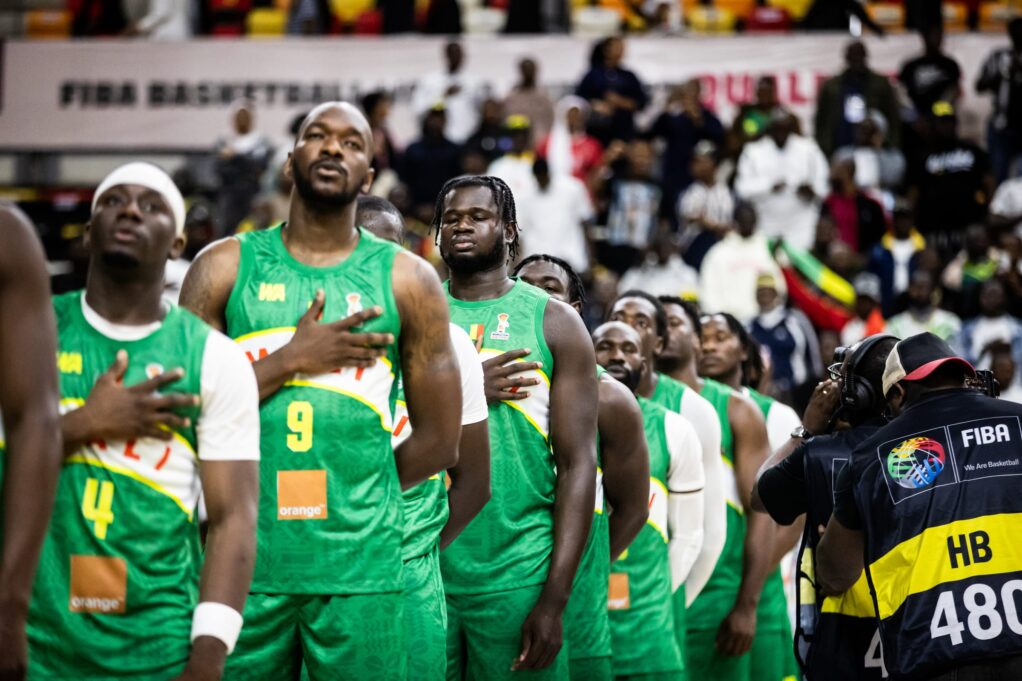
IN recent years, Mali has developed an impressive basketball program that stands out in Africa. The country has consistently produced teams capable of competing at a high level on the continental stage, with a strong focus on nurturing young talent and ensuring continuity in the senior program.
Now, the investment in this emerging generation of players is starting to yield results. The core of the men’s Mali team, which reached the final of the 2019 FIBA U19 Basketball World Cup against the United States, has matured. Additionally, players like Aliou Diarra have added depth and physicality to a well-rounded squad.
Following a strong 5-1 record in the opening round of the FIBA Basketball World Cup 2027 African Qualifiers, Mali is in a prime position to make history. The nation has never qualified for the men’s FIBA Basketball World Cup, and this group of talented players could change that in these qualifiers.
A team built around chemistry
What stands out about Mali is not just the individual talent, but the relationship between the players. There is a clear understanding when they are on the court together. Siriman Kanoute seems to know exactly where each player wants the ball, and the frontcourt can function through different players without disrupting the team’s overall rhythm.
Importantly, individual performance does not come at the expense of the unit. Players have opportunities and moments to shine, while having a strong sense of what Mali is trying to achieve collectively. This is especially valuable at the international level, where national teams have limited time to build chemistry and define roles.
Mali has an advantage because many of these players have developed together for years. This continuity is now starting to translate into positive results.

Kanoute gives Mali their offensive engine
Siriman Kanoute has been a key player in Mali’s qualifying campaign. He is averaging 19.2 points, 5.7 rebounds, and 9.2 assists per game – the highest in the qualifiers. His standout performance occurred during Mali’s second game against Uganda, where he recorded 27 points, nine rebounds, and nine assists.
The assists are particularly significant because Mali is not solely relying on Kanoute to score. He is responsible for organising the offence, creating opportunities for his teammates, and distributing the ball to their front-court players. This makes Mali a more dynamic team compared to those that rely only on size; they have a legitimate primary playmaker.
In addition to his playmaking, Kanoute is shooting 49.3% from the field and 43.8% from three-point range during the qualifiers. While the three-point percentage should be viewed with caution due to the limited sample size, it does mean that opposing defences cannot afford to ignore him on the perimeter.
This creates a challenge for Mali’s opponents. If they give Kanoute space, he can take advantage of the opportunity. However, if they focus on shutting him down, they face the threat of other players inside.
Enter 2026 BAL Champion, Oumar Ballo
At 208 cm, Oumar Ballo gives Mali a strong presence in the paint, making them particularly hard to match up against. He is averaging 13.5 points, 9.2 rebounds, and 2.5 assists while shooting 58% from the field. His best performance came against Egypt, where he recorded 23 points, 12 rebounds, and five assists.
However, Ballo’s impact extends beyond scoring. He serves as Mali’s anchor around the basket – a player who can finish efficiently, control the glass, create second-chance opportunities, and protect the rim. Additionally, Mali benefits from having another physical presence in Aliou Diarra, who averaged 11.3 points and 9.0 rebounds during the opening round while playing just 26.9 minutes per game, including 7.3 defensive rebounds. Mahamane Coulibaly is another worthy contributor, averaging 8.5 rebounds per game, while guard Siriman Kanoute adds 5.7 rebounds.
This distribution of contributions illustrates an important aspect of Mali’s game. They do not rely on a single player to win the rebounding battle; instead, they can overwhelm opponents with depth. Ballo averages 3.8 offensive rebounds and 5.3 defensive rebounds per game, while Diarra’s strong presence on the defensive glass helps limit opponents’ second chances. As a result, Mali create possessions while denying them to their opponents. In a qualifying campaign where narrow margins can decide games, these extra possessions can be crucial.
More importantly, Mali has a physical identity that can carry them, and they do not necessarily need to excel offensively to remain competitive. They can win possessions, control the paint, and force opponents to work hard for every point.

Could the Three-Point Line Determine Their Ceiling?
Mali’s size provides them with a significant advantage, particularly in their ability to generate pressure across the court. Siriman Kanoute is averaging 2.7 steals per game, while Oumar Ballo contributes 1.3 blocks. Additionally, Aliou Diarra averages 1.0 block, and Mahamane Coulibaly also offers a strong presence around the rim. The combination of active perimeter defence and a formidable front court allows Mali to defend effectively without sacrificing physicality.
They can pressure the ball, contest shots, and still have enough size to protect the paint. Most importantly, they finish defensive possessions by securing rebounds. A stop means little if it ends with an opponent grabbing an offensive rebound, so Mali’s ability to control the boards is crucial for their defence.
However, a notable concern is their three-point shooting. As a team, Mali is shooting only 29.1% from beyond the arc, and several key players are shooting well below that average. Ibrahima Cherif Haidara is at 15.2%, Hassan Diarra at 16.7%, and Coulibaly is struggling at just 5.6%. While Kanoute’s impressive 43.8% provides some balance, Mali cannot depend on one player to carry their perimeter shooting throughout the entire qualifying campaign. As competition intensifies, opponents will adjust their strategies. Teams will pack the paint, try to neutralise Ballo, and force Mali’s other perimeter players to make shots.
This raises a critical question for the team: Can Mali succeed when their inside game is ineffective? Answering that question could determine whether this promising group becomes the first Mali men’s team to reach the World Cup.

The opportunity is bigger than one qualifying campaign
Mali’s current basketball position is a result of years of development. This team did not suddenly discover two talented players; instead, they built a strong talent pool. Their head coach, Alhadji Dicko, has known many of the players since they were children and even played alongside some of their fathers. The generation that reached the FIBA U19 World Cup final in 2019 has now advanced to become senior players.
Kanoute has evolved into a primary playmaker, Ballo has become a significant interior force, and Diarra has added another physical dimension to the team. They have already demonstrated that they can compete at the highest level of African basketball. Now, they have the opportunity to achieve what would be the greatest accomplishment in the history of the country’s men’s basketball programme. However, the road to the world stage as a senior men’s team remains challenging. The second round will present more pressure and little room for error.
After witnessing what Mali showed in the opening round, the perspective has shifted. It is no longer a question of how well they can compete with Africa’s best; it is now about whether this generation will finally take Mali to the World Cup and how far they can take it once they get through the door.

Sign up for our monthly newsletter for all the latest feature stories and previews of events on the African continent.


