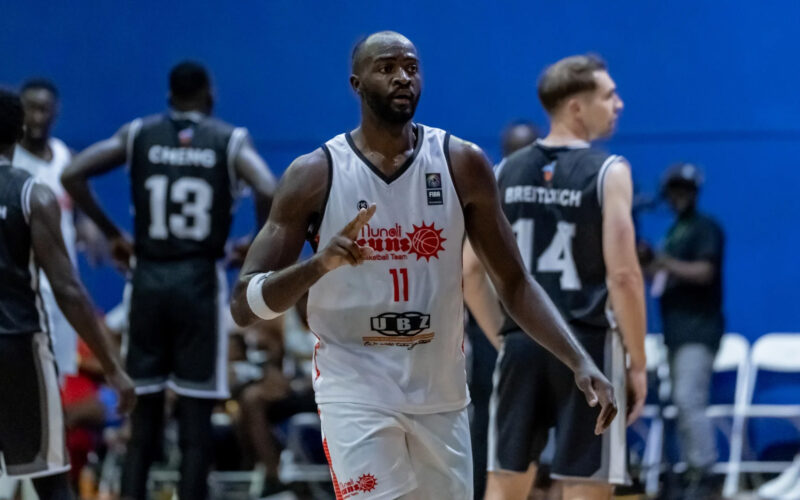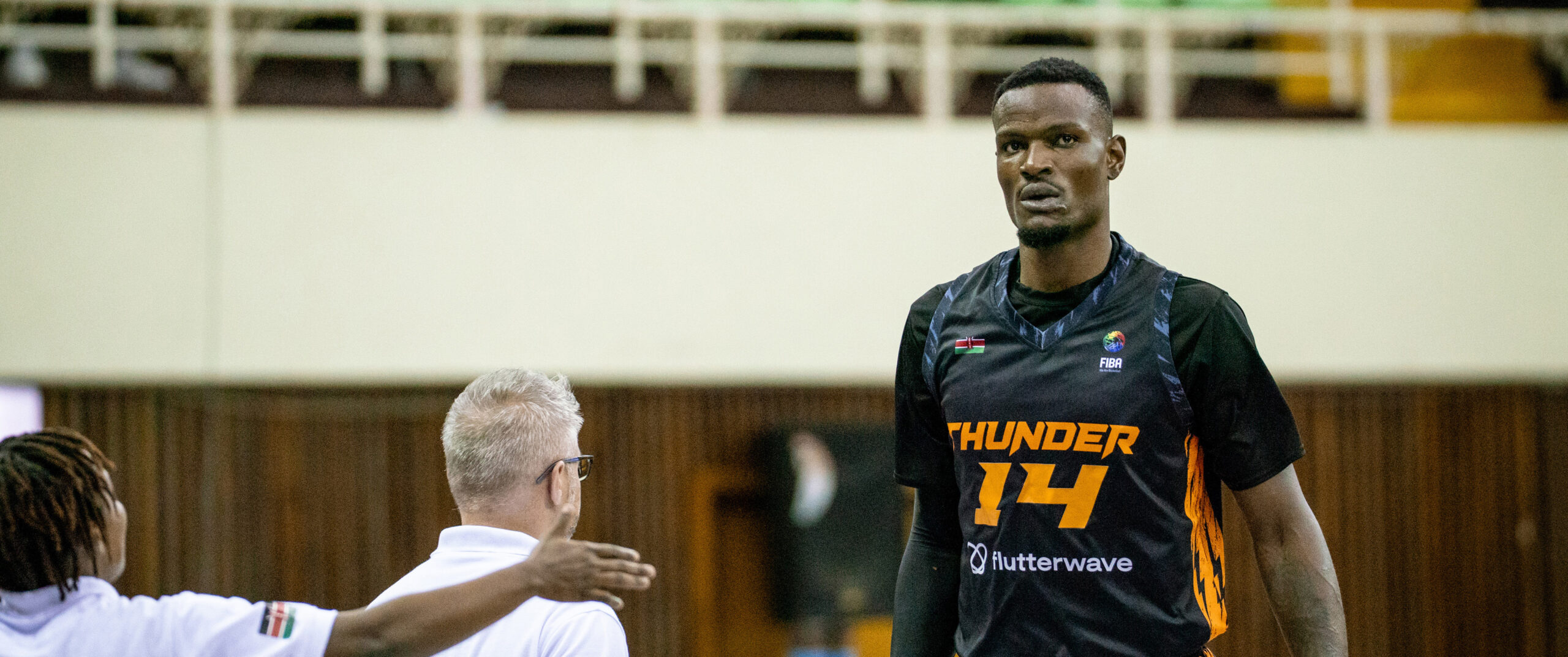
AFTER spending a significant portion of his professional career plying his trade across North America, Europe and Africa, there is perhaps no better time for Tom Wamukota to return home to Kenyan basketball.
After leaving Kenya following high school at Maseno School to pursue collegiate basketball in the United States, the seasoned big man has accumulated a wealth of experience across diverse basketball ecosystems.
The 6’11” centre has competed in multiple editions of the Basketball Africa League (BAL), won championships in Rwanda with Patriots BBC and APR, and plied his trade in countries including Tunisia, Nigeria, and South Sudan.
Now, Wamukota returns to a Kenyan basketball landscape vastly different from the one he left behind. For someone who has long advocated for the development of basketball in his country, the opportunity to play professionally in front of Kenyan fans is made all the more significant by his return to a programme emerging as one of the continent’s most promising.
“There’s a different kind of motivation when you’re playing in front of your people,” Wamukota explained in an interview with The Big Tip Off. “It just hits different.”
The homecoming has also afforded him the opportunity to reconnect with former high school rivals, classmates and national team colleagues, some of whom have followed his career from its infancy.

A wealth of experience at Thunder’s disposal
With Nairobi City Thunder registering a win and a loss in their opening two games of the Elite 16, the Kenyan outfit have to find a greater degree of consistency as they look to secure their passage to the BAL.
While Wamukota has played limited minutes in the competition thus far, the value of having a player of his experience at Thunder’s disposal extends beyond the minutes he spends on the hardwood.
Having competed across several African leagues, the veteran centre brings with him an understanding of the nuances of continental basketball. His familiarity with different styles of play and potentially some of the personnel the Thunder will encounter could prove particularly valuable in a competition where teams have little time to make adjustments between games.
Beyond his versatility in the post, his ability to see the floor, be vocal and communicate with his teammates is an attribute that Thunder can draw on both on and off the floor.
“I’m a very vocal person,” Wamukota explained. “In basketball, you cannot play quiet.”
As a big man, his positioning on the defensive end affords him a vantage point from which he can read the opposition’s offensive movements, communicate defensive rotations and guide his teammates through different situations on the floor.
It’s a responsibility Wamukota embraces – viewing himself as an extension of the coaching staff, irrespective of whether he is on the floor or on the bench.
“Just being able to be the extra guy on the bench who is an extension for the coach, I think that’s a big part of our team,” said Wamukota
Finding the balance between pace and composure
Nairobi City Thunder’s brand of basketball is characterised by the pace at which they like to play. However, playing at such a high tempo requires a considerable amount of chemistry and an understanding of one another’s tendencies on the floor.
Without that understanding, playing with pace creates room for impulsive decision-making, which can prove costly in a high-stakes competition such as the Elite 16, where the margins for error are particularly slim. Finding the balance between pace and exercising composure will be important as the tournament progresses.
It is in navigating these demands that the Kenyan outfit could benefit from the wealth of continental experience within their roster, including that of Wamukota.

Speaking ahead of the Elite 16, Wamukota identified chemistry and consistency as two of the greatest attributes the team developed over the course of their preparations.
The Thunder had approximately a month to integrate their international additions into an existing local core that had spent the domestic season competing together.
“In a lot of these tournaments, it’s a short-term tournament, it’s about a week, and people kind of undermine the importance of the chemistry and the consistency within the team.”
Beyond familiarising themselves with one another’s strengths and identifying how best to maximise them, the competitive nature of their training sessions also afforded Thunder the opportunity to test themselves ahead of continental competition.
“Our practices are a lot harder than actual games,” he said. “I think the biggest attribute that we have developed is our consistency and our chemistry.”
Finding alignment beyond the hardwood
While Wamukota’s immediate focus is on what he can contribute to Thunder on the hardwood, his decision to join the Kenyan outfit is particularly interesting because it aligns with his long-term ambitions and the organisation’s.
In a country where athletics, football and rugby have historically dominated the sporting landscape, Nairobi City Thunder are helping to change the perception of basketball, not only as a sporting discipline but also as a commercially viable product.
It is an evolution that Wamukota has watched with keen interest from afar and aligns with his own ambitions within the sporting ecosystem.
Having spent years navigating different basketball ecosystems, his return to Kenya is an opportunity to find a home within the sport that will allow him to continue to grow long after he has hung up his sneakers.
“Even after I’m done playing, my main focus is to have a career in sports,” he explained. “[Nairobi City Thunder] is an organisation where I’m learning a lot at the same time as I’m playing, when it comes to monetisation and partnerships.”
The organisation’s growth is particularly important in that regard. Beyond providing a platform for Kenyan players to compete at the highest level of club basketball on the continent, the programme’s development could also create avenues for those players to transition into other facets of the sporting industry.
For a player who has accumulated a wealth of knowledge across different basketball markets, there is value in being able to reinvest that knowledge into an ecosystem he has long wanted to see flourish.
“Nairobi City Thunder was the perfect fit,” said Wamukota. “[They have helped] make people understand that basketball can be very lucrative in terms of an investment, as a sport, or in terms of bringing people together.”

Building a basketball culture in Kenya
One of the most noticeable changes since Wamukota’s departure from Kenya has been the evolution of the country’s basketball fan culture. Greater exposure to the sport, the emergence of basketball-related media platforms and the role of social media in bridging the gap between players and fans have contributed to a growing appetite for the game.
“Basketball is turning into a social event now in Nairobi,” he explained. The sport is increasingly attracting people from the corporate world, other sporting disciplines and audiences who may not have previously had an affinity for basketball.
That growing appetite also places a responsibility on the players and organisations tasked with sustaining it. For Thunder, competing in front of a home crowd during the Elite 16 not only secures the club’s passage to the BAL, but also further endears the sport to a growing audience.
The more consistently Kenyan fans are exposed to high-level basketball, the greater the opportunity to build a culture that can sustain the sport commercially, competitively and institutionally.
“We need to grow the sport, we need to grow the fan base, we need to grow the national team,” said Wamukota. “We need to make sure that Kenya is known on the continental map as a basketball hub.”
Perhaps one of the greatest indicators of the growth of Kenyan basketball will be its ability not only to produce talent capable of competing internationally but also to build programmes that give that talent a compelling reason to return.
For Wamukota, who once had to leave Kenya to pursue a meaningful career in basketball, returning home and contributing to building an ecosystem that affords future generations more opportunities would be a meaningful endeavour.
And for the young basketball player watching from Bungoma or Nairobi, the prospect of building a career in the sport may increasingly extend beyond the opportunities available outside Kenya’s borders.

Sign up for our monthly newsletter for all the latest feature stories and previews of events on the African continent.