Basketball Feature

Swiss army knife Kennedy, the sharp point of Beira offence

Beira learnt lessons from loss to Tigers

BASKETBALL runs deep in Jermel Kennedy’s family. The influence of his kin is one of  the main reasons he plays the game.

Community also played its part in providing the fertile ground for the Canada-born player to grow, spread his wings and further his ambition in the sport.

“Growing up, where I am from, basketball is popular. It’s something I enjoy doing. The city of Malton has a huge basketball culture. In a way it propelled me to achieve my dreams,” said Kennedy. “Also, basketball runs in the family. My mom played in high school and my older sister played as well. In fact, my older sister’s influence was what encouraged me to take on the sport. I used to watch her high school games. She was pretty good.”

Second Picture
Jermel Kennedy believes lessons have been learnt from the loss against Tigers Pictures: The Big Tip Off

The 32-year-old forward would go on to chart his own path as he learnt the ropes at Lincoln Alexander Secondary School and refined his game in the American college system. With  a clear foundation laid and a physical growth spurt, the signs were there that he had the potential to be a good player.

“In my second year of high school, I grew taller and realised there was an opportunity there. I was probably one of  the tallest players in my area or team and decently athletic. I was slowly developing, and people recognised that I had certain attributes that translated well,” said Kennedy, who had spells with two junior colleges in the United States before joining Division II college team, Lander Bearcats.

Kennedy says while he enjoyed his time at the South Carolina school, where he also graduated, he was far from the polished player that he is now.

“I liked what Lander offered me. It was perfect for me, a good fit. It was different. Although, in the beginning, I was more like a four or five and did not shoot very well. I was more like a get-out, run and dunk the ball kind of player, but I still had most of the tools I use now although I was more of an inside than outside player,” said Kennedy.

The road to the pro-ranks saw Kennedy return home to the Canadian National Basketball League (NBL). Although he was a high draft pick for the NBL, he did not see himself playing on home turf, as the league was relatively new and painted in a negative light by players who had participated in it.

“I took a year off and played in tournaments or basketball leagues. Anything basketball-related, I immersed myself into. I also wanted to be a part of the NBL draft (in 2013). So, to get there, I went to the combine,” said Kennedy, who landed at the Moncton Miracles. “I ended up getting drafted sixth, but I had no intention of playing in the NBL. Some friends and players did not have good experiences playing in it. The league was new at the time, so how they handled players was not professional. I used my high draft value as a way of marketing myself and leveraging a move overseas.”

In addition to realising his dream of playing abroad, Kennedy has also been a bit of a journeyman. Spain (CB Clavijo Logrono), Britain (Worcester Wolves), Portugal (ADO Basquetbol SAD Overanse), Canada (Guelph Nighthawks and Hamilton Honeybadgers), Argentina (Ferrocarril Oeste) and France (AS Kaysersberg, Besancon BCD and Toulouse Basket Club) have all been home to the Canadian player.


View this post on Instagram


A post shared by Jermel Kennedy,BSc (@jermz30)

Mozambican club Ferroviario Da Beira, is where he now earns his keep. The Beira-based club is on a mission to qualify for the Basketball Africa League (BAL) and was in South Africa three weeks ago, where they successfully progressed to the Elite 16.

Beira won their first two games against Matero Magic of Zambia (81-51) and Roche-Bois Warriors of Mauritius (132-36) and crumbled in the final minutes against hosts, Cape Town Tigers (86-85) in a game the Mozambican’s dominated.

Reflecting on the qualifiers, especially in the final game, Kennedy says it was a good thing that they lost the game against the Tigers. In his opinion, it provided Beira with some teachable moments that will come in handy at the Elite 16 in December.

“I would say our biggest plus in that tournament was losing that game. It made us aware of certain things we had not noticed. We are not going to waltz into games and expect to win,” said Kennedy. “We were leading that game, and we were dominating. There were little things that we slept on. Little things like turnovers, not finishing easy plays, getting back on defence and rebounding. There are so many takeaways. It sucks when you have to understand that lesson through a loss. So, the loss provided those lessons.”

Despite the loss, Kennedy’s scoring feats for Beira was the highlight on the court during the regional qualifiers held at the University of Johannesburg Soweto Campus. In the opener against Matero, he dropped 16 points and in the second game against Warriors he again scored 16 points. In the loss to the Tigers, Kennedy did not disappoint as he notched double figures scoring 22 points. The Canadian has so far shown that he has a high basketball IQ in terms of scoring. His stats in the game against Tigers speak to this fact. He was 9/12 in field goals and was 4/5 from behind the arc.

Third Pic
Jermel Kennedy used his high NBL draft to leverage a move overseas.

Kennedy has shown that he is a proven scorer for Beira. He also sees himself as an all-around player and does what the team requires of him.

I am like a Swiss army knife. There are a lot of things I do on the court. I don’t do everything super amazing, but I do everything good. I am like the glue guy, but my role in this team is different. The coach expects me to be more aggressive, rebound, drive in, kick out and create for the team. I try to do that at a high level as much as possible,” concluded Kennedy.

On his experience with his new teammates, Kennedy says the process has been seamless as he has joined a good team with quality players that understand basketball. He feels this group of players will turn it up a level for the club when the Elite 16 tournament begins.

“It’s way easier than people make it out to be. These guys are smart players and easy to play with. Our system is not that difficult, it’s actually quite easy.” said the new Beira recruit. “We are definitely going to turn the intensity up this month as the Elite 16 approaches. Hopefully we are able to resolve the issues we have identified.” 

The Elite 16 will require a different attitude from Beira and Kennedy. There has been introspection, and moving forward, the Mozambican team will have to dot their i’s and cross their t’s, as the road to the BAL tournament will not get any easier. Beira will need Kennedy and his teammates to step up and play consistently at an elite level.

Swiss army knife Kennedy, the sharp point of Beira offence Read More »

Tigers ready to earn their stripes in BAL qualifiers

BAL a chance for players to become super stars

FOR Cape Town Tigers big man Pieter Prinsloo, South Africa is where his heart has always been. His allegiance and patriotism run deep, skin deep.

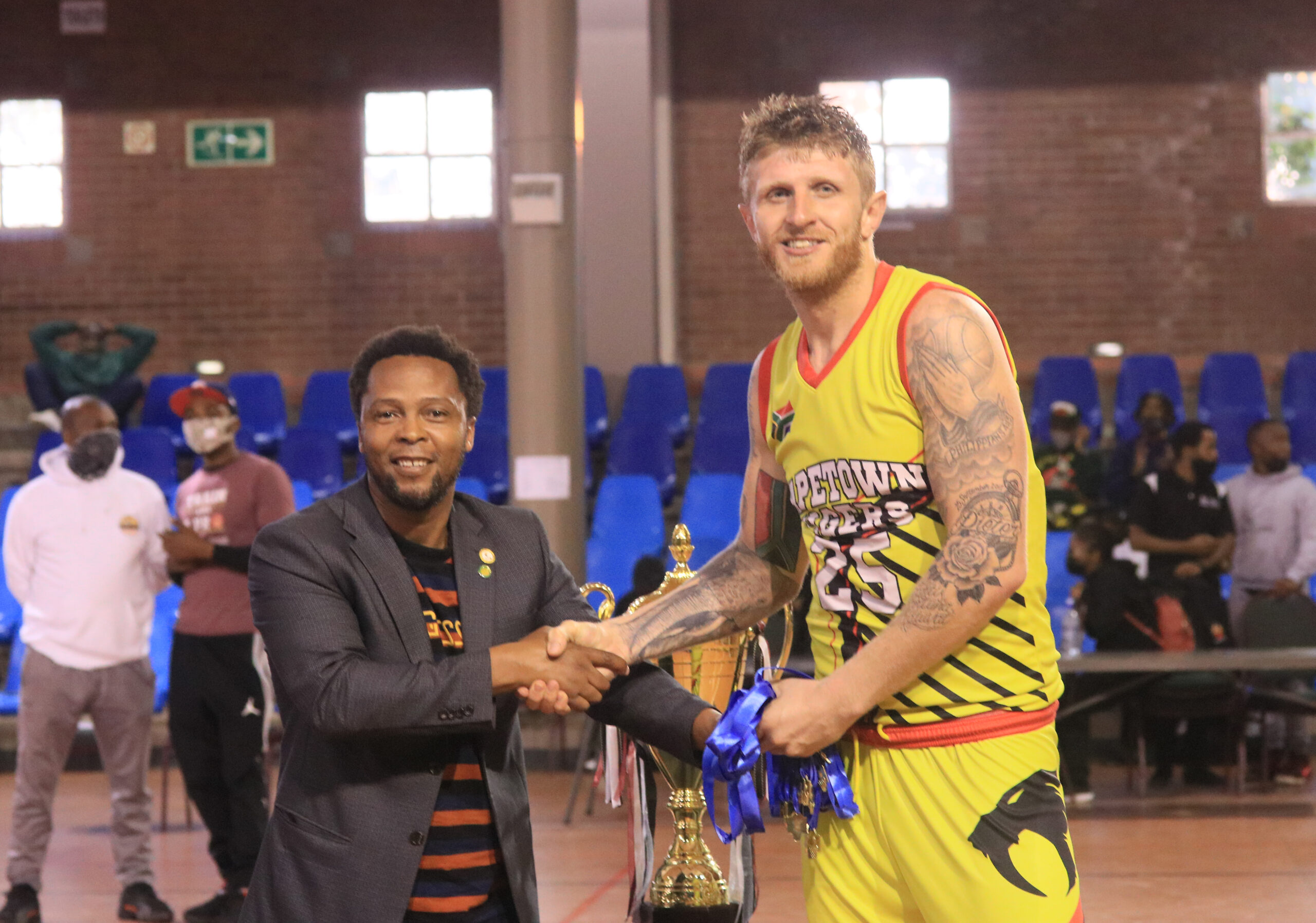
Embellished on the Tigers captain’s right arm are tattoos of the national flag and the big five (lion, leopard, rhino, elephant and buffalo), elements that celebrate his South African roots.

Prinsloo always held the ambition of representing South Africa through the Proteas cricket team, but his life took a different turn when he moved to the United States, where he picked up basketball. Despite living most of his life in the US and playing professionally in different parts of the world, Prinsloo never forgot the country of his birth.

“As a kid growing up here, I always thought I would play for the SA national cricket team. It did not work out that way because I left for the States. For me, this (South Africa) is my home. It’s where I am from, and I will never forget that,” said 29-year old Prinsloo. “Soon as I got out of the house and was allowed to do my own thing, the first thing I did was to get a tattoo of the South African flag.

“For me, that’s my heritage. I also have tattoos of the big five. The tattoos on my right arm are a celebration of my heritage. So wherever I am in the world, and people take note of the tattoos, I let them know this is my representation of home.”

Second Picture
Cape Tigers get ready to receive the National Club Championship trophy. Pictures: The Big Tip Off

Prinsloo knows all about representing South Africa at the highest level. He has donned the green and gold vest at the 2017 AfroBasket co-hosted by Senegal and Tunisia. Now he will have another opportunity to represent his country, but this time in the colours of the Tigers, who beat Jozi Nuggets 76-70 in September to become the new National Men’s club champions.

The Cape-based club will take on four Southern African teams in the Zone VI Basketball Africa League (BAL) qualifiers from 19- 24 October in Johannesburg at the University of Johannesburg Campus in Soweto.

Pretoria-West born Prinsloo believes hosting the games and hopefully qualifying for the BAL presents an opportunity for Tigers to help raise basketball’s profile in the country and for players to make a name for themselves.

For us, it’s great! It’s an opportunity for guys to become superstars. Some of the guys realise that. When they walk in the street, they will be recognisable. It also means long-term security. It means guys can change their lives and futures,” said Prinsloo, who experienced his bit of the limelight. “I have experienced that playing in countries overseas, where somebody would say ‘hey Prinsloo can I get a picture.’ So, for me, it’s normal to be on a poster because something is going here or there.”

“For South Africa… it’s probably the richest and most talked about country in Africa, but in sport, we ain’t doing sh*t. Our rugby is up and down. Cricket has its scandals. Soccer has not been relevant in, who knows for how long? So we know by what we are doing, we can become a big-time face in this country.”


View this post on Instagram


A post shared by Pieter Prinsloo (@pieter_p34)

Unfortunately for Tigers, they will not host the BAL qualifiers in their home city, and according to Prinsloo this is a missed opportunity for the club and its fans. He also felt the tournament organisers made it impossible for the Tigers to host the event.

“We would have loved to have the games here. We are the SA champs, and we are from Cape Town, but the organisers made it a complicated process in trying to host it here. They had a lot of requirements that we felt were excessive, but they have their rules, so we left it at that,” said Prinsloo. “We would have preferred to have it in Cape Town. Our fanbase is here. It also could have helped us with our branding, marketing of the game, and we could grow our support even more.

“We do have a fanbase in Johannesburg because of the growth of the game, and people see the work we have done.”

The issue of where games should held, has not been a distraction for the Tigers players, as they have continued preparing  for the BAL qualifying tournament. They have also added some quality players to help them reach their objective. The only stumbling block could be the lack of meaningful competition since being crowned national champions.  

“Training wise, things have been going good. We have incorporated a couple more pieces. Jared (Harrington) is included again after missing out on the championships because of paperwork. We have also filled our African slot with Evans (Ganapamo) and Ben Uzoh, who played with us at the championships. Billy Preston from the States has also joined the team,” said Prinsloo, a former Marist Red Foxes player.

“We have not had many practice games, but in training, things are coming together. The talents we have brought in are starting to click with the rest of the team. There is good chemistry. Guys are starting to understand each other.

“It’s been hard to find competitive scrimmages. We get better runs going five-on-five in the team at training because of the size and skill. It’s been hard to find a similar kind of talent that we will face in Joburg.”

Third Picture
Cape Tigers captain Pieter Prinsloo receives the medals from BSA secretary general Victor Bergman.

The talent that lies in wait for the Tigers comes in the form of Ferroviario da Beira (Mozambique), Matero Magic (Zambia), Mercenaries (Zimbabwe) and Roche Bois Warriors (Mauritius).

Prinsloo is familiar with Beira, having had a stint with the club. He also provided some insight into what the Mercenaries and Matero will bring to the table.

“Beira is a team that likes to press. They play at a fast tempo. So teams that press don’t handle it very well because they don’t want that pressure. I know some of the guys from Zim. They might have some guys who play here and there in SA. The Zambians play with a quicker small team,” said the former Universidad de Concepcion player.

“I don’t see it causing complications for us. We have a balanced team; we can go big or small at any time. There is size and skill in every position. A guy like me can play small forward, power forward and centre. We have a team that can go quicker or slower. We don’t want to play the opposition’s game. We want to play our game.”

While the qualifying process is still a long one, Prinsloo who has won championships in El Salvador and Nigeria feels that winning the BAL would add another feather on the cap.

“For me, on top of what I have accomplished in my career… I have played in champions league in South America and competed against some the best players in the world. So, winning BAL would add another championship to my resume. To bring that trophy back home and to Cape Town, that would be crazy. It would be an honour,” concluded Prinsloo.

Tigers ready to earn their stripes in BAL qualifiers Read More »

Koranga and the Lionesses will have a competitive edge

Award winning season for Koranga

FELMAS Koranga does not mince her words when she says basketball was not her preferred choice of sport. To her, participating in basketball and other sporting codes were a form of escape and having fun.

“I tried different sports to figure where I fit in best. Note, this was for FUN! There was no intention from my side on building my future through sport,” said the 25-year-old. “I was the type of person who did not want to tire because of physical activity. I would cry a lot when instructed to put up shots and get fit.

“No. I did not want any of that. It was something to look forward to after class. Something refreshing.”

The influence of her older brother Ariel Okall Koranga, who plays for the Kenya Morans, also proved to be the turning point for Felmas.

Second Picture
Felmas Koranga in action against Rwanda in AfroBasket Zone IV qualifiers. Pictures: FIBA

“I was introduced to basketball by my older brother Ariel. Well, he insisted that I take it up and I am here because of that,” said the power forward.

There’s a twist of irony in Koranga’s journey, as what turned out to be a leisure activity has seen her achieve excellence for her country and university team.

Koranga, the first Kenyan to play in the NCAA tournament has had a stellar season for Troy University in Alabama. Her performance for Troy was so good she won the Sun Belt Newcomer of the year and was named the All-Sun Belt Second team. She was part of the Trojans team that made the NCAA tournament, although they fell to Texas A&M in the first round.

Initially, Koranga struggled to adjust in her new environment but eventually knuckled down and was able to settle.

“I have to say it was not easy at first. Having to cope and gel in the system was not easy. It took me some time. I think in late January till March, I began to settle and be comfortable with the style of play,” said the former Tyler Junior College player.

Despite her achievements, Koranga was not overly excited about her success. To her, the awards are a sign that the behind the scenes work on her game have paid off and helped contribute to the team.

I know it’s a big platform and stuff, but I don’t get carried away with things like that. It’s just a title and a name. To me it’s just like any other game,” said Koranga, who took a similar tone on her individual achievements. “When you put in work it’s sometimes possible to predict that something big is going to happen. Also, the work I put in was not for individual accolades but for the success of the team.”

She also carried her form to Kenya’s Lionesses for the FIBA Zone V AfroBasket qualifiers. In the process, she also continued a proud family legacy of representing the East African nation in international competitions.

Her father, Elijah Koranga, who played for Kenya’s Harambee Stars in the 1992 Africa Cup of Nations, set the benchmark. Ariel matched the feat as he recently helped the Morans end a 27-year absence from international basketball by qualifying for this year’s men’s AfroBasket in Rwanda (24 August to 5 September).

Now, Felmas has written herself into Kenya’s sporting lore as she helped lead the Lionesses to qualify for the women’s competition (AfroBasket) in Cameroon (17-26 September).

Nakuru-born Felmas explains that the battle for bragging rights within the family is friendly. She points that it used to be her father who held the mantle for a long time. Now Ariel and herself are perched next to the Koranga patriarch in terms of sporting success.

“It is a little competition that we have going on. Dad used to say he is the only one who has competed on a higher platform. Ariel also used to say: ‘dad is not the only person that can speak in the house’. But now I’m the main person,” quipped Koranga.


View this post on Instagram


A post shared by Felmas Koranga (@felikoranga2)

Koranga and the Lionesses made hard work of their qualifying route to Cameroon. Round robin losses to hosts Rwanda (77-44) and Egypt (107-106) and the one win over South Sudan (66-48) sandwiched in between last month saw the Kenyans having to dig deep.

What they found going into the semi-final and final was self-belief. So galvanised were the Lionesses, they swept aside Rwanda (79-52) and Egypt (99-83) to stamp their ticket to the women’s showpiece tournament.

“We did not expect it, but we had a measure of hope. Also, we wanted to prove a point. Some people did not believe in us,” said Koranga, who was named the power forward of the qualifying tournament.

Kenya will expect more award-winning performances from Koranga in the 12-team tournament. The Lionesses are Group A with the hosts Cameroon and Cape Verde.

Third Pic
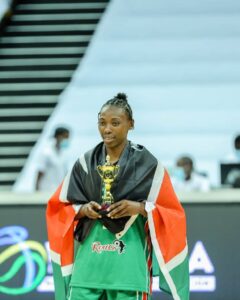
Felmas Koranga poses with her individual trophy.

Koranga acknowledges that competing in the tournament will present a different kind of challenge for the Lionesses.

“It’s going to be tough for all the teams. It’s a different level of competition. We have to practice like we are going to face people playing in the WNBA. That’s the attitude everybody should have. We are not overconfident, but we are coming there to compete,” said Koranga, who was non-committal about how far the team would go.

“Somebody asked me the same question. Honestly, I never have an answer to such a question. All I will say is we will compete. Hopefully, we will get somewhere.”

Looking at Kenya’s record at this competition, what stands out is that the Lionesses finished fifth in 1986, second in 1993 and fourth in 1997. Since then, there was nothing to write home about in the last three AfroBaskets they participated in.

While they are far from the upward ascent of those early years, Koranga intimated that the ball is rolling in trying to get the team back on track. She says there have been challenges in the rebuilding process.

“You won’t believe this, but before we went to Rwanda, we had been together for only ten days. You could tell from our first game that the chemistry was not there,” said Koranga. “There is an ongoing process of rebuilding the team. I feel we have talent. The right things need to be put in place so that the team well prepared.”

Koranga and the Lionesses will have a competitive edge Read More »

×
Verified by MonsterInsights