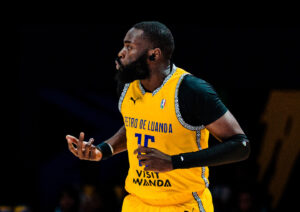
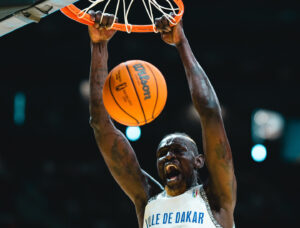
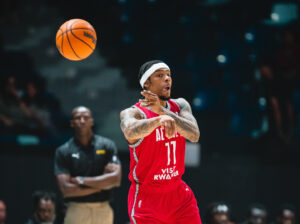
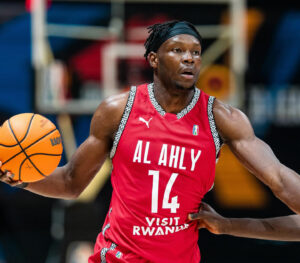
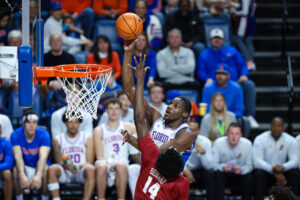
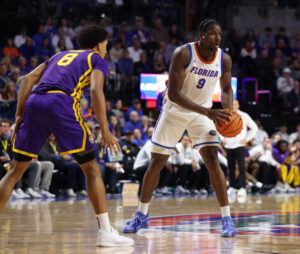
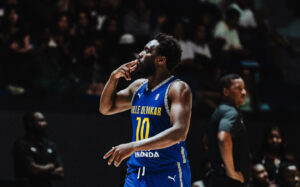
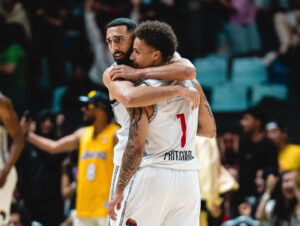
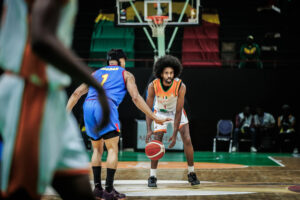
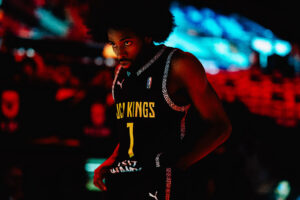
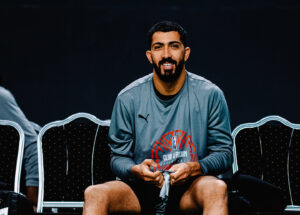
THE Basketball Africa League (BAL) Sahara Conference has reached its halfway mark at the Prince Moulay Abdellah Sports Complex in Rabat, Morocco, and the race to Kigali is beginning to take real shape.
With nine games in the books and six remaining, the race to Kigali is separating the contenders from the rest, getting closer for some and slipping away for others. So far, only the Tunisian champions, Club Africain, have officially secured their place in the post-season.
Current Standings
Club Africain sits comfortably at the top of the standings at 3–0, their perfect start enough to clinch the first ticket to Kigali. Behind them, the host club FUS Rabat and Al Ahly are tied at 2–1, holding the head-to-head edge for now.
The middle of the table is where the tension truly lies. ASC Ville de Dakar and Maktown Flyers are both 1–2, with ASC currently occupying the fourth playoff spot thanks to a dramatic one-point victory over FUS Rabat.
At the bottom, JCA Kings remain winless at 0–3, their playoff hopes hanging by a thread. With only three game days remaining and three spots still up for grabs, every possession from here carries playoff implications.
Nail-Biters and Down-to-the-Wire Drama
The Sahara Conference has delivered tense action from the opening tip. Club Africain’s 85–79 win over ASC Ville de Dakar set the tone, a six-point thriller decided in the closing minutes. Maktown Flyers followed with a gritty 76–68 win over JCA Kings, refusing to let their campaign spiral early.
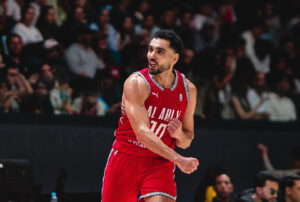
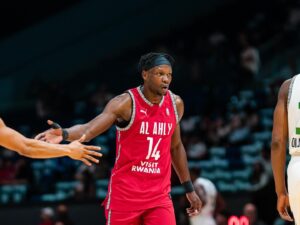
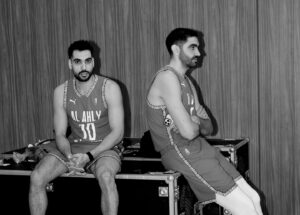
Osayi Osifo has helped Egypt’s Al Ahly get into a good position for the playoffs. Pictures: NBA and Getty
One of the biggest shocks came when Club Africain edged Al Ahly 69–68, announcing themselves as legitimate contenders. Tuesday night raised the stakes even further, as Club Africain survived a gruelling 79–74 overtime battle against JCA Kings. This win clinched their ticket to Kigali.
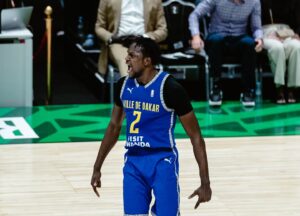
Perhaps the most dramatic moment came when ASC Ville de Dakar stunned FUS Rabat 67–66, sealed by a clutch three-pointer from Samba Fall with just four seconds remaining. This shot reshaped the playoff picture instantly.
Scoring output
While the Kalahari Conference featured more explosive offensive outputs, with Petro de Luanda breaking the 100-point barrier three times and several games landing in the 90s. The Sahara Conference has been more tightly contested, with winning scores typically in the 60s to 80s range and fewer blowouts. So far, only one game has reached the 90s: FUS Rabat’s 97–72 demolition of Maktown Flyers.
This suggests that while the Kalahari has produced higher-scoring games overall, the Sahara’s tighter margins may better prepare teams for the pressure awaiting in Kigali.
The debutantes divide
Club Africain has been the revelation of the conference. They stunned the Egyptian champions Al Ahly 69-68 in their opener. They followed with an 85-79 win over ASC Ville de Dakar. Then they survived a gruelling 79-74 overtime battle against JCA Kings on Tuesday night, which secured the first playoff spot for them.
Maktown Flyers authored another compelling narrative. The Nigerian club refused to stay down. After a 25-point defeat to FUS Rabat in their opener, the Nigerian side regrouped and made history, defeating JCA Kings 76-68. However, they came up short against Al Ahly, losing 89-80 in their third game.
Samba Daly Fall’s clutch three gave ASC Ville de Dakar their first win of the Sahara Conference.
For JCA Kings, however, the learning curve has been steep. Still searching for their first win, they face a daunting schedule ahead against Al Ahly and ASC Ville de Dakar. These are two sides on the brink of qualification. Their 55-point performance against FUS Rabat remains the lowest-scoring output of the 2026 BAL season, underscoring their offensive struggles.
The Road to Kigali
With the Sahara conference set to conclude on Sunday, the stakes could not be higher. Four teams will advance to Kigali, joining the Kalahari Conference qualifiers: RSSB Tigers, Petro de Luanda, Al Ahly Ly, and Dar City.
Club Africain have already punched their ticket. The remaining three spots are still up for grabs. FUS Rabat and Al Ahly are each just one win away from securing qualification. Behind them, ASC Ville de Dakar and Maktown Flyers remain within striking distance, ready to capitalise on any slip.
AFTER a year’s absence, Egyptian giants Al Ahly are back on African club basketball’s biggest stage – the Basketball Africa League (BAL), and they will aim to be as impactful as they were in their championship season two years ago.
On Saturday, Al Ahly of Egypt, the 2023 BAL champions, will make their highly anticipated return to the competition. With their third appearance, they rank first for the most trips to the BAL by an Egyptian club.
Alongside Petro de Luanda, they are one of only two clubs this season to have previously won a BAL championship.
A Legacy Born in 1930
The club was founded in 1930 and is one of the oldest basketball clubs in Africa. This is a club that has seen nearly a century of Egyptian and African basketball history unfold.
The 2023 BAL title was the club’s second African title after their triumph in the 2016 FIBA Africa Champions Cup in Cairo. In that 2016 victory, they became the first Egyptian team to win the competition in two decades.
Ehab Amin and Omar Oraby were part of the 2023 Al Ahly team that won the BAL. Pictures: BAL
The Return
Al Ahly’s last appearance in the BAL was in 2024, where they reached the playoffs but fell short of defending their 2023 title. They entered the postseason as the No. 1 seed. After winning the Nile Conference with a 5-1 record, including a dominant 94-71 closing win over Bangui Sporting Club. But their campaign ended unexpectedly in the quarterfinals with an 86-77 defeat to Libya’s Al Ahly Ly at BK Arena in Kigali.
Domestically, the 2023-24 season was equally frustrating. The Reds lost both the Premier League and the Egyptian Cup final to rivals Al Ittihad Alexandria.
The 2025 season saw them miss out on BAL qualification entirely, a rare stumble for a club accustomed to dominating Egyptian and African basketball.
Al Ahly secured their return by winning the 2024-25 Egyptian Basketball Super League, capturing their eighth national title with a hard-fought 3-2 finals series win over rivals Al Ittihad Alexandria.
The Roster
The roster has significant new faces. Jonathan Jordan, a former FUS Rabat guard, arrives to run the show. The naturalised Democratic Republic of Congo point guard is no stranger to the BAL. He played for FUS Rabat in the 2024 and 2025 seasons, averaging 14.4 points, 4.6 assists and 4.5 rebounds per game across 14 BAL appearances while shooting efficiently from the field.
Another notable new face is that of Osayi Osifo, who last played for the Austin Spurs in the G League. The 6’9″ forward has no prior BAL experience. However, his G League resume includes averages of 5.6 points and 6.3 rebounds per game in the 2025-26 season with the Spurs.
Egyptian national team big man Ahmed Khalaf also crosses over from rivals Al-Ittihad Alexandria, adding size and interior presence.
Head coach Linos Gavriel signed a two-year deal with Al Ahly in July 2025, replacing Agustín Julbe. The seasoned coach made his mark on African basketball in the 2010s by coaching Tunisian side Etoile Sportive de Rades to second place in the 2014 FIBA Africa Champions Cup, and the previous year led Etoile Sportive du Sahel to the same position.
He also led Bahraini side Manama Club to the 2023 FIBA West Asia Super League title. In his first full campaign with Al Ahly, he delivered a domestic championship, guiding the club to their eighth Super League title. Assistant coach Ahmed El Beltagy remains from the 2023 BAL championship staff, providing continuity between the old regime and the new.
New signing Jonatnan Jordan will bring energy to the point guard position for Al Ahly.
The Sahara Conference
Al Ahly will open their campaign today against Club Africain, before facing ASC Ville de Dakar, Maktown Flyers, JCA Kings, and finally FUS Rabat in the Moroccan capital. The final game against hosts FUS Rabat is already being billed as a must-watch. When the two sides last faced off during the 2024 season, FUS Rabat emerged victorious with an 89-78 win at BK Arena in Kigali.
This game will see Jonathan Jordan facing his former team, bringing insider knowledge of FUS Rabat’s system and tendencies. Jordan spent two seasons with the Moroccan club, leading them to back-to-back quarterfinal appearances. He knows every set, every defensive rotation, and exactly how they operate in the clutch. That intelligence could prove invaluable in a tournament where margins are razor-thin.
Can They Win the BAL Title?
The 2023 champions bring back the DNA of a title team. Ehab Amin’s offensive command, Seif Samir’s rim protection, and the defensive identity that defined their success. But the 2024 quarterfinal exit proved that pedigree alone guarantees nothing.
What makes this roster compelling is the blend of BAL experience and fresh firepower.
Coach Gavriel, who delivered an unbeaten domestic campaign, now faces his ultimate test on the continental stage, where one bad game can end a season. The pieces fit. The hunger is there. Whether that translates to a second crown depends on whether this blended roster of veterans and newcomers can develop chemistry fast enough in the eight-day tournament.
In a conference where every team earned their place through blood and sweat, there are no soft matchups. History says never count Al Ahly out. The 2026 BAL will reveal if history repeats.
AS the Basketball Africa League’s Sahara Conference begins on Friday, a blend of new talent, well-known players, and pivotal moments will take centre stage. It will also be the setting of an historic moment. For one individual in particular, this occasion signifies the continuation of a journey that has already unfolded across multiple chapters.
Stéphane Konaté, who previously played for the ABC Fighters, returns to the BAL, but this time in a different role –é as head coach of Côte d’Ivoire’s JCA Kings.
This transition showcases how competing in the league can lead to leadership opportunities, influencing not only his own career path but also the direction of the team he now oversees.
Understanding the BAL as a Player
Before stepping into the role of a coach, Konaté gained valuable experience as a player in the Basketball Africa League (BAL). That experience continues to influence his approach to the game today. He views the BAL as the highest level of club basketball on the continent, a platform where ambition, preparation, and performance converge.
His participation in the BAL was crucial as he neared the end of his playing career. It represented not only an opportunity to compete but also a chance to immerse himself in the experience.
“The BAL is the biggest club competition in Africa. To participate in this competition as a player was an accomplishment for me,” he stated. “I was told my career was ending, but I wanted to take part in this competition.”
What stood out most to him during this time was the importance of mindset. He emphasises that his focus was on enjoyment rather than pressure.
Stéphane Konaté has enjoyed a meteoric rise in his coaching career. Pictures: BAL
“My biggest challenge was to enjoy the experience… Doing well both on and off the court. I truly enjoyed it as a player,” he reflected. “As a coach, I encourage my players to enjoy every moment and to be happy playing in those conditions. When you do, everything falls into place.”
This philosophy now guides how he leads from the sidelines.
From the Court to the Sidelines
Konaté’s journey in the BAL will come full circle this week as he transitions from player to coach. This change brings not only personal pride but also significant responsibility as he takes on his new role on the sidelines. Embracing this change, Konate gains a renewed perspective that reflects the evolving landscape of African club basketball.
“An African competition is still a competition,” he stated. “So we have to compete and fight.”
With his unique background, Konaté understands the demands of the game and the mindset required for success, drawing heavily from his experiences on the court. Konaté’s lived experience gives him an advantage, especially in navigating the intensity of the BAL, where a high volume of games in a short period leaves little room for error.
Each game serves as both a lesson and a test, providing immediate feedback while exposing vulnerabilities that could be exploited on the court of play.
For him, this moment represents not an endpoint but rather the next chapter in his relationship with basketball in Africa. Transitioning from player to coach involves more than just knowledge of the game; it requires the ability to translate past experiences into valuable guidance for younger players.
“It is a great joy and pride to be the first to play in the BAL and to return to the competition as a coach. It is a great opportunity for me as well,” he said, highlighting the significance of his journey. “I draw inspiration from all the experiences I’ve acquired during my career,” he explained.
With this foundation, he aims to motivate his players to give their best and navigate the challenges of high-level competition.
Shaping JCA After the Road to BAL
When Konate took over JCA, the situation was far from straightforward. With only a short time to prepare before the season began, he had to quickly establish structure, identity, and belief within the group. Despite the limited preparation, the team responded well, ultimately winning the national championship and successfully navigating the Road to BAL, which led to their qualification through the Elite 16 West Division.
In the months since the Road to BAL, JCA’s focus has shifted to maintaining sharpness and momentum during the extended break, which can often be a challenge for teams with limited time to adjust to the demands of the BAL.
“Since the Road to BAL, this team has remained united, strong, and disciplined,” he said. “The preparation has gone well, and the management has implemented the necessary means to ensure everything runs smoothly.”
Konate is particularly encouraged by the balance within the squad, which combines experienced players with young talent. He believes this mix is essential to their identity.
“This team is doing well,” he said. “We have a blend of experienced players and several young players, and it’s working effectively.”
For him, the key aspect is not just individual talent but the collective chemistry among the players. “The strength of this team lies in its chemistry,” he said.
Stephané Konaté wants his team to savour their BAL debut.
A Young Team On A Big Stage
With four tickets to Kigali available, JCA have as good a chance as any to book their place in the next phase. For a young group, many of whom are experiencing this level for the first time, the learning curve will be steep.
Coming in as debutants, however, also offers a subtle advantage. With no established expectations weighing on them, JCA have the freedom to define themselves on their own terms, playing with expression, belief, and the identity that carried them through qualification.
Konate is realistic about the demands ahead, but he frames them as an opportunity rather than a limitation. Pressure exists, but so does belief.
“All I wish for this young team is to give the best of themselves, and not regret it afterwards,” he shared.
He acknowledges the difficulty of competing at this level, particularly for inexperienced players, but sees it as part of their development.
“There’s always pressure,” he says. “We are a young team with a lot of young players who are participating for the first time in such a competition in a very high conference, it’s normal.”
Still, his message remains anchored in confidence: “But we believe in it,” he said. “This is an opportunity for these young people to prove what they’re worth.”
For Konate, it’s what the BAL represents at its core, not just competition, but transition, growth, and opportunity. From player to coach, his journey continues, now shaped by the responsibility of guiding others through the same path he once walked himself.
The Basketball Africa League Sahara Conference tips off with a compelling doubleheader, as Tunisia’s Club Africain takes on Senegal’s ASC Ville de Dakar, while hosts FUS Rabat go head-to-head with tournament newcomers JCA Kings of Côte d’Ivoire.
Club Africain vs ASC Ville de Dakar
This matchup presents a fascinating contrast between BAL experience and championship pedigree. ASC Ville de Dakar holds a clear edge in tournament familiarity, having already gone through the demands of the 2025 BAL conference phase. That experience matters in a competition where travel, physicality and late-game execution often decide outcomes. The Senegalese side qualified automatically after winning back-to-back Nationale 1 Masculin titles in 2024 and 2025.
Their roster also includes proven BAL contributors such as Solo Diabaté, a veteran point guard and two-time BAL champion, who won the title with Zamalek SC in the inaugural season (2021) and with Monastir the following year. He is joined by proven centre and returnee to AS Ville, Ater Majok, who won the 2022 championship with US Monastir and earned Defensive Player of the Year honours that same season.
Club Africain, on the other hand, arrive as BAL debutants but carry championship DNA within their core. Oussama Marnaoui won the BAL title, lifting the 2022 trophy with US Monastir, while veteran floor general Omar Abada adds elite-level experience as a 2021 All-BAL First Team selection and two-time AfroBasket champion, giving Club Africain an unusual blend of debutant status and proven winning pedigree.
Their 2025 domestic run in the Tunisian League, culminating in a 3–1 finals victory over US Monastir that secured their automatic qualification as national champions, further reinforces their ability to perform in high-pressure environments.
Statistically, ASC Ville de Dakar’s 2025 BAL campaign (2–4 record) highlighted inconsistency, particularly in closing out tight games, despite their notable upset over defending champions Petro de Luanda.
Club Africain, by contrast, arrive with momentum from sustained domestic dominance but faces the uncertainty of translating that success into continental competition for the first time.
FUS Rabat will host five other clubs in the Sahara Conference. Pictures: The BAL
The coaching duel adds another layer: Club Africain’s Antonio Pérez Cainzos brings European tactical structure and methodical half-court discipline. Ville de Dakar’s coach, Moustapha Gaye, offers decades of African basketball experience and a deep understanding of BAL-style physicality and game management.
The key question is whether Club Africain’s title-winning players can impose their winning mentality in a new environment, or whether ASC Ville de Dakar’s hard-earned BAL experience and tactical familiarity will prove decisive in the closing moments.
FUS Rabat vs JCA Kings
This fixture is arguably the most compelling narrative matchup of opening day. FUS Rabat have a clear edge in experience, having twice reached the quarterfinals.
FUS has built its squad on continuity and BAL experience, with players like Will Perry, a two-time BAL Sportsmanship Award winner and 2024 All-BAL First Team selection, directing play as the floor general, while Abdelhakim Zouita, the club captain and 2017 FIBA Africa Clubs Champions Cup MVP, anchors the frontcourt. Both bring a deep understanding of the pace and physical demands of the competition.
Statistically, their trajectory tells a mixed story – strong at their 2024 peak (4–2 conference run), followed by a 2025 drop-off to 2–6, suggesting a team still searching for sustained consistency at an elite level.
On the other side, JCA Kings arrive with momentum rather than history. Their 7–1 Road to BAL qualification campaign signals a team that is confident, cohesive, and comfortable winning under pressure, even without prior BAL exposure. What they lack in continental experience, they make up for in rhythm and belief.
Their roster also includes Ulrich Kra, who emerged as a clutch player, averaging 22 points and four steals against Spintex Knights in the decisive Road to BAL Elite 16 semi-final, burying the dagger three that sealed BAL qualification. Point guard Jonathan Cisse delivered the decisive five-point run in the final moments of that same game. Combo guard and another veteran of the BAL, Chris Crawford, a seasoned campaigner in several BAL competitions, brings the veteran stability a debuting team needs.
Club Africain’s Oussama Marnaoui brings a championship pedigree to the team.
The coaching contrast adds another layer. Stéphane Konaté is a rare figure in this competition, the first former BAL player to become a head coach in the league, having played for ABC Fighters and won the 2005 FIBA Africa Champions Cup and was the tournament MVP. That inside knowledge of African basketball’s highest level could prove decisive in game management, especially against a FUS bench that, while experienced, does not feature a coach with BAL playing pedigree.
FUS lean heavily on their home advantage at the 10,000-capacity Prince Moulay Abdellah Sports Complex, where crowd energy can be a major factor. But the Kings’ youthful fearlessness, combined with Chris Crawford’s experience and Lahat Thioune’s size inside, gives them the tools to disrupt that comfort.
Ultimately, the key question is whether FUS Rabat’s experience, shooting depth, and proven BAL history can steady them through the difficult moments or whether JCA Kings’ momentum, athleticism, and Konaté’s insider understanding of BAL dynamics will be enough to deliver a statement debut win.
THE 2026 FIBA Women’s Basketball World Cup draw has outlined two distinct paths for Africa’s representatives, Mali and Nigeria. However, one reality remains consistent: there are no easy games at this level.
Considering their rankings adds further context to the challenge ahead. Mali, ranked 18th in the FIBA World rankings, and Nigeria, ninth, now have clarity on their paths as they prepare for the Women’s World Cup in Berlin, Germany.
As we enter the next Women’s Basketball World Cup cycle, let’s examine the trajectories of Nigeria and Mali.
Mali in Group A: A Development Curve Under Pressure
Group A: Spain (6), Japan (10), Germany (11), Mali (18)
Mali’s arc has been more developmental but increasingly structured. Their surprise participation in the 2022 World Cup – stepping in late and finishing 11th – exposed the scale of the gap at the global level, but it also accelerated the exposure of a young core.
Since then, their AfroBasket performances have shown incremental progress rather than breakthrough dominance, competitive stretches against stronger African sides, but without yet converting that into title contention. Unlike Nigeria, Mali have not had Olympic exposure in this cycle, meaning their international reference points remain largely continental and qualification-based.
In the most recent World Cup qualifying windows, they have continued to operate as a developing side, capable of flashes, but still building the consistency required to survive against elite non-African opposition.
Nigeria’s D’Tigress have struggled against elite nations. Pictures: FIBA
That context makes this draw particularly unforgiving. Spain brings structure and elite execution, while Japan introduces pace, spacing, and perimeter volume.
Germany sits just ahead of Mali in the rankings – yet they operate with a level of physicality and tactical consistency that Mali is working to reach – an edge further strengthened by home-court advantage and strong national support.
For Mali, this group is less about outcomes and more about resistance: staying defensively disciplined against Spain’s half-court precision, containing Japan’s speed without conceding the three-point line, and competing physically and tactically with Germany over 40 minutes of basketball.
It demands sustained execution, not just isolated moments, because progress will not be judged solely on wins, but on competitive margins, decision-making under pressure, and the ability to remain structurally sound deep into games. Group A demands rapid learning and growth in real time.
Nigeria in Group B: A Window, not a Guarantee
Group B: France (2), Nigeria (8), Korea (15), Hungary (19)
For Nigeria, the past four years have been a blend of both affirmation and disruption. After missing the 2022 World Cup due to administrative issues despite qualifying, they responded emphatically on the continental stage, reclaiming dominance at the FIBA Women’s AfroBasket, with their continued run of titles, which stands at seven, reinforcing their status as Africa’s benchmark programme.
Mali is among the national teams which could be a surprise package.
Their presence and performance at the 2024 Paris Olympics cemented their reputation as a physically intense, defensively elite unit capable of troubling top-tier opposition, even if consistency against the global elite is a bridge too far. Most recently, their World Cup qualifying campaigns have reflected that same duality: comfortably superior within Africa, but still navigating fine margins when matched against Europe and the Americas in high-pressure qualification windows.
France is the clear benchmark in the group; elite in depth, structure, and execution, and that matchup will test Nigeria’s ability to score efficiently against top-tier defensive systems. Beyond France, however, opportunity emerges. Korea brings speed and shooting but lacks Nigeria’s physical edge, while Hungary presents a game that Nigeria has the potential to win.
This is where expectations shift: Nigeria are positioned to advance; however, can they translate defensive intensity into controlled, efficient offence, limit perimeter damage against shooting-heavy teams like Korea, and execute in late-game situations where composure defines outcomes? Unlike Mali, Nigeria’s challenge is not exposure but conversion.
This group offers a clear pathway to the knockout stages, while also removing any ambiguity around expectations.
Two Teams, Two Timelines
The contrast between Nigeria and Mali is clear. Nigeria comes in as a recognised continental powerhouse, carrying a sense of expectation but still seeking complete stability on the global stage. In contrast, Mali is a work in progress, gaining exposure, accumulating experience, and striving for sustained competitiveness at this level. This difference ultimately shapes their respective outlooks: Nigeria must demonstrate that it can translate its status into consistent results when it truly matters, while Mali needs to turn opportunities into meaningful progress.
WHEN great basketball careers become the top of the discussion in the African continent, the name Abdelhakim Zouita cannot be left out. The Moroccan is the embodiment of what it means to build a legacy of greatness throughout one’s playing career.
His career has spanned over 20 years, and he is still going strong. When asked about turning 40 this year, he stressed he was still far from the big four-zero. “Just 39,” laughed FUS Rabat captain Zouita. “For now, I am just 39.”
While the question factored the legend’s advancing age, it had a caveat. What made the legendary Moroccan hooper hungry and wanting more? “I want to win more titles. I want to achieve more success. To give young kids and other basketball players a good image of Moroccan basketball,” said Zouita.
There is no better ambassador of the game in Morocco and possibly Africa than Zouita, whose career has produced continental trophies for his country and former club AS Salé. On the domestic scene, he has won 10 Division Excellence and 12 Coupe de Trone titles. And he still craves more success. It’s a craving which, over the past couple of seasons, has found resonance within the FUS Rabat club.
Zouita says the desire to win is part of the club’s DNA, and that championship mentality has seen FUS win three Division Excellence titles in a row and qualify for the BAL from 2023.
“We have competitive players. Players who want to win. Players who want to take everything in Morocco. And win the biggest (club) title in Africa, the BAL. That’s it,” said Zouita.
Zouita Abdelhakim and FUS have been shaped by past experiences to be a better team at this year’s BAL. Pictures: Getty Images
Winning on the continent is something Zouita knows a thing or two about, having triumphed with Morocco at the 2023 AfroCan and nine years ago (2017) with his former club, AS Salé, he won the old FIBA Africa Champions Cup, and to cap off a memorable tournament, he got the MVP crown.
Zouita, who averaged 15.9 points, 5.4 rebounds, and 3.9 assists when Salé triumphed, could only express gratitude for helping his country and club reach the mountain top in African basketball.
“I am grateful. I have had a great career. I love basketball, and what I did for my country. I hope to give more and show basketball is big in Morocco,” said Zouita.
On winning the MVP trophy, Zouita says great team chemistry led to his individual success. “It was the group. We had about six, seven, or eight players who played together for about 10 years. That was the key,” intimated Zouita.
Back to the BAL. Morocco will host the Sahara Conference for the second time in the North African country’s capital, Rabat, and Zouita and FUS will look forward to facing Al Ahly, Club Africain, JCA Kings, AS Ville Dakar and Maktown Fliers.
Zouita believes the calibre of clubs coming to Rabat will make the conference tough. “I think this is the hardest conference. These are the biggest clubs in Africa. Clubs with good quality players,” said Zouita.
Abdelhakim Zouita won the 2017 FIBA Africa Club Championship. Picture: FIBA
Looking at the Rabat-based club’s BAL record, they navigated the conference stage quite well, but they have failed to progress beyond the last eight. Zouita says experience has been a teacher to him and his teammates, and the reinforcements added to the club have played in the BAL before, they canwhich will help make FUS a contender this year.
“We are more prepared. We have more experience because we have participated in this competition for two years. We have brought in two good players – Will Perry and Abdoulaye Harouna – they are a plus for our team,” said Zouita. “We will be good at this conference. This year we will be good.”
Zouita and FUS have always been competitors at this level, but they have to take it up a notch this year. While he still has a desire to win, he acknowledges that his window to win another continental title could be closing.
“I need to work more, I don’t want to end my career now. I want to play for a few more years. I want to have fun and enjoy the few years I have left on the court,” said Zouita. “I hope I can end my career with one more title. It will be hard. As I said, the conference in Morocco is the toughest… We will see. We will see.”
JOSHUA Ozabor explains that two years ago, while playing in South Africa’s national club championship, he was naive about how serious the competition was and what it would have meant had the team he played for won the final.
Ozabor, one of the standout players for the Johannesburg Giants in the recently concluded BAL Kalahari Conference, which ended in disappointment, says playing for the haphazardly put-together Tip-Off Sport Vikings at the 2024 national tournament was a wake-up call.
Despite being a hastily arranged outfit, the then Florsheim Ngwenya-coached Vikings made it to the final but lost to MBB, who would earn the ticket to represent South Africa at last year’s BAL. During a telephonic interview with The Big Tip Off, the athletic Ozabor, who was playing NCAA Division I basketball at the time, recalled the lesson he learned two years ago.
“Not to take anything for granted,” said Ozabor, a former Bryant University Bulldogs player. “At that time, I was still at university. I was back for like three or four weeks. I think that was the third game I was playing in that tournament. I did not know what it was for. I was close with Florsh, who asked me to come and play and get some experience. I took that final for granted. I treated it like a normal game, not understanding the ramifications.
“It taught me that no matter where you are playing or who you are playing, you always have to come with that competitive mindset to win.”
Joshua Ozabor feels the BAL showed he can get to his spots. Pictures: The BTO
The attitude adjustment showed last year, and he won. This time, it was with the less-than-a-year-old Giants, who captured the national title and had a dream run in the Road to BAL, which led to automatic qualification for this year’s BAL Season 6. Sadly for Ozabor and Co., their Kalahari Conference debut held in South Africa’s capital, Tshwane, did not go according to script.
A humbling 0-5 record saw the Giants make an early exit. Despite finishing last in the opening leg of the BAL – the Kalahari Conference – Ozabor was one of the team’s shining lights. The 23-year-old statuesque baller averaged 14.8 points, 3 assists, and 4 rebounds during the Kalahari Conference. Ozabor was second in minutes (31.9) for the Giants in the five games he played, and he hit double figures after a quiet seven points in the opening game against Dar City.
Ozabor scored 18 points vs Nairobi City Thunder, 17 points vs RSSB Tigers, 13 points vs Al Ahly Libya and 19 points vs Petro de Luanda. While he held his own in terms of points production, he feels he could have done more to improve the fortunes of the Giants.
“Individually, numbers-wise, I did pretty well,” said Ozabor. “I am my own harshest critic. I feel I could have done better. Especially in that first game, I wish I could have done more offensively and defensively.”
While the Giants’ debut BAL campaign ended disappointingly, Ozabor feels his performances can only propel him forward.
“I am grateful for the opportunity. What I did in the tournament will help progress my career,” said Ozabor. “I definitely could have done better. Especially at the free-throw line. Just overall shooting percentage-wise I could have done better.”
He did feel he was able to get to his spots and make shots. “In terms of the aspects of my game that helped. Definitely my floaters and my finishing at the rim,” said Ozabor. “I thought I did a pretty good job putting the ball in places I know I wouldn’t get blocked.”
While a tournament of this magnitude requires meticulous preparation, sadly, the Giants were found wanting in that department, as competition in South Africa is not on par with leagues in Angola, Rwanda and Libya – countries which are home to the clubs that finished in the top three of the Kalahari Conference.
Joshua Ozabor put up some good numbers at the Kalahari Conference.
Ozabor pointed to the experience factor and how it may have counted against them at the Kalahari Conference.
“I know for the most part, other than two imports (Jakobi Heady and Caleb Magua) and David Craig, the guys I was playing with, we had been together for a bit. Since last year, October,” said Ozabor. “Obviously, we are a new team. Many of these teams have played together, and as organisations, they have been around for over ten years.
“Individually, players like Nino (Dim) or Vees (Aviwe Mahlong) prepared extremely hard… As hard as they could have. We had been together since February, maybe we could have started earlier, but I think we prepared as hard as we could have for this opportunity.”
Having had the experience of facing off against high-calibre players like Childe Dundao, Nisre Zouzoua and the Jean Jacques Boissy’s of this world, how did he feel he measured up?
“The best play against the best of the best,” said Ozabor. “As a team, we never felt overwhelmed or scared. We didn’t perform to the level we should have, but we never doubted our abilities. It’s basketball at the end of the day, and there has to be a winner and a loser.
“Individually, or if I speak for myself and people like Nino and Aviwe, we feel like we are right up there with all those players. We are definitely younger and less experienced than they are, but when we step on the floor against them, we didn’t feel inadequate. We had trust in our work, our abilities and trust in God.”
Joshua Ozabor enjoyed playing in front of his friends and family.
With the Kalahari Conference being held in Pretoria, Ozabor says he enjoyed playing in front of “friends and family”.
“It was a blessing. Of course, we did not get the results we wanted, but playing in front of my friends and family is a once-in-a-lifetime opportunity,” said Ozabor. “Every time you score a point or make a good play, you look to the side and see people that you know. The atmosphere as well… Seeing the fans there cheering… The overall excitement in the air. It was overwhelming at times and just a blessing to be a part of.”
The BAL season may have ended earlier than expected for Ozabor and the Giants, but his performances on that stage were surely enough to attract potential suitors for his services.
While there isn’t anything concrete yet about his future, Ozabor is taking everything in and hopes he does not have to wait too long to be rewarded for his talents.
“My family and I are still deciding that right now. By God’s grace, I’ll progress in my career. Whatever continent or country that is… We are still processing everything…. Still making decisions about who I want to do that with. By God’s grace, I’ll know soon enough. I am just grateful to Jesus Christ for having had the opportunity, which I had,” said Ozabor.
It is clear Ozabor moves by faith. With his added maturity brought by experience, he will be able to navigate obstacles on and off the court.
GERSON Gonçalves, Aboubakar Gakou, and Childe Dundão; three names that have become synonymous with excellence across the Basketball Africa League. Shooting, playmaking, defensive intensity, control, and that unmistakable Angolan flair, but none of this was guaranteed.
In another life, they are a doctor. A chemical engineer. A civil engineer.
Structured paths. Certain futures. Instead, they chose a different kind of pursuit; one that demanded just as much discipline, precision, and intent. Stepping into an institution already rich in history at Petro de Luanda, they have become central to the club’s evolution.
It is within that balance, between legacy and reinvention, that this Petro core has defined itself. And during the recently concluded Kalahari Conference, The Big Tip Off caught up with the group to unpack what sustains their dominance: the spirit, the system, and the shared understanding that continues to set them apart.
A culture that sustains itself
Across Africa, soccer dominates as the continent’s most popular sport, but in Angola, basketball has long held the spotlight. The country has produced a string of stars, cultivated a storied tradition of excellence, and built a reputation for teams and players who consistently compete at the highest levels. You can feel it in packed arenas, neighbourhood courts, and the rhythm of every street game, a pulse that runs through the nation.
To understand Petro is to understand that environment, where basketball is more than a sport; it is a standard, a language, a way of life.
“Basketball is the most important sport in Angola,” Gakou explained. “Young people grow up loving the game.” It is a culture built not only on success, but also on aspiration, visibility, creating opportunities, and excellence, inspiring the next generation.
Every practice, tournament, and street pickup game carries echoes of the players who came before, and the influence of decorated figures is tangible.
Childe Dundão is the on-court brain of the Petro team. Picture: The BTO
The standard and the target
Sustained success inevitably shifts perception. Petro de Luanda are no longer chasing – they have become the standard.
“Yes, of course,” Gakou said when asked if they are the team to beat. “If other teams want to be great in the BAL, they have to beat Petro first. That’s why we have a target on our backs.”
That awareness doesn’t come with discomfort – it comes with clarity. Petro knows exactly where they stand within the league, and more importantly, what that position demands. Having competed in every BAL season without fail, played more games than any other club, and reached the semi-finals in each of the first five editions, winning the championship once, finishing second twice, claiming bronze, and taking fourth, they are the standard by which others measure themselves.
Pressure, in that sense, is not an exception to their experience; it is part of it. “In basketball, there is always pressure,” Gakou explained. “Every night we step on the court, there is pressure. But we are used to it.”
Rather than resist it, Petro has absorbed pressure into their process. The expectation to win has become routine, and it, in turn, has become their advantage. “Every practice is about being ready for the game,” Gonçalves added. It is this consistency in preparation, rather than moments of brilliance, that has allowed them to maintain their dominance across seasons.
Being the team everyone targets brings constant pressure: intense scrutiny, high expectations, and the need to prove your excellence again every single night. For Petro, that is not a burden; it is part of the standard they set, and one they uphold.
Living the legacy
What makes Petro’s current moment unique is that the past is not separate from the present; it exists alongside it. For this Petro core, that connection is deeply personal. “We grew up watching players like Carlos Morais,” he shared. “That’s what shaped us.”
Morais himself was a key part of Petro de Luanda until the end of the BAL’s fourth season, helping the club secure the championship. Throughout his career, he has achieved success – securing four AfroBasket titles, a FIBA Africa Clubs Champions Cup, and a BAL title; a legacy of excellence that continues to set the standard for the current core.
“I grew up watching those players,” Gakou reflected. “Now we are in the same locker room. I didn’t dream of that.”
Alongside Morais, Olimpio Cipriano, now part of the coaching staff, brings his own decorated legacy, with four AfroBasket medals and five FIBA Africa Clubs Champions Cup titles. Together, they are not just symbols of the past; they are active contributors to the present.
“It means a lot,” Gonçalves shared. “We have a big responsibility to be here and to do great things.”
These standards are not merely remembered; they are actively lived and reinforced each day by those who helped establish them. “That’s why our mentality is tough,” Childe Dundão added.
For this group, legacy is not something to reflect on later; it is something they are actively participating in now, a continuation of a culture that sustains itself and defines what it means to be the best.
Gerson Goncalves provides calm during the storm for Petro.
When winning means more
If the Season 4 BAL title validated Petro’s status, last August’s AfroBasket reshaped their perspective. After 12 long years without a continental crown, Angola reclaimed the AfroBasket title, winning it for the 12th time and cementing its place as the country with the most championships. That 12-year gap made this victory particularly elusive, a reminder that even the most prolific teams face moments of challenge, expectation, and the weight of history.
In a fairytale run, the national team went undefeated at home, playing in front of packed arenas every night. The roar of 12,000 fans made it feel like every opponent was facing the full weight of the nation, not just the 12 players on the court. The energy, the expectation, and the pride intertwined, creating a stage that elevated every play, every defensive stop, every fast break.
“For our generation, we hadn’t won anything with the national team,” Gonçalves explained. “So it meant a lot, for us and for the whole country.”
The difference was not just in the result, but in the context in which it occurred. Playing at home transformed the experience into something collective, a shared triumph that extended far beyond the players themselves. It was about connection, between teammates, fans, and the nation.
“We saw the people supporting us,” he said. “At a time when the country wasn’t doing so well, we were able to give them joy. To make them believe.”
That moment reframed what winning meant. It shifted from a personal or team achievement to something deeper: a responsibility to inspire, to lift spirits, and to leave a mark beyond the court. It was a reminder that basketball, at its best, is not just about trophies – it can also lift a nation’s morale.
And when they returned to Petro, they carried that shift with them. “We came back with the same energy, the same focus,” he said. “To do the same thing.”
Growth in parallel
For Childe Dundão, the evolution of Petro de Luanda mirrors his own. “When I was young, I was just trying to play,” he shared. “But when I grew up, my goals changed. I started to take the game more seriously, to become a better professional.”
His path wasn’t guided by early certainty, but shaped through a gradual process of realisation. “I don’t think it’s what I imagined,” he admitted when asked about whether he had thought he would become AfroBasket MVP and now lead as captain. “But I’ve grown into it.”
Standing at 5 ft 6, Dundão’s success has not always been a given; it has been built through repetition, consistency, and an environment that demands progression without forcing it. That growth is now evident in his production.
During the Kalahari Conference this season, he averaged a team-high 18.8 points per game, along with five assists and 2 steals, a significant leap from Season 5, where he averaged 6 points, 4.8 assists, and 1.2 steals per game.
Time, continuity, and simplicity
The nature of the BAL means that compressed conference windows leave little room for adjustment, and a byproduct of this is that time and chemistry become currency, and few teams possess both quite like Petro does.
“We’ve been together for more than six years,” Gonçalves shared. “That chemistry is the key.”
In a league where roster turnover is common and continuity rare, that stability has become their greatest asset. For Petro, chemistry is not an abstract concept that they have ever had to scramble to build, and it has been evident in their on-court decision-making, spacing, and trust.
“We know where to find each other,” he explained. “We know everyone’s spots, I know that Abou will be in the corner. Everything is already understood.”
That understanding removes hesitation. It allows Petro’s players to play instinctively, to move without overthinking, and to trust without second-guessing. It also explains why Petro can translate domestic success into continental performance, a challenge which can be a stumbling block for many teams.
And yet, despite everything they have achieved, there is no sense of reinvention. “Not much has changed,” Gakou reflected. “The base is still here, and we know that if we defend well, we will win,” he said.
This philosophy strips the game back to its essentials, removing complexity in favour of execution. And in that simplicity lies their strength.
Aboubabakar Gakou is a two-way threat for Petro de Luanda.
What they leave behind
For all the systems, structure, and success, the question of legacy remains central. What has Petro de Luanda truly built? Internally, the answer has always been clear.
“It’s the spirit of the team. We are very united, and we play as a team. That’s our identity,” shared Gonçalves. “We don’t play to separate; we play together. Everyone plays for each other.” From the outside, Petro’s dominance appears to be a result of consistency. However, from within, it is something far more deliberate, something constructed with patience.
When asked how they wanted the Petro group to be remembered, the answer came without hesitation: “The most consistent team in the BAL,” shared Dundão with conviction, while Gakou added, “The best team of all time.”
It is an ambitious statement, but it is not an empty one. For Petro, this has never been solely about winning in the moment. It has always been about building something that lasts.
AFTER 10 days of intense basketball, high-scoring and record-breaking feats characterised the BAL’s Kalahari Conference. The Big Tip Off’s Sandisiwe Msibi highlights the moments which shaped the Conference, which ended on Sunday in Pretoria, South Africa.
RSSB Tigers and Petro de Luanda both finished 4-1 to claim the top two spots, followed by Al Ahly Libya at 3-2 and Dar City at 2-3, securing the final playoff berths, while Nairobi City Thunder (2-3) narrowly missed out on qualification and the Johannesburg Giants (0-5) finished winless in their debut campaign.
Historic moments and broken records
The Kalahari Conference will go down in history for rewriting and creating BAL history. Tigers guard Craig Randall delivered a phenomenal performance, breaking a BAL scoring record of 54 points and 11 assists against Dar City. He finished the conference averaging 36.3 assists, leading the conference in scoring, despite not playing the last game against NCT.
“My teammates and my coaches put more trust in me than I could ask for,” Randall said. “I do not take that for granted. It is easy to come out here and play with confidence and have fun.”
Al Ahly Libya produced a record-breaking offensive performance, scoring 118 points against Dar City, one of the highest team totals in BAL history. In that same game, Damion Baugh registered 18 assists, setting a new league record and surpassing the previous mark of 16.
Baugh also achieved a historic milestone, becoming the first player in BAL history to record a triple-double, posting 11 points, 10 assists, and 11 rebounds in Al Ahly’s last game against the Johannesburg Giants. He finished the conference as the assist leader with 10.0 assists per game.
Petro de Luanda and RSSB Tigers finished the Kalahari Conference with identical (4-1) records. Pictures: The BTO.
RSSB Tigers (Rwanda)
The most remarkable story of the Kalahari Conference was undoubtedly the RSSB Tigers, a team that didn’t even exist in the BAL ecosystem until two weeks before the tournament began.
To finish the conference with four wins, only losing their final game against the fifth-seeded Nairobi City Thunder (in which conference-leading scorer Randall did not play), represents one of the most improbable success stories in BAL history.
When asked about his team’s performance in this conference, head coach Henry Mwinuka summed up by saying, “This is for our country, Rwanda.”
Petro de Luanda (Angola)
The 2024 champs continued to build on their legacy of excellence, securing the second seed with a 4-1 record. Their consistent performance reaffirms their status as one of the premier clubs in African basketball.
Petro’s coach Sergio Moreno was left impressed by the depth of his squad, emphasising their collective strength: “We finished the competition doing well in defence.” In my team, there aren’t only one or two important players. Everyone is important, whether we lose or win.”
Al Ahly Benghazi (Libya)
After starting 0-2 with losses to RSSB Tigers and Petro de Luanda, the Libyan champions were staring at elimination. Then came their dramatic turnaround.
Coach Ahmed Soliman reflected on the challenging start: “Two losses were very hard for us, but everybody put in effort… we had to adjust as a team,” he said.
Forward Lual Acuil echoed that sentiment: “The first two games we did not play well…. We knew as time went on that we were going to have good chemistry.” He continued, praising Baugh for how he has been letting everyone get involved.
What was most notable with Al Ahly’s rotations was the limited minutes of reigning MVP Jean Jacques Boissy. Despite limited playing time, he still concluded the conference with a strong average of 12.2 points per game, shooting 31% from beyond the arc.
Hasheem Thabeet and Dar City earned a BAL playoffs spot on debut.
Dar City (Tanzania)
The Tanzanian debutants secured the last playoff spot with a 2-3 record. The team started strong with two wins but struggled to maintain momentum in the latter stages of the conference.
“We are a very young team, three years since we have been in existence. It’s our first time playing in the BAL,” said Dar City coach Pabi Gueye.
When asked about potential adjustments ahead of the playoffs, head coach Mamadou Gueye emphasised the need to strengthen his frontcourt: “It’s too early to say, but we need to reinforce our front court and execute better in that area.”
Nairobi City Thunder (Kenya)
In their second BAL season, the Kenyans finished 5th in the standings, winning two games against the top-seeded RSSB Tigers and the last-seeded Johannesburg Giants.
Forward Josh Nzeakor, reflecting on his second season in the league, noted the increasing competition: “I played in this league five years ago, and the competition increases every single year. We had a lot of guys that were locally based, so it was a learning curve,” said Nzeakor. “Overall, I think we did well, and I think that next year we will be a lot better.”
To the fans, he expressed heartfelt gratitude: “We appreciate everything, we see all the messages, we see all the support and you guys could not have been any better.”
Johannesburg Giants (South Africa)
The odds were stacked against the hosts from the outset, as they finished the conference winless. Despite boasting a South African-first roster construction and coach Florsheim Ngwenya, who led Cape Town Tigers to the 2024 semifinals, the Giants never quite adjusted to the pace and intensity of BAL competition.
After their fourth loss, a contrite Ngwenya apologised to the home supporters: “I just want to apologise to our fans who came out to support us from day one. They showed up in numbers and paid their money to be here. We are better than what we showed them, there was a lack of fight from our guys, and that’s disappointing. The fans come, they clap, they shout, and they spend their hard-earned money. We didn’t give them what they deserve.”
Nairobi City Thunder and the Johannesburg Giants bowed out of the competition.
Yet at the conclusion of the conference, when asked to rate his team out of 10, Ngwenya offered a surprising perspective: “I’d give them 10. I am not saying that they are playing 10 out of 10, but they made it here.”
Ngwenya continued, emphasising the developmental nature of their campaign: “The Johannesburg Giants are still a work in progress,” he said. “Most of these guys got the experience, and we will be a different team next year because of the experience we accumulated.”
Giants captain Pieter Prinsloo offered insight into the broader challenges facing South African basketball: “All these teams are playing in professional leagues that run for 7-9 months. It is hard [for us] to simulate the speed, the execution and the physical toughness when it comes to preparations without leaving the country. As the coach said, we will have to travel and do a training camp outside of the country, where we will be able to face high-level competition and simulate what we will be playing against every single day.”
Raising the bar
The 2026 Kalahari Conference showcased everything that defines the Basketball Africa League: elite competition, emerging stars, passionate fans, and historic performances.
From the RSSB Tigers’ fairy-tale rise to Al Ahly Libya’s record-breaking night, and despite the struggles of the hosts, the tournament delivered compelling stories across the board.
As the focus shifts north to Morocco, one thing is clear: African basketball is evolving rapidly, and the road to Kigali promises even more drama.
WITH three game days remaining, the BAL Kalahari Conference has begun to separate, but not entirely settle. Through the opening stretch, identities have taken shape, margins have emerged, and for some, urgency is already unavoidable.
While a team like the RSSB Tigers Rwanda has created an early distance at the top, much of the table remains defined by fine margins, inconsistent execution, and the pressure of what’s still to come. What follows now is less about discovery and more about response.
Control established at the Top
The RSSB Tigers Rwanda have not only taken the top spot but also redefined what early momentum can look like. Stepping in as late replacements for APR BBC just weeks before the conference tipped off. Their presence alone came with uncertainty. And yet, three games in, they remain undefeated. Their rise has not been built on reputation, but on daily progression; layer by layer, game by game.
If it takes 21 days to build a habit, then the Tigers are living proof of that process in real time. What has emerged is a team that has built cohesion under pressure, finding rhythm not before the tournament, but within it. The Tigers’ +25 point differential highlights their growth, structure, discipline, and rising confidence.
They are no longer a surprise. They are the standard.
Petro de Luanda have looked steady in the Kalahari Conference. Pictures: The BTO
Close behind, but not secure
Both Petro de Luanda of Angola and Dar City of Tanzania sit at 2–1, but their trajectories continue to offer different insights into their potential.
Petro’s +37 point differential, the best in the conference, highlights a team capable of dominance. At their best, they create separation with ease, controlling tempo and imposing themselves physically. But beyond the numbers, there is context behind their edge.
With players coming off an AfroBasket title in August, Petro are playing with a level of confidence and continuity that few teams can replicate. That winning experience, combined with the presence of reigning AfroBasket MVP Childe Dundão, has translated into composure in key moments and an ability to dictate stretches of play.
Their ceiling remains one of the highest in the conference, but as their record shows, sustaining that dominance consistently remains the next step. DarCity’s record suggests stability, but beneath that are structural concerns that could become decisive.
Their offensive flow is built on cohesion, with players like Nisre Zouzoua key to creating quality looks within the system. Their lone loss exposed a key vulnerability: a lack of depth. When Zouzoua found himself in foul trouble and David Micheneau effectively contained, their offensive options narrowed significantly.
In those moments, much of the burden fell on Michael Foster, underscoring the imbalance in the roster beyond their import players. While they have been exceptional, the drop-off beyond that core has limited their flexibility. Against more physical or well-prepared opponents, that lack of comparable support becomes easier to exploit. Sitting with a 2-1 record, they remain firmly in position, but their margin for error is thinner than it appears.
A Work in Progress
Few teams present as intriguing a case as Al Ahly Ly Libya. On paper, their ceiling rivals anyone in the conference. With two former BAL MVPs anchoring the roster, alongside impactful pieces like Majok Deng and Mohamed Sadi, the expectation is clear. And yet, through three games, that potential has only appeared in flashes. Much of that was because of circumstances.
Late arrivals in Pretoria disrupted their ability to build early chemistry, and at times, the disconnect was prevalent in their execution. But if their most recent performance is any indication, those early gaps may be closing.
There were signs of rhythm, of alignment, of a team beginning to understand itself. If that continues, Al Ahly may shift from chasing the standings to comfortably booking their ticket to Kigali.
Nairobi City Thunder need find consistency.
Caught Between Contention and Urgency
The Nairobi City Thunder of Kenya remain difficult to define. With a 1–2 record and a -26 point differential, their campaign has been a tale of inconsistency, moments of promise undercut by lapses in execution. The gap between their best and worst stretches within games remains significant, particularly on the defensive end.
And yet, they remain within reach, and their path is still open, but it demands a level of control and composure that has so far been elusive.
Searching for a Response
For the Joburg Giants in South Africa, the urgency is immediate and personal. A winless start at home, combined with a -49 point differential, reflects a campaign that has yet to find stability. And with two difficult fixtures ahead, the margin for recovery continues to shrink.
There have, however, been some good signs, particularly in their performance against the Tigers. While the result did not shift, the competitiveness did. Players like Nkosinathi Sibanyoni, Nino Dim, Joshua Ozabor, and Jakobi Heady showed glimpses of the consistency and edge the team has been searching for.
What remains a concern is the form of Captain Pieter Prinsloo. Averaging just 4 points per game, he has yet to impose himself in the way he has in previous BAL campaigns, where he often carried the offensive load. His struggles have mirrored the team’s broader challenges in finding rhythm and leadership on the floor. For the Giants, the question is no longer about potential; it is about response.
What Will Decide the Final Spots
With the standings still unsettled below the top, the final three game days will come down to the smallest details:
Late-game execution and decision-making
Turnover control and shot selection
Defensive consistency across four quarters
Depth and the ability to withstand foul trouble or defensive adjustments
For some teams, those advantages are already clear. For others, they remain unresolved.
The Giants have had a winless run at the Kalahari Conference.
Nothing is set in stone
The Kalahari Conference is nearing conclusion. The Tigers have turned uncertainty into control. Petro de Luanda, backed by a championship pedigree, and Dar City, balancing cohesion with underlying limitations, remain firmly within striking distance. Behind them, Al Ahly Ly are beginning to align at just the right time. With three game days remaining, the margins are no longer theoretical – they are defining.
And in a conference shaped by both preparation and adaptation, the final stretch will reveal which teams have truly built something sustainable and which will leave Pretoria still searching!