African Basketball

Meet our All BAL team

THE 2026 Basketball Africa League (BAL) season is now in its final stage, with the semifinals concluded and attention shifting to Sunday’s final and third-place game. The Big Tip Off writer, Sandisiwe Msibi, has compiled a list of standout players who have defined this year’s tournament, highlighting those who have delivered record-breaking performances, historic efficiency, and consistent two-way impact throughout one of the most competitive seasons in BAL history.

Craig Randall II – RSSB Tigers

At the centre of the offensive explosion stands Craig Randall II, whose 2026 campaign has been unlike anything the BAL has seen before. Averaging 36.6 points per game, he leads the league in scoring by a remarkable margin, separating himself from the rest of the field.

Randall leads the BAL in seven statistical categories: points, field goals made and attempted, three-pointers made and attempted, and free throws made and attempted, a rare level of dominance across all scoring areas.

He averages 37.8 minutes per game, the third-highest in the league, carrying one of the heaviest offensive loads in professional basketball. The gap between Randall and the second-leading scorer stands at 14.1 points per game, larger than the gap between second place and fifteenth.

His most defining performance came against Dar City during the Kalahari Conference at SunBet Arena in Pretoria, where he set a BAL single-game scoring record with 54 points. He finished 19-for-34 from the field and 12-for-14 from the free-throw line, overcoming constant double-teams and defensive pressure to deliver one of the most dominant performances in league history.

Jo Lual Acuil Al Ahly Ly 2026
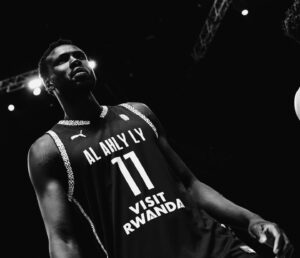
Jo-Lual Acuil has played his best basketball for Al Ahly Ly. Pictures: BAL

Jo Lual Acuil – Al Ahly Libya

The 2024 BAL MVP has built his 2026 season on pure interior dominance. Leading the BAL with a 58.9% field-goal percentage, he operates almost entirely around the basket, finishing efficiently with positioning, strength, and touch.

He averages 10.0 rebounds per game, consistently controlling the glass and generating second-chance opportunities. Defensively, he adds 2.0 blocks per game, anchoring the paint and providing one of the most reliable interior presences in the league.

Donovan Williams – Al Ahly Libya

Donovan Williams averaged 21.6 points per game and is ranked third in the league. It was the shooting splits that separated him from every other volume scorer: 56.8% from the field, 50.0% from three-point range, and 81.5% from the free throw line.

No player in BAL history had come this close to the 50-40-90 club, and Williams achieved these numbers while carrying a significant offensive load for a team that reached the final four.

Zachary Lofton – Al Ahly Egypt

Zachary Lofton arrived in the BAL as a proven scorer, but the 2026 season showed there was far more to his game than putting points on the board. Averaging 18.5 points per game, Lofton established himself as one of the league’s most dangerous offensive weapons while proving that high-volume scoring could still come with efficiency and control.

What elevated his game even further was his playmaking. His 5.3 assists per game revealed a player capable of reading defences and punishing teams that focused too heavily on stopping his scoring.

His standout performance of the season came on May 5, when he exploded for 32 points and knocked down 8 three-pointers in Al Ahly Egypt’s 85-65 victory over JCA Kings, a win that secured the team’s playoff spot.

Lofton’s 32 points were the highest individual scoring performance in the Sahara Conference that season, surpassing Jonathan Cisse’s 30-point outing

Zachary Lofton Al Ahly BAL 2026
Zachary Lofton brought his A-game for Al Ahly.

Mangok Mathiang – RSSB Tigers

Mangok Mathiang is the type of two-way player championship teams rely on. Averaging a double-double of 16 points per game and 14.5 rebounds per game, he is impacting games through effort, positioning, and physical presence.

While his defensive influence does not always appear fully in the box score, opponents constantly felt it around the rim. He alters shots, protects the paint, and helps control possessions on defence. Offensively, his 52.8% field goal percentage shows his ability to convert opportunities created through hustle and smart positioning

Sixth  Man: Chile Dundão – Petro de Luanda

If the All-Star team needs someone to steady the game when the starters rest, Childe Dundão is the ideal choice. His 6.0 assists per game kept the offence flowing smoothly, consistently finding open shooters and cutters with smart, well-timed passes.

What truly separates Dundão as a sixth man is his efficiency. He shot a BAL-best 88.0% from the free throw line and 44.1% from the field, making the most of every possession without forcing the action. His 2.1 steals per game also brought valuable defensive energy, disrupting opponents and creating transition opportunities before defences could recover.

Whether it was setting up a teammate or stripping a ball handler at half court, Dundão provided exactly what every championship-calibre bench needs: composure, efficiency, and energy in crucial moments.

Meet our All BAL team Read More »

Our top defensive players for BAL Season Six

WHEN Aliou Diarra patrolled the paint last season, the question of defensive supremacy in the Basketball Africa League felt almost predetermined. His absence in 2026 has opened up the race for a new name to claim the Dikembe Mutombo Defensive Player of the Year trophy.

Rim Protection and Rebounding Dominance

Start with the boards, because that is where defensive control is still most visibly won.

Mangok Mathiang produced one of the most statistically overwhelming defensive seasons the BAL has seen from a big man. His 16.0 rebounds per game in 33.1 minutes did not just lead the competition; it was bending it. Every missed shot became a dead possession for the opposition. Shot selection tightened, second-chance opportunities disappeared, and entire offensive structures had to adjust before the shot even went up. That dominance was not theoretical either. At one point, Mathiang pulled down 23 rebounds in a single game, finishing just two shy of the BAL record currently held by Nkosinathi Sibanyoni.

Nathi Sibanyoni BAL 2026
Nathi Sibanyoni was back to his best in the Kalahari Conference of this year’s BAL. Picture: The BTO

Nkosinathi Sibanyoni remains one of the most quietly complete defensive bigs in the competition. His 12.6 rebounds, 1.4 blocks, and 0.8 steals across 31.4 minutes reflect a player who consistently impacts possessions without needing dominance in a single statistical category. His 3.8 assists per game add another layer, not just ending possessions, but immediately converting them into transition value. That ability to turn defence into initiation is part of his defensive identity, not separate from it.

Jo Lual Acuil anchors his case through pure rim protection and presence. His 2.4 blocks per game led the conversation in deterrence, but his 12.0 rebounds ensured he wasn’t simply a help-side shot blocker waiting for opportunities. He was an active paint presence who made the restricted area functionally closed for long stretches.

Mouhamadou Diagne offers perhaps the most intriguing efficiency profile in the group. In just 24.8 minutes per game, he produced 2.8 blocks and 10.4 rebounds, alongside 1.4 steals, which point to defensive mobility beyond traditional rim protection. His impact is amplified when adjusted for minutes; a defender whose impact on a per-minute basis rivals anyone in the league.

The Guards and Forwards

The defence this season was also shaped by multiple guards who turned defensive pressure into a structural advantage.

Milton Valente led the entire competition with 2.6 steals per game, producing that output in just 20.0 minutes per game. That makes him the most efficient possession disruptor in the league by a margin. However, his defensive value is not limited to steals alone, he adds rebounds and occasional rim contests, forming a more complete defensive footprint than his role suggests. His impact is immediate: when he’s active, possessions don’t develop cleanly.

Childe Dundão brings a different kind of perimeter pressure. His 2.2 steals per game reflect constant anticipation and disruption, but his real value lies in rhythm distortion. He forces early decisions, breaks entry timing, and accelerates possessions into mistakes. Even when he doesn’t directly generate turnovers, he influences how they occur.

Ehab Amin represents the more controlled defensive archetype. The Egyptian’s 2.2 steals per game, combined with 4.2 rebounds from the guard position, reflect a defender who operates within structure rather than chaos. He removes options rather than gambling on outcomes, which makes his defensive value stable and repeatable across high-pressure possessions.

Chris Crawford remains the most unconventional profile in the entire conversation. His 7.6 rebounds per game as a guard are an outlier that fundamentally changes how his defensive impact is evaluated. While his steals numbers are modest relative to the leaders, his ability to consistently end possessions on the glass adds a different defensive dimension rooted in completion rather than disruption.

Mohamed Sadi further strengthens the perimeter argument as a guard who blends activity with structural discipline. His 7.6 rebounds per game and 1.0 steals reflect a player heavily involved in rotations, second efforts, and defensive containment. He may not dominate defensive moments in the highlight reel, but he consistently contributes to possession control.

The 2026 BAL All-Defensive Team

After weighing rebounding dominance, rim protection, steals, efficiency, and total possession impact, the 2026 All-Defensive Team takes shape as:

  • Mangok Mathiang (RSSB Tigers)
  • Nkosinathi Sibanyoni (Joburg Giants)
  • Mouhamadou Diagne (FUS Rabat)
  • Childe Dundao (Petro de Luanda)
  • Milton Valente (Petro de Luanda)
Milton Valente BAL 2026
New Petro guard Milton Valente has led the team in steals.

Mathiang and Sibanyoni anchor the frontcourt through control, consistency, and possession-ending dominance. Diagne earns his place through efficiency and defensive ceiling. Dundao and Valente give Petro de Luanda arguably the most disruptive perimeter defensive pairing in the competition, shaping possessions before offences can even fully settle.

Jo Lual Acuil, Ehab Amin, Chris Crawford, and Mohamed Sadi remain strong omissions in an unusually tight defensive field, each offering a distinct version of impact that could easily translate into selection in another season.

Defensive Player of the Year: Mangok Mathiang

In a season without a single, uncontested defensive identity, the DPOY conversation ultimately comes down to one question: who controlled possessions most consistently from start to finish? This is where Mangok Mathiang distinguishes himself.

Sixteen rebounds per game is not just statistical dominance but is also structural control in the high-stakes BAL environment. It removes second chances before they can develop into anything meaningful. His 23-rebound performance earlier in the season came within just two boards of the BAL record held by Sibanyoni, a reminder that his statistical ceiling is not theoretical, but historic in proximity.

Our top defensive players for BAL Season Six Read More »

The BAL semifinals stage is set

THE  upcoming BAL semifinals have familiar clubs and a new one debuting with a bang. Al Ahly of Egypt and Petro de Luanda are former champions, while Libya’s Al Ahly have been down this road, while Rwanda’s RSSB have had a memorable debut.

The Big Tip Off previews the match-ups taking place on Wednesday and Thursday at Kigali’s BK Arena.

Last season’s finalists, Petro de Luanda and the high-scoring Al Ahly Libya, renew their growing rivalry in a rematch of the 2024 BAL Final. While Rwanda’s RSSB Tigers take on former champions Al Ahly Egypt for a place in the title game.

With a place in the championship game and a ticket to the FIBA Intercontinental Cup on the line, the next two nights at BK Arena will be decided by more than talent alone. Experience, composure, and the ability to handle pressure when the margins get thin will shape which two teams move one step closer to continental glory.

Petro de Luanda vs Al Ahly Libya

This semifinal is a rematch of the 2024 BAL Final, the night Petro de Luanda lifted their first BAL crown at the expense of the Libyan upstarts. Two years later, the Angolan dynasty meets a reinvented Al Ahly Ly side that has transformed from runners-up into the most explosive offensive force in the competition.

The Angolan champions are the only team to have reached the BAL semifinals in all six seasons of the league’s existence. In the quarterfinals, they faced Tanzania’s Dar City, where they suffered an 88-80 defeat in the first leg. In the second leg, however, they responded like seasoned champions, producing a commanding 83-69 victory to overturn the aggregate score and book a sixth straight semifinal appearance.

The Libyan side enters the semifinal as the highest-scoring team in BAL 2026, averaging more than 100 points per game during the conference phase. The Libyans won their two-legged quarterfinal series against Club Africain 88-87 and 98-80.

Al Ahly vs Petro de Luanda BAL Semi-Final 2026
Petro de Luanda got the better of Al Ahly in the 2024 final and recent Conference stage in Pretoria. Pictures: BAL and The BTO

One of the biggest X-factors in this semifinal could be the contrast in depth and player workload. Petro’s bench completely dominated Dar City in the quarterfinals, outscoring them 51-16 in the first game and 34-5 in the second, highlighting the Angolans’ ability to maintain intensity through constant rotation.

In contrast, Al Ahly Ly relied heavily on their starters during their series against Club Africain, with each starter averaging around 34 minutes per game. While the Libyan side possesses the most explosive offence in BAL 2026, their heavy reliance on the starting unit could become a factor late in the game if Petro succeeds in slowing the tempo and turning the semifinal into a physical battle of endurance.

RSSB Tigers vs Al Ahly (Cairo)

RSSB Tigers survived a quarterfinal battle against Morocco’s FUS Rabat to secure their place in the semifinals. The Rwandan side laid the foundation for qualification with a dominant 95-72 victory in the opening game, giving themselves a comfortable cushion heading into the second game. However, in the second game, the Tigers were pushed to the limit, narrowly falling 99-98 in a tense encounter.

Despite the defeat, the one-point margin was not enough for FUS Rabat to overturn the heavy first-game deficit, allowing the Tigers to advance on aggregate and continue their remarkable BAL campaign.

Nuni Omot Al Ahly (Cairo) 2026
Nuni Omot, the BAL 2024 BAL MVP, is back with Al Ahly for the playoffs.

Al Ahly Egypt delivered a classic quarter-final comeback to secure their place in the BAL 2026 semi-finals. After falling 93-90 to Senegal’s ASC Ville de Dakar in the first game, they returned in game two with a commanding 87-76 victory to overturn the aggregate score and continue their pursuit of a second BAL title.

The Egyptian champions will need to contain Craig Randall II’s offensive production, as the Tigers look noticeably different without him. In their only loss against Nairobi City Thunder, Randall did not play. The American guard is currently averaging 37.7 points per game and played 40 minutes in the second game of the quarterfinals.

The rebounding presence of Mangok Mathiang and Oumar Ballo is another factor the Egyptians will need to manage.

It will be interesting to see whether Al Ahly Egypt will shoot from the outside, as they attempted only 8 three-pointers in the second game, making only 3. The inside defensive presence of Mathiang and Ballo in the paint might force them to.

Another area where the Tigers get points is off turnovers; they stole the ball 10 times in the second game of the quarterfinals series and scored 27 points off those turnovers. So the Egyptians will have to take care of the basketball.

Rebounding is another area the Egyptians should take advantage of because the Tigers shoot a lot from outside. However, they shot only 31% and 32% from beyond the arc in games one and two of the quarterfinals, respectively. So the Egyptians can capitalise on their misses.

The BAL semifinals stage is set Read More »

Club Africain’s structure vs Al Ahly’s new adjustments

A FOURTH versus fifth matchup in the combined standings sets up one of the most balanced quarterfinals of the competition, with Club Africain facing Al Ahly Benghazi in a series defined by contrasting styles and high individual talent on both sides.

Club Africain have emerged as one of the more composed teams in their first BAL appearance. Across the Sahara Conference, their identity has been built on structure, ball movement, and collective scoring responsibility, rather than reliance on a single dominant scorer. What has stood out is not just their execution. Their discipline in tight stretches; they rarely rush possessions, and they rarely drift away from their system, even when games become physical or momentum shifts.

The Abada factor

At the centre of their system is Omar Abada, who has established himself as one of the most productive guards in the competition. Averaging 19.2 points and 8 assists per game, Abada controls offensive flow while maintaining scoring efficiency. His ability to balance creation and scoring has been central to Club Africain’s consistency in tight games. He is also the player who naturally absorbs pressure possessions; late-clock situations, broken plays, and defensive mismatches tend to flow through him.

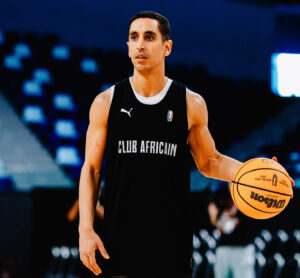
Omar Abada Club Africain Practice 2026
Omar Abada’s experience will be key against Al Ahly Benghazi. Pictures: BAL

Oussama Marnaoui remains one of their most important late-game options. His game-winning three-pointer against Al Ahly Egypt earlier in the competition highlighted his ability to deliver in high-pressure moments. A proven BAL champion, he brings experience and shot-making reliability in closing possessions. In a series likely to be decided by late execution, his presence becomes even more significant.

Jesse Jones Jr provides energy and pace on both ends of the floor. While not always the primary option offensively, his impact comes through activity, transition scoring, and defensive pressure that helps set the tone for Club Africain’s system. He is often the player who shifts the tempo, turning half-court possessions into early-offence opportunities.

Their strength lies in collective execution. Different players have stepped up across different games, reinforcing a “next man up” approach that has carried them through multiple competitive fixtures this season. Even when one scoring option is neutralised, another tends to emerge without disrupting the structure.

South Sudan duo and new addition, Marei, improve Al Ahly’s hopes

Al Ahly Benghazi, however, bring a significantly higher concentration of individual talent. Jo Lual-Acuil remains one of the most dominant interior forces in the BAL. The 2024 MVP continues to produce consistent double-doubles regardless of game context. His scoring efficiency, size advantage, and touch around the rim make him one of the most difficult matchups in the competition. He also alters how opponents defend the paint entirely, often forcing early help rotations that open perimeter looks.

Majok Deng adds a highly efficient scoring profile from mid-range and beyond the arc. His ability to convert at a high percentage, particularly in catch-and-shoot situations, allows Al Ahly to stretch defences and punish rotations. When he is hitting early, it immediately changes defensive spacing.

Jo-Lual Acuil AL Ahly Benghazi 2026 BAL playoffs
Jo Lual Acuil’s all-around attributes could pose a problem for Club Africain.

Assem Marei adds more championship pedigree to the Libyan club’s line-up, having won with Al Ahli Tripoli last year. His IQ in the paint is unmatched, and he keeps things simple, which suits a team that had struggled in the Conference stages in South Africa.

The key issue for Al Ahly has been consistency. The team did not begin the competition in rhythm, but improved significantly as the Kalahari Conference progressed, eventually showing signs of cohesion and structural balance. However, they are still searching for a complete 40-minute performance, stretches where their defence, transition offence, and half-court execution all align.

The absence of Jean-Jacques Boissy, the reigning BAL MVP, due to injury is a significant loss, particularly in late-game scoring situations and in creating perimeter chances. While Al Ahly have the depth to absorb his absence, his presence is difficult to fully replace in high-pressure moments, especially when possessions slow down, and isolation scoring becomes necessary. Club Africain’s advantage lies in their cohesion and clarity of system. Al Ahly’s advantage lies in individual ceiling and interior dominance. The series is likely to be decided by execution in key stretches rather than overall dominance, particularly how each team handles momentum swings across the two-game format.

The edge: marginal — Al Ahly Ly on the ceiling, Club Africain on the structure. This could be one of the most evenly balanced series in the quarterfinals.

Game 1: 23 May, 14:00 | Game 2: 25 May, 15:00

Club Africain’s structure vs Al Ahly’s new adjustments Read More »

Petro have the aces, but can Dar City spring a surprise?

THE BAL’s most established force meets its newest playoff presence as Petro de Luanda takes on Dar City in a quarterfinal series defined by experience, depth, and offensive firepower at opposite ends of the spectrum.

Petro de Luanda arrive not just as favourites, but as the most consistent organisation in BAL history. They are the only team to have featured in all six editions of the competition, reaching the semi-finals in every single season. Across that span, they have won the title once, finished runners-up twice, and built a record that reflects sustained competitiveness at the highest level.

Strong veteran presence and solid acquisitions

At the centre of that consistency is Childe Dundão, who is on the cusp of a career milestone: closing in on 500 career BAL points, a milestone previously reached in this very season by Chris Crawford and Abdoulaye Harouna during the Sahara Conference. The AfroBasket MVP continues to operate as Petro’s primary tempo setter, impacting games through scoring, playmaking, and defensive pressure. He averaged 18.8 points, 5.2 assists, and 2.2 steals during the Kalahari conference and will carry that form into the BAL playoffs. His control of possession remains one of Petro’s most defining advantages in half-court situations. Alongside him, Aboubakar Gakou remains one of the most reliable two-way forwards in the competition. His ability to stretch the floor, defend multiple positions, and hit timely shots makes him a constant mismatch problem.

Petro’s recent additions of Raphiael Putney and Chasson Randle have only strengthened an already loaded roster. Putney brings size, rim protection, and interior scoring that will complement Petro veteran, Yanick Moreira and allow Petro to shift lineups without losing defensive structure. Chasson Randle provides scoring depth and perimeter reliability. With NBA experience and a strong reputation as a three-point shooter and secondary creator, he adds another layer to Petro’s already deep guard rotation. His presence allows Petro to maintain offensive pressure even when primary actions are disrupted.

Aboubakar Gakou BAL playoffs 2026
Aboubakar Gakou is a scoring threat for Petro. Pictures: BAL

Balance is key for Petro

What makes Petro particularly dangerous is their balance. There are very few weaknesses to exploit. They are arguably the most complete team on both ends of the floor in this year’s competition, and arguably in BAL history. Their depth is unmatched, and many of their core players lifted the AfroBasket title just last year, further reinforcing their championship mentality.

They have not answered the question of depth

Dar City, however, arrive with a different profile. The Tanzanian team is the first from East Africa to reach the BAL playoffs, securing qualification after an inconsistent performance in the Kalahari Conference held in Pretoria. Their identity is built around offensive production, individual scoring bursts, and pace, but their success is heavily dependent on the availability and output of their foreign players. At the centre of that structure is David Benoit Michineau, who remains their most important offensive weapon. The guard averaged 28.7 points per game in the Kalahari Conference, the second-highest scoring mark in the entire BAL season. His performances included a 39-point outing against Nairobi City Thunder and an efficient 27-point display against the Johannesburg Giants. When fully fit, Michineau is capable of dictating games through scoring and playmaking, particularly in transition and pick-and-roll situations.

Alongside him, Nisre Zouzoua provides consistent perimeter scoring. A streak-based shooter with BAL experience from ABC Fighters and FUS Rabat, he remains a constant threat from beyond the arc. His ability to score in clusters makes him one of Dar City’s most important momentum players, particularly in short stretches where games can shift quickly. 

Michael Foster Jr. adds interior scoring and physicality. His standout performance against Al Ahly Libya, 37 points, 8 rebounds, and 4 blocks, highlighted his ability to impact games on both ends of the floor. He provides Dar City with a second scoring option in the paint and is often the difference between offensive balance and over-reliance on perimeter creation. In the paint, Egyptian centre and 2021 BAL champion with Zamalek, Anas Mahmoud has signed for the playoffs, and his rim protection gives Dar City a chance to minimise the opposition clubs’ scoring chances.

David Michineau BAL playoffs action
DarCity floor general David Michineau will pull the strings for the Tanzanians.

The challenge for Dar City remains depth and consistency. Their system is heavily reliant on their top three scorers, and any dip in production from one or more of them significantly affects their competitiveness. This becomes particularly relevant against a Petro side known for sustained defensive pressure and depth of roster.

The two teams already met earlier in Pretoria, where Petro recorded a 100–75 victory. That game exposed the gap in depth and execution, particularly when Dar City’s offensive rhythm broke down under defensive pressure. For Dar City to remain competitive across both games, its margin for error is minimal. They will need sustained scoring from Michineau, efficiency from Zouzoua, and a controlled interior presence from Foster to keep the series within reach.

The edge: Petro de Luanda, based on depth, experience, and structural consistency across both ends of the floor.

Game 1: 23 May, 17:00 | Game 2: 25 May, 17:00

Petro have the aces, but can Dar City spring a surprise? Read More »

BAL Playoffs: Al Ahly Egypt vs ASC Ville de Dakar

THE Basketball Africa League (BAL) Season 6 playoffs tip off on Friday with a former champion, Al Ahly of Egypt, looking to return to the throne. Ahly’s opponents, Senegal’s ASC Ville de Dakar, in their second BAL season, made it past the regular season for the first time and are looking to make strides in the playoffs. 

For the first time, the quarterfinals will be decided by two games. Al Ahly, the 2023 champions, return to the same BK Arena where they once lifted the trophy. 

When these two met in the Sahara Conference, the game was very tough. A back-and-forth fight that stayed close right to the end. Al Ahly escaped with a 76-72 win, but Dakar proved they can hang with the conference’s best. Now they meet again, this time with everything on the line across two games instead of one.

New Playoff format

The quarter-finals are played as a two-game series. Both teams will play each other twice, and the one with the higher total score across both games moves on to the semifinals. If the aggregate score is tied, overtime will be played to determine the winner. 

Now coaches have to think differently: do you push hard in Game 1 or save energy for Game 2? Do you risk foul trouble early, knowing there’s another game coming? Every point matters, even in a loss.

The four quarter-final winners then move on to single-elimination semi-finals, with the two winners there meeting in the championship game and the two semi-final losers playing for third place.

Ater Majok Ville de Dakar BAL 2026
Ater Majok brings energy to both ends of the floor. Pictures: The BAL

Al Ahly Egypt

Al Ahly finished second in the Sahara Conference with four wins and one loss, posting a +38 point differential – the best in the Sahara Conference.

Their only defeat was a one-point heartbreaker to Club Africain, 68-69, in a game that came down to the final seconds. But they showed their resilience, and a day later, Al Ahly bounced back to beat this same Dakar. That win proved the Egyptians could handle adversity and find ways to close out games.

ASC Ville de Dakar

For ASC Ville de Dakar, the Senegalese champions arrive as the seventh-seeded team with a 3-2 record and a +16 point differential, stepping into uncharted territory with their first-ever playoff appearance and an opportunity to become only the second Senegalese team to reach the BAL semi-finals.

Their path to Kigali was anything but smooth. Two straight losses to Club Africain and Ahly put the pressure on, and Dakar responded by winning their final three games to earn their place in the playoffs.

They’re the third Senegalese team in BAL history. Back home, they’re back-to-back Senegal champions (2024 and 2025).

Why Al Ahly Could Win

Al Ahly could win this series. They have the psychological edge following the win over ASC during conference play, and they have the best shooters in the field. Zachary Lofton and Kevin Murphy can both go off on any night. Lofton dropped 32 against FUS Rabat, and Murphy averages 20.7 points on elite efficiency. If both of them shoot well from three across two games, this could end fast. The two-game format rewards the deeper, more explosive team, and that’s Al Ahly.

Zach Lofton Al Ahly BAL 2026
Zach Lofton put up some good numbers at the Sahara Conference.

Why Dakar Could Pull the Upset

But don’t count Dakar out. They have three players who have won at the highest level. Solo Diabate has two BAL championships (2021 and 2022) under his belt, Ater Majok won the title and was the defensive player of the year in 2022, and Alex Toupane has an NBA championship. They already proved in Rabat that they can hang with Al Ahly for 40 minutes, even leading and tying the game in the fourth quarter.

X-Factors to Watch

Several elements could swing this series. Foul trouble for Majok or Diabate would negatively affect Dakar’s chances to drop immediately; they cannot afford to play significant minutes without their defensive anchor or floor general.

Three-point variance is critical. As Dakar shooting 35% or better from deep makes them competitive, while shooting below 25% puts them in serious trouble, given their inconsistent 5-for-21 performance against Club Africain.

The signing of Cape Verdean point guard Williams Tavares by AS and the 2023 BAL MVP Nuni Omot rejoining Al Ahly will raise the competitive bar for both teams.

Bench contributions matter significantly in a two-game format, and whichever team’s reserves can provide more points across two games will gain a major advantage.

Finally, the coaching battle between Gavriel and Gaye will test who can make the better in-series adjustments between Game One and Game Two.

BAL Playoffs: Al Ahly Egypt vs ASC Ville de Dakar Read More »

From one hoop in Potchefstroom to the BAL stage

AS the Basketball Africa League (BAL) switches gears from conference play to the Playoffs in Kigali, it is no surprise that one of the eight teams that have punched their ticket to the heart of Africa is Al Ahly Egypt.

On a roster built around experience, continuity, and championship ambition sits a player whose journey began at the opposite end of the continent: Osayimwen Osifo.

The South African forward, part of the Austin Spurs, the developmental affiliate of the San Antonio Spurs, entered the Basketball Africa League this season through the league’s collaboration with the NBA’s development pipeline. In a tournament defined by condensed schedules and immediate expectations, Osifo carved out a role built on impact rather than volume, finishing as the Egyptian side’s leading rebounder at 6.6 rebounds per game, alongside 7.8 points and 1.6 blocks across the Sahara Conference.

His most complete performance came against the Maktown Flyers: 20 points, eight rebounds, two blocks, an outing that highlighted his ability to influence both ends of the floor within a system that prioritises efficiency and discipline.

In an interview with The Big Tip Off, Osifo discussed his introduction to basketball, his experience with the Austin Spurs, and his introduction and impressions of the BAL.

Osayi Osifo BAL 2026
Osayi Osifo has quickly adapted to the pace of the BAL. Pictures: The BAL

The Sport That Found Him

Growing up in South Africa, the sporting ambitions of most boys pointed in a very specific direction. “You want to be good at soccer, cricket, rugby and track,” Osifo says. “Those are the things that are going to give you clout.” He was no different. At Potchefstroom Boys High School, he had found genuine traction in athletics and rugby, competing at a national level, his afternoons accounted for. Then a finger injury sidelined him mid-season, leaving a gap in his schedule to fill.

The school had one basketball court, old, built around 1960, fitted with a single hoop. With one arm still in a cast, he went out there. He played against the boys who typically occupied the court, and something clicked, not through effort, but through ease. “I noticed, like a natural instinct, I was better than most of the guys I was playing with.” For a young man who had worked hard for every breakthrough in athletics and rugby, finding something that came naturally felt like a different kind of gift.

Once the cast came off, he found himself falling in love with the game. He started to experience a significant growth spurt, quickly becoming the tallest boy in his class and eventually the tallest in the entire school. This transformation came just in time for a visit from his uncle from Dallas, a man who saw his nephew and recognised the potential that the South African system was ill-equipped to nurture. Within months, Osifo developed a plan: finish tenth grade, move to Texas, and explore the possibilities that basketball could offer him.

The conversation at home

It is worth pausing on what that conversation must have looked like at home. African parents carry a particular reputation when it comes to their children’s futures. The script usually reads: medicine, law, or engineering, and deviating from it requires either remarkable courage or remarkable evidence. Osifo is measured about it. “My parents have always supported me,” he says. “Going to the States, I think they knew that in what I wanted to do, there was a big opportunity.” But something is telling in how quickly he adds what came next: “I really wanted it for myself, to make something out of the opportunity I was given.”

The acknowledgement that the opportunity had to be earned, not just given, suggests he understood what was at stake for the people who had backed him. He left in December 2015. In January 2016, he was suiting up for Junior Varsity at McKinney Boyd High School in Dallas, which gave him a taste of humility. “I thought I was really confident,” he says. “But when I came to the States, I definitely got humbled, just having to learn the basics and going from streetball to organised basketball.”

What followed were hours after school, patience from coaches, and the slow work of converting instinct into technical fluency. By the following year, he was on varsity. “It’s always been a learning process,” he says. “Even when you watch my games, I’m still making mistakes.”

Osayi Osifo Al Ahly BAL 2026
Osayi Osifo is ready to help Al Ahly win a second BAL title.

Building inside the Spurs system

After college, Osifo entered the NBA’s development ecosystem through the Austin Spurs, widely regarded as one of the most aligned pipelines in the G League. The environment offered exposure to NBA-level coaching, high-density talent pools, and a culture built around incremental improvement. “It’s one of the best organisations in the world,” he says. His time in the system included playoff runs, summer league appearances, and training camp exposure, one season culminating in a franchise-high win total. Osifo has since become co-captain, and even now, he still resists framing any of it as finished.

All eyes on Al Ahly

Since graduating from college, Osifo had wanted to play in the Basketball Africa League. An earlier opportunity with a South African team had come and gone without materialising, interest from the Cape Town Tigers in the league’s early days that never quite aligned. However, the pathway remained open, particularly through the G League’s integration with BAL rosters, and this season, through Al Ahly, everything converged.

The process is not entirely within a player’s hands. The G League makes the pool known to eligible teams. Players whose domestic seasons have concluded can enter their names, and clubs select based on fit, timing, and mutual interest. Several teams across both conferences expressed interest in Osifo, but contracts had to align, and the timing had to work. “The last team to reach out to me was Al Ahly,” he shared. “I spoke with the coaches. The staff is great. And the championship mentality they have, that’s something I wanted to be a part of.” He signed within a week of the deadline and was on his way to join the North African side.

What Osifo found when he arrived was not what development basketball had prepared him for. The BAL is not a league particularly built around patience with young players. It is built around professionals, men with international résumés, years of competitive repetition, and very little interest in waiting for anyone to find their feet. “In this league, 30 is a very young age,” Osifo says. “You’re playing against vets. You can’t teach experience.”

His role inside Al Ahly’s system reflected that reality. This was not about developmental upside or long-term projection; it was about functional contribution, immediately. Defensive presence, rebounding, energy off the bench or from the start, whatever the game demanded. “It’s requiring a certain level of professionalism,” he shared. Preparation had been deliberate even before the conference began: a training camp in Egypt where time was treated as a scarce resource. “We were really intentional: meals together, video sessions, everything.” Al Ahly’s objective was clear from the get-go. “Championship.”

Osayi Osifo BAL 2026
Osayi Osifo says support from family and friends has meant everything to him.

Into the water

His introduction to the Sahara Conference play came against Club Africain, and it announced him in the way that matters most at this level, physically. A powerful dunk early in the game rippled across broadcast and social platforms, the kind of moment that tells a league you are here. But the result was a narrow loss, and Osifo is honest about what that first game actually was. “It was really just throwing us into the water,” he says. “Testing us.”

The response was what separated Al Ahly from a team still assembling itself. Adjustments were made quickly, defensive structure tightened, communication became sharper, and roles became clearer. “We’re learning each other on the fly,” he says. By the time the conference concluded, the work had translated into results: a playoff berth secured, Kigali confirmed, Al Ahly’s position as one of the tournament’s genuine contenders intact.

If you can make it out here

Osifo had followed the league from a distance for years. He had wanted to be part of it since college. And now that he is inside it, the verdict is unambiguous. “It’s blown it out of the water,” he says. “The competition level, the professionalism, the fans, it feels like playoffs every night.”

There is something about the BAL’s intensity that is difficult to prepare for without experiencing it. The margins are thin. The format leaves no room for gradual warming up. And the visibility, within Africa and increasingly beyond it, is real in a way that changes how the games feel. “If you can make it out here,” Osifo says, “you can make it anywhere.”

When asked what he is most proud of, Osifo does not reach for statistics or milestones but instead points to something which carried him from his earliest days. “The resilience,” he says. “And the support I had from back home.” The school, the friends, the family that kept him tethered to where he started, even as the distance grew. “If not for the support of family, different people from different walks of life, it’s all about togetherness. That’s something I learned from back home.”

From Potchefstroom to Texas, from the G League to the BAL playoffs, the journey has not followed a single system. It was a series of crossings, each one demanding a different kind of adaptation, highlighting that where you start is not a limitation on how far you can go.

From one hoop in Potchefstroom to the BAL stage Read More »

Chinyelu talks amazing college career and NBA dream

RUEBEN Chinyelu speaks proudly of being Nigerian and of flying his country’s flag on the NCAA stage. It’s a path several of his compatriots have walked, but Chinyelu is distinguished by winning an NCAA championship and earning individual accolades with his college team, the Florida Gators.

The 6ft10 (2,08m) forward follows a path first navigated by Nigeria-born NBA legend Hakeem Olajuwon, who went through the American college system and won two NBA titles with the Houston Rockets in the mid-90s. It’s a legacy Chinyelu celebrates, and he hopes to be on the same stage where Olajuwan’s name once illuminated.

Speaking to The Big Tip Off via the Zoom platform at his Florida base, he reflected on the court life lessons he learnt before tasting success with the Gators and acclimating to life far away from home.

“It feels good to leave home, enter a new environment, and represent your country abroad. I am proud of where I come from, and knowing that legends like Hakeem Olajuwon dominated, and I am doing my part… That is beautiful,” Chinyelu said. “I aim to represent my country and embrace being Nigerian. I’m grateful to be Nigerian.”

Stormy days in Washington

Before becoming a Gator in 2024, the NBA Africa Academy alumnus spent a season at Washington State, where he committed a year earlier. Off his time in the US capital, he says he learnt resilience, especially when things did not go according to script.

“It’s another side of the country. It’s really cold. Lucky for me, I have adaptive skills, which allowed me to settle in a different environment, and that was an anchor for me. It helped me get through that time,” said Chinyelu. “Washington played a huge part in my growth… Just learning to be resilient. Knowing things are not always going to be rosy. There will be storms and sunshine. And through it all, you have to stay the course.

“I think Washington prepared me for where I am right now. Every other part of my journey, even before Washington State, also contributed to where I am now. From Nigeria, where I started playing basketball, to the NBA Academy (Senegal) and playing in the BAL. Without those experiences, I would not be successful.”

Rueben Chinyelu Florida Gators NCAA 2026
Rueben Chinyelu says the Gators family environment fuelled the team’s and his success. Pictures: Hannah White and Maddie Washburn

Striking gold with the Gators

Chinyelu’s two years at Florida were a golden period of his college career, from a team and individual perspective. Looking back on Florida’s NCAA championship run, which was the university’s third basketball title, Chinyelu says that the success was due to the “family environment” built within the team. It’s a culture that permeated the team this year.

“When we won the championship, it was so wonderful. All the work put in… Seeing guys happy, wanting to play together and celebrating one another’s success was key for us. It kept us going. It kept us thriving, no matter the circumstances. Our team chemistry last year was unmatched,” said Chinyelu. “It was just a family environment. Everybody loves each other. We check on one another. It’s like one big family. Things like that make a difference… Because we have guys coming from different parts of the world, and giving them a family environment plays a huge part in the team being successful.”

While the Gators fell short of the exploits which saw them win the NCAA title last year,  Chinyelu intimated that the family dynamic within the team allowed him to have an outstanding season this year (2025-2026), leading to him scooping five individual awards: SEC All-Defensive Team, Second-team All-SEC, SEC Defensive Player of the Year, NABC Defensive Player of the Year and Naismith Defensive Player of the Year.

“This year was no different. Everyone enjoyed playing together. It’s just that it was a breakout for me. I worked hard and did all I could,” said Chinyelu. “When it comes to winning the individual stuff, it was my teammates and them playing well with me, and the way I play with them. For any player to be successful, it’s the collective. Basketball is a five-man game. I would not have done it without them, so I share those awards with the team. They are our awards.”

Rueben Chinyelu Gators 2026
Rueben Chinyelu hopes his time at the Gators can open the doors to the NBA.

Eyes on a bigger prize

His season had already ended, and after the interview with The Big Tip Off, he announced that he was declaring for this year’s NBA draft (set for June 24), while keeping the option to return to college. While he returned to college after declaring last year, this time around, he seems confident of a future in the NBA.

“Once I make it to the league. I want to be able to play long in the league,” said Chinyelu. “Once I am done, I want to help shine a light on Africa. Even if it’s to help create infrastructure or give back to the community. There is a ton of talent in Africa, but a lack of opportunity and resources. So once  I am in a good position, I want to do everything I can.”

Chinyelu continued: “You have to start somewhere. You know how it is. If it is difficult here, in Africa, it’s 200 times more difficult. So that is why I want to do as much as I can for the African continent to help pave a way for another generation.”

Should he realise the dream of playing in the NBA, Chinyelu would join former NBA Academy Alumni and teammates Ulrich Chomche from Cameroon and South Sudan’s Khaman Maluach in being drafted to the elite league. On Maluach, a 10th pick in last year’s NBA Draft, Chinyelu recalled the work they put in together during the Academy days and how fate did not allow their colleges to face off in the NCAA final. Maluach’s Duke team fell short against the losing finalist, the Houston Cougars.

“Last year, when we made the final four, I was hoping I would play Khaman (in the final),” said Chinyelu. “He is my guy. We played together at the Academy for some years. So, I hoped he would make it to the final. It was going to be so much fun.

“I am so happy he got drafted. Super happy. Super proud of him because I remember the late-night and early morning work we put in to get better. That moment meant a lot. Not just for me, but the academy as well. I am proud of him.”

Chinyelu’s heart is in the right place, and whatever decision he makes to either return to Gainesville, Florida, for his final year of college or to pursue an NBA career, his story of resilience and adaptation is an example to follow.

Chinyelu talks amazing college career and NBA dream Read More »

A look back at the Sahara Conference

THE BAL Sahara Conference in Morocco saw the final four teams, Club Africain, Al Ahly, AS Ville de Dakar and Conference hosts secure their playoff spots for Kigali, Rwanda, from 22-31 May. The Big Tip Off writer Sandisiwe Msibi shares her insights on the concluded Conference.

What unfolded was one of the most competitive and unpredictable conference campaigns in BAL history, defined by overtime thrillers, record-breaking performances, injury setbacks and a dramatic final-day playoff race.

Six teams from across North and West Africa battled for four coveted playoff spots.

Final Standings

The Sahara Conference produced a fascinating final table, with the fourth playoff spot decided on the final day.

Club Africain secured the top spot with a 4-1 record, becoming the first team from the conference to punch their playoff ticket on April 29. The Tunisian debutants exceeded all expectations, while hosts FUS Rabat and former champions Al Ahly rounded out the top three. The last playoff spot was secured by Senegal’s champion, ASC Ville de Dakar.

Ehab Amin Al Ahly BAL 2026
Ehab Amin and Al Ahly showed the pedigree that saw them win the 2023 BAL title. Pictures: Getty and BAL

Records & Notable Numbers

There can’t be a mention of this conference without mentioning close games, and they were delivered in abundance. The final standings were ultimately determined by which teams could execute under pressure and which crumbled when it mattered most.

The four playoff-bound teams, Club Africain, Al Ahly, FUS Rabat, and ASC Ville de Dakar, combined for a 12-5 record in games decided by 10 points or fewer. While the bottom two, Maktown Flyers and JCA Kings, went just 1-8, their inability to close out tight contests proved the difference between postseason basketball and an early exit.

Most Team Rebounds in a Game

The JCA Kings made history even in defeat. In their 79–74 overtime loss to Club Africain, the Ivorian champions grabbed 65 rebounds, tying the BAL record previously set by the Rivers Hoopers in May 2025. What made it even more remarkable: the Kings had already pulled down 60 rebounds by the end of regulation. Four players, Chris Crawford, Babatunde William, Chris Echui and Cheikh Diong, finished with 10 or more rebounds each. Their 23 offensive rebounds were among the highest in league history

A New Addition to the Winless Club

The JCA Kings finished 0–5, joining an unfortunate list of BAL teams that have gone winless in conference play: AS Police from Mali in 2021, GSP from Algeria in 2021, GNBC from Madagascar in 2021, Kwara Falcons from Nigeria in 2023, Stade Malien from Mali in 2025, and the Johannesburg Giants from South Africa in 2026.

A League First: 500 Career Points

Two players crossed the 500-point threshold in BAL history: Abdoulaye Harouna of FUS de Rabat became the first to do so during the 2026 Sahara Conference. Entering with 490 career points and surpassing the milestone in his second game to finish with 532 points across 31 BAL games, Chris Crawford of JCA Kings joined him as the second member of the exclusive club, having already reached 500 points before the 2026 season.

Solo Diabate AS Ville de Dakar BAL Sahara Conference 2026
Solo Diabate will make his sixth BAL playoff appearance in the colours of AS Ville de Dakar.

Club Africain (4-1)

The biggest story of the Sahara Conference has been Club Africain’s stunning performance. The Tunisian champions, making their first-ever BAL appearance, have been nothing short of sensational.

Led by the incomparable Omar Abada and bolstered by the inside presence of Drew Cisse and Mohamed Hadidane, they combined disciplined defence with clutch offence. Their only stumble came against FUS Rabat in the final game, but by then they had already secured the conference’s top seed.

Al Ahly Egypt (4-1)

The only former BAL champion in the conference, Al Ahly, lived up to their pedigree. Despite an opening-night stumble against Club Africain (68–69), Al Ahly responded with four straight wins to claim the conference’s second seed.

Their roster depth proved decisive, with Kevin Murphy leading the team at 20.7 PPG and Zach Lofton dropping a conference record 32 points in one game. The double-OT win over FUS Rabat, 77–71, demonstrated their mental toughness. They enter the Kigali playoffs as the team to beat. That double-overtime thriller was Al Ahly’s intense game against FUS de Rabat. The Egyptian champions pulled out a 77–71 victory after two extra periods.

FUS Rabat (3-2)

The hosts endured a rollercoaster ride at the Sahara Conference. After starting 2-0, they suffered a stunning one-point loss to ASC Ville de Dakar and lost three key players, Abdelhakim Zouita, Ilias Aqboub, and Abdoulaye Harouna to injury. Yet they showed their championship pedigree by bouncing back to defeat unbeaten Club Africain in front of a packed home crowd. With Kuany Kuany, Mouhamadou Diagne, and Anthony Pritchard stepping up, FUS Rabat proved their depth and resilience. Their third consecutive BAL appearance has seen them evolve from quarterfinalists to genuine title contenders.

ASC Ville de Dakar (3-2)

Ville de Dakar authored one of the great turnaround stories of the conference. After early losses to Club Africain and Al Ahly, they won three consecutive games, including the clutch 79–62 victory over Maktown Flyers in the winner-take-all finale to snatch the last playoff spot. After missing the playoffs last season, this qualification felt like redemption.

FUS Rabat players BAL 2026
Ayoub Nouhi and Anthony Pritchard ensured FUS Rabat will compete in their third playoffs.

Maktown Flyers (1-4)

So close, yet so far. The Nigerian champions showed flashes of their potential. Their only win came against the winless JCA Kings, 88–67. A lack of bench depth and empty scoring runs, particularly in fourth quarters, proved fatal.

Al-Wajid Aminu was their standout performer, but it wasn’t enough. They became only the second Nigerian team to miss the BAL playoffs, following the Kwara Falcons in 2023.

JCA Kings (0-5)

The JCA Kings’ first BAL campaign will be remembered as a learning experience rather than a competitive one. The Ivorian side failed to secure a single victory across the conference, joining the Johannesburg Giants as the two winless teams this season.

While the results were disappointing, the exposure to continental competition should serve as valuable development for a club still building their programme. Competing against established powers like Al Ahly and FUS Rabat provided a measuring stick for where Ivorian club basketball stands.

The Sahara Conference has set the stage for what promises to be an electrifying BAL Playoffs in Kigali, Rwanda, from May 22 to 31. With Club Africain, FUS Rabat, Al Ahly, and ASC Ville de Dakar joining Kalahari Conference qualifiers RSSB Tigers, Petro de Luanda, Al Ahly Ly, and Dar City, the race for the 2026 BAL championship is wide open.

A look back at the Sahara Conference Read More »

Meeting with father opens doors for Cisse

AMERICAN-born Jonathan Cisse had grown up without his father for most of his life, so when he met him for the first time two years ago in Côte d’Ivoire, as stated in a social media post, it proved life-changing on two fronts.
 
It was a chance for him to build a relationship with his father, who is from Côte d’Ivoire, and it opened doors for his playing career in the West African country.
 
The 26-year-old has since become part of Côte d’Ivoire’s basketball fabric, having donned the Elephant’s orange jumper in March at the 2027 World Cup Africa Qualifiers in Senegal. He continued his club career on the continent with JCA Kings, whom he helped qualify for the BAL last year, and he is part of their ongoing BAL debut campaign.
 
This meaningful personal milestone also intersected with his growing career. Reflecting on this turning point, he says that meeting his father was “perfect timing”, and it became a launchpad for his basketball journey on the continent.
 
“It was special. Just growing up my whole life, not knowing my dad… It was perfect timing when I met him,” said Cisse. “I was coming out of college, starting my professional career. He kind of mentioned at first that I should look into playing for the national team.”
 
In addition to his father’s encouragement, he says playing in Europe drew the attention of the national team selectors.

Jonathan Cisse FIBA World Cup Africa Qualifiers 2027
Jonathan Cisse made his debut for Côte d’Ivoire at the World Cup Qualifiers. Pictures: FIBA and Getty

Looking back on the lead-up before his debut, Cisse explained, “First year in Cyprus (2024-25 season) opened the doors. People started noticing my game. The director of the Ivorian national team said, ‘maybe you should consider’. This year, it finally happened,” said Cisse. “It was an honour when it finally happened, and seeing what it means to the people of the country. It was a special experience.”
 
On the court, Cisse finally made his debut for Côte d’Ivoire this year after missing out on the AfroBasket last year. He was part of the exceptional Elephants team, which went on a tear in the second window of the World Cup Africa Qualifiers, finishing with a 3-0 record in Group B. The fine start to the campaign has Cisse eager to continue the national team’s momentum in the next round of qualifiers (2-5 July in Senegal).
 
“I’m looking forward to the next window. I think we have a very solid team. It’s been great. My experience of missing the (2025) AfroBasket was disappointing. I was not cleared in time to play after getting to know and train with everybody,” said Cisse, who averaged 14 points, 3.7 rebounds and 3 assists in the second window between February 26 and March 1. “Now that I have played with them and everybody knows each other, I am excited. I think we can do something special. I am excited for what’s to come.”
 
For Cisse, turning out for the JCA Kings led to him picking up the finer points of the game in Africa from legendary player and current club coach Stéphane Konaté.
 
“It’s a different style of basketball from what I am used to, but it’s been great just doing what I love, which is playing basketball. I am having fun with it, working hard on and off the court, so I can continue to grow as a player and as a teammate,” said Cisse. “I am learning from Coach Steph. I know he had a great career with the national team. He’s been helping out a lot too, so it’s been a great experience.”

Jonathan Cisse of JCA at BAL 2026
Jonathan Cisse still holds hope JCA can make the playoffs.

What has been forgettable so far is their BAL debut, as JCA fell 0-3 in the Sahara Conference, which has heightened the pressure on Cisse and his teammates to win their two remaining games so they can have a chance of qualifying for the playoffs in Kigali. Before the tip-off of the Sahara Conference, Cisse said the team was looking forward to their debut.
 
“I think it’s good spirits… The practices have been intense. High level. We have been going at it and stuff. I think everybody is excited to make their debut,” said Cisse.  “I think we are going to shock a lot of people. I know not many people are expecting us to do much, but we are excited, hungry, and everybody is ready to show what we can do.”
 
Things have not gone according to script, but Cisse has not lost hope of a place in the playoffs despite a third loss in a row, a 79-74 defeat to Club Africain on Tuesday, in which he scored 30 points and dished out 7 assists.
 
“We still have two games left. We need to keep our heads high. We are not satisfied. We are gonna come out and compete in these next two games,” said Cisse of JCA’s dire situation at the post-match press conference.
 
Like in life, Cisse understands there are highs and lows, and the latter times require a team with unshakable resolve to overcome adversity.

Meeting with father opens doors for Cisse Read More »

×