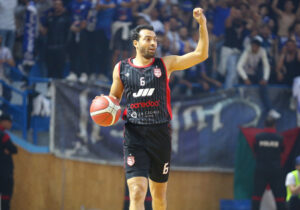
Author name: Manyehlisa Lehohla

African basketball enthusiast, founder and editor of The Big Tip Off and a freelance writer.

Niang thankful for education and the doors it opened for him

THIERNO Ibrahima Niang divulged that in his youth, he did not take basketball seriously until a life-changing situation altered his attitude. It led to an opportunity, and along the way, it presented some significant life lessons for him. While fortunate to have pursued a basketball career, he came to terms with the fragility of his body and how that could have stood in the way of his dreams.

Niang, currently on the books of ASC Ville de Dakar, had to deal with injury as a player for the University of Wisconsin-Milwaukee. It was a sobering moment in his life, which made him understand the value of education. But it was not the first place where that wisdom was imparted to him – that honour goes to the Seed Academy.

The Seed Academy, founded by the BAL president Amadou Gallo Fall, has former NBA players Gorgui Dieng, Saer Sene and this year’s BAL MVP Jean Jacques Boissy as some of its alumni. The former Senegal international says it (Seed Academy) offered him a broader perspective on life, which saw him go from an aimless juvenile to being moulded and shaped into an ambitious young man.

“If you ask me, education saved my life. It was at the Seed Academy where I understood how important it was,” said Niang about the program located in Thies, Senegal. “When they were recruiting me over there, I was not focused on school. I did not like school. Once I realised that basketball is something I loved and wanted to succeed in, I went back to school.

“They really made me understand that education is the thing in life. Basketball, you can play it for 10 to 20 years if you are lucky. But could you get injured… Tear an ACL or something else… Basketball is not safe – you need something to fall back on. And that thing is education. I feel it’s more important than basketball.”
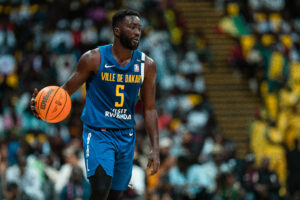
Thierno Ibrahim Niang AS Ville de Dakar
Thierno Ibrahima Niang wants the team to give improved performances at next year’s BAL. Pictures: Getty Images and Supplied

The 35-year-old Niang, who graduated with a degree in information studies, reflected on the stress fracture in his lower back, which he feels somewhat diminished a more promising career. At the time, Niang revealed to the media that he thought it (the injury) would cut short his career, but it cemented his notion of athletes obtaining education.

“It was a scary season for me. It was my second season in college. I think the injury stifled my career a bit. Maybe if that didn’t happen, I’d be telling a different story,” said Niang. “What I can say is that the biggest takeaway I got from it is school. Sports are sometimes tricky. You will never know when it’s your last day on the court.

“What saved me was school. I had a chance to complete my degrees. Regarding the injury, I managed to fight back and have a career, it’s not how imagined it, but I am cool about it.”

Niang, who played in the 2014 FIBA Basketball World Cup for the Lions of Teranga, has gone on to enjoy some success in the pro ranks in Spain, winning a LEB Oro (second division) title with Gipuzkoa in 2017. The guard also has a decent trophy haul in his home country, Senegal, where he has played since 2018.

He has turned out for Dakar Université Club Basketball, AS Douanes, Jean d’Arc and his current team, AS Ville de Dakar, whose men’s team is 10 years old. He feels the standard of club basketball has improved since his return.


View this post on Instagram


A post shared by Thierno Ibrahima Niang (@tniang10)

“It’s been great. If I compare this year to the year I started, the level is not as good as it is now. These kids are willing to return after studying in the United States. You have to give credit to the BAL,” said Niang, a four-time Senegal National 1 Masculine (NM1) winner. “We all wanted to play at a high level in places like the United States and Europe. I feel it (the BAL) has changed things in Africa. It has helped to lift the domestic leagues on the continent because every club wants to be part of it.

“The BAL took things to another level these last five years. It can only go up from where it is now.”

After winning the Senegal championship with AS Ville de Dakar, Niang will be heading back to the BAL next year. While Niang enjoyed his second BAL, he hopes next year’s campaign will be far better than their debut between April and May. The West African club, unfortunately, fell in the Sahara Conference stage on home soil.

“It was a great experience. This was my second one – I played in season two. It was a great season for my team, which is 10 years old,” said Niang, who played in the 2022 edition of the BAL with DUC. “Representing Senegal at the tournament was incredible, seeing the fans and all the behind-the-scenes stuff was just amazing. I’m glad we will have the opportunity to make it happen again.

“Next year, we want to have a better season, so we have to learn lessons from this past BAL experience.”
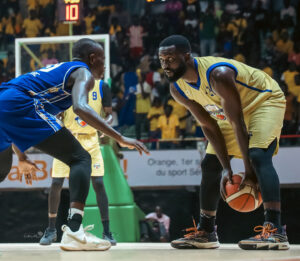
Thierno Ibrahima Niang and AS Ville de Dakar will compete for two more domestic titles.

With the domestic league done and dusted, the Dakar-based club captured another trophy, the Coupe de Meir (Mayor’s Cup) trophy (after beating Guediawaye on Sunday), and they are gunning for the Senegal Cup. Niang spoke with confidence ahead of the Coupe de Meir final about wanting to win both championships.

“We feel great. We have achieved our main goal – to win the championship and return to the BAL. There is still more to play for. We are confident and want to end the season on a good note,” concluded Niang.

Niang has found his feet at home. He has embraced the challenge of playing in Senegal, and so far, he has made a success of it. His presence and journey will inspire many harbouring a desire to follow in his footsteps, and who better to impart the wisdom than Niang himself.  

Niang thankful for education and the doors it opened for him Read More »

Bravehearts breathe life into the soul of Malawi basketball

BRAVEHEARTS Basketball Club has become the epitome of success in basketball in Malawi. With every domestic title hoisted, the ten-year-old club’s status has been elevated in the hearts and minds of fans at its Lilongwe home base and possibly across the Southern African nation. Despite a lack of investment in basketball, the club has risen to become the face of the game, and the architect of that success is none other than Griffin Kalua.

Kalua wears a couple of hats inside and outside of basketball. He is a businessman as well as the founder and coach of Bravehearts. Last month (June), he led the men’s and women’s teams to four and five championships.

Before delving into the club’s recent success in both the men’s and women’s championships, he offered insights into building Brave Hearts in a climate that is not wholly supportive of basketball.

Kalua, who owns an import and export company, highlighted that basketball in Malawi receives little to no funding, so he has had to run Brave Hearts from his pocket.

“One of the reporters asked me why basketball does not get the kind of sponsorships that football and netball do,” said Kalua. “I raised two issues. The corporate world does not believe basketball can give immediate mileage in terms of advertising and branding.

“… Luckily, my companies have been sponsoring Bravehearts, and I have seen the benefits. Both of my companies are the reason we are able to do what we do. People are now also coming on board and want to do business with Bravehearts.”

Brave Hearts Women
Griffin Kalua to move mountains for the Bravehearts women to get a shot at the continental qualifiers. Pictures: FIBA Africa and Supplied

Kalua also emphasised the importance of visionary leadership at all levels in making basketball work, a consistent plea throughout the continent. 

“The other issue is our leaders. They do not have a vision. When you get into leadership positions without a vision, you cannot attract anything,” said Kalua. “So that is why I decided to try to make the club self-sufficient. We have opened a business division at the club. It aims to generate funding for our day-to-day operations and philanthropic work. Another thing we want to do is to build a sports facility, which will also help us generate income. These are the dreams I have for the organisation.”

The success in the national championship led to prize money for both Bravehearts teams, but Kalua says he split the winnings among the men and women. While he commended the league for scaling up, he says the bulk of the money to fund the club still comes from him.

“We don’t get much from winning (the league). Both teams received a total of $2500. It’s not much, but it’s something,” said Kalua. “So when we get prize money, I leave it for the players and team officials. I do spend a lot of additional money every year to run the club.”

On the court, it has been another successful year for Kalua and Bravehearts. In June, the men captured a fourth national title, and the women added their fifth national trophy to the Bravehearts’ cabinet, meaning both teams will enter the continental stage.

After becoming the first club from Malawi to qualify for the Road to BAL Elite 16 last year, Kalua is hoping for another return to that particular stage of the competition. He hopes they can go from qualifying to winning games.

“We did well in the preliminary stage in Zimbabwe, but what was crucial for us was to make it to the Elite 16. What helped us get that far was competing in tournaments in South Africa, Zambia, Tanzania and other parts of Southern Africa,” said Kalua. “We were not sure what to expect at the Elite 16. Getting that far and the exposure will help us prepare better this year.

“The first thing we want to do again is qualify for the Elite 16. Should we get there, we want to try and win one game. Last year in Kenya (at the Elite 16), we did not win a single game. If we get a win, it can be something to build on. It would be reckless to think we can go all the way, so what I am looking for is improvement from last year.”

Kalua also looks forward to the women’s team competing at the AWBL qualifiers after they last appeared in 2018. He hopes to do it via the Zone 6 (Southern Africa) qualifiers, which have not taken place for some time.

“I have a budget for the women. We have kept it for a long time. We thought we would go to the Zone 6 qualifiers last year. They did not happen. And by the time we tried to enter the qualifiers of another zone, it was too late,” said Kalua. “This time around, we are ready. We will go wherever the qualifiers take place. That is a promise.”

Brave Hearts Basketball Club
Bravehearts are set to make another appearance at the Road to BAL.

Being a dominant player in the Malawi basketball scene means the club has a strong culture, one that players can buy into and one that brings championships year after year. Kalua says never giving up is the creed they live by. This is a maxim that saw them qualify for the Elite 16 against difficult odds in Zimbabwe last year.

“These kids don’t give up. You would have seen the difficulty we experienced in Zimbabwe. We only had seven players, but against all odds, we qualified for the Elite 16. That culture has filtered throughout the club,” said Kalua. “We don’t give up easily. It’s one of the characteristics of Malawians. We go through a lot, being one of the poorest countries. It requires us to be resilient in the face of tough circumstances. So you will see the same on the court. These kids don’t give up.

“It’s a definition of a Malawian. We don’t give up easily. We fight for everything.”

Kalua’s passion for basketball has seen the club grow and thrive. He is investing in the long term, aiming for incremental wins, capitalising on Malawi’s resilience ethos, and building the club for sustainability. Brave Hearts are an emerging success story in African basketball. They are an example to follow in growing a basketball club and culture that influences an entire ecosystem. 

Bravehearts breathe life into the soul of Malawi basketball Read More »

Kavakure carrying a mix of emotions ahead of VBL finals

ANOTHER epic chapter between two of Burundi’s oldest clubs opens on Saturday when Urunani and Dynamo duel in a seven-game series to decide which of the two celebrated clubs from the capital, Bujumbura, will be crowned VBL champions and take the bragging rights that come with winning.

Urunani, the East African nation’s most titled club, and current defending champions, are looking to maintain the status quo. Dynamo, the older of the two clubs and a losing finalist last year, will hope it has the battery charge required to usurp the title they won two seasons ago.

Adding spice to this storied battle is Bryan Kavakure, a point guard who celebrated many a victory in the blue vest of Urunani but has since swapped it for the green of Dynamo.

Kavakure played for Urunani for four years, but last season he felt his time at the club had come to an end and he needed a change in scenery. The 31-year-old says he had to ponder the decision for a long time about whether to continue with Urunani or join three-time VBL winners Dynamo.

Brian Kavakure Dynamo
Brian Kavakure believes Dynamo has what it takes to reclaim the title. Pictures: Dynamo

He had already gotten a taste of things at Dynamo, having joined them for a short stint during the Road to BAL in 2023, where they became the first club from Burundi to qualify for the BAL. Kavakure says that reuniting with his former Urunani teammates, Guibert Nijimbere and Richard Ndikuriyo, during the Road to BAL and knowing they were still part of the Dynamo set up assured him that leaving was the correct move.

“I found that Dynamo was a well-organised team. Everything went well. Having spent time with Dynamo and having friends like Guibert and Richard made it easy to move on,” said Kavakure.

He also reflected on leaving Urunani. “Spending four years with one team and then joining their rivals was not an easy decision. Seeing how things went last season, I had to make a decision,” said Kavakure. “I spent two weeks deciding whether to stay or go. It was a tough one.”

Journeying to a third successive final, Dynamo finished top of the VBL table in the regular season and coasted to a 3-0 semi-final series win over Les Hippos. Ahead of Game 1 on Saturday, Kavakure naturally has a ton of emotions facing Urunani, a team with which he enjoyed success and developed friendships.

“I have mixed feelings. It will not be easy to play against them. It’s not easy playing against players who know your strengths and weaknesses. It will be a challenge, but the goal is the same,” said Kavakure. “I have moved from one good team to another one, and the goal is to win the trophy with them. The challenge will be trying to beat my friends.”


View this post on Instagram


A post shared by Bryan Kavakure (@bryankavakure)

To reclaim the title and make a second Road to BAL appearance, Dynamo has enlisted the service of Cameroon point guard Etienne Tametong, who has been with the club from the beginning of the season.

Going into the playoffs, Nigerian big man Chingka Garba and American Tyrone Jeffrey were also signed by Dynamo to strengthen the team for the playoffs and finals.

“They have helped us a lot. A player like Etienne has played for so many years and in many countries. Since his arrival, he has made a huge impact. The same goes for Chingka. He is a big man who dominates in the paint,” said Kavakure. “Jeff from the US has led us in the playoffs, and we have a good coach (Julian Chaingot). We have local players who can step up, so the team is good.”

Bryan Kavakure Dynamo
Bryan Kavakure says Dynamo has the personnel to compete in the final.

Having played in this final battle on many occasions, what makes this match special? Kavakure says it’s the fans that make Urunani vs Dynamo a great derby in basketball.

“Our fans and the trash talk amongst themselves makes the rivalry between Dynamo and Urunani what it is. If you have a chance, you should come and experience it. Even the club members have a rivalry among themselves. All those things make it extra special,” said Kavakure.


Kavakure carrying a mix of emotions ahead of VBL finals Read More »

Gannouni, LeFriki setting a higher bar in the coming season

CLUB Africain, in late May, flipped the script in Tunisia’s Championnat Pro A championship, winning a fifth title in the Tunis-based club’s history. What made capturing the title sweeter for LeFriki was that it ended rival and finals opponents US Monastir’s six-year hegemony of the Pro A and earned them the prize of debuting at the BAL next year.

There was another element to the tale of Club Africain’s monumental success. Winning the league brought to an end the eight-year league title drought for one of Tunisia’s heralded clubs and its passionate fans. What made the journey of securing the trophy memorable for Club Africain was winning the five-game series, 3-1, in front of their supporters at their home arena, the Cherif Bellamine Gymnasium.

Twenty-eight-year-old small forward Achref Gannouni, a former Monastir player, says the fans provided the spark that lit the path to a decisive Game 4 victory.

“It’s always spectacular to play in front of the home fans. They have been with us from the start of the season right till the end,” said the four-time Pro A champion. “Winning in front of them was very special. The atmosphere they created was phenomenal, so the title is for them. As I said, from the beginning of the season they believed in us. We felt it, especially when we played at home. “

Gannouni Club Africain
Achref Gannouni and Michael Dixon celebrate winning the Tunisia Pro A title. Pictures: Club Africain.

Having ended the club’s long wait for the national championship, Gannouni felt ecstatic. “It feels amazing to win titles. I am happy for the club and the fans. What made it more special was that the club had waited for a long time to win. The joy is multiplied!” stated the Tunisian international.

On their way to the title, Club Africain won Game 1 of the series at Monastir’s Mzali Sports Hall. The forward says that the first-game victory against the nine-time league champs was the cushion LeFriki needed ahead of the remaining games.

“It was the key to the title for us. We knew if we won one game out of the two at Monastir’s home court, we would have a great chance of winning the series at our arena, and we were able to acheive that,” said Gannouni.

He also reflected on breaking the dominance of Monastir. For Gannouni, the victory had to do with more than who the opposition was; it was about feeding his and the team’s desire. “As an athlete, I always play to win. Achieving that goal every year is satisfying. It also makes me hungry. And it doesn’t matter which team we face,” he said.

Gannouni looks forward to the prospect of returning to play at the BAL after first experiencing it with Monastir two years ago.

“It meant a lot to us because it’s been part of our goal. We are looking forward to competing in it next year. Our journey doesn’t end at the qualification stage. We will be aiming for more,” proclaimed Gannouni.


View this post on Instagram


A post shared by @achref_gannouni

It may look like the season was smooth sailing for Gannouni and his teammates, but it was far from it. Players battling injury and the disappointment of losing the Tunisia Cup final to Monastir a week after clinching the league were part of the challenges to an otherwise celebratory season.

“Dealing with injuries was tough for us. Several players struggled with injuries, including me. It did affect the team’s chemistry because you are not playing as often as you would like. Luckily we have a good medical team. They got us ready for an important part of the season,” said Gannouni.

He also spoke about his own experience with injury during the season. “It was a bit tough. I had injuries that kept me out for two months. When I came back, I was stronger and helped my team to have a successful season. I was able to give everything for the team,” said Gannouni.

Part of the reason for Club Africain’s success was the togetherness, and Gannouni says this is the glue that should hold the team together in the coming season.

“Club Africain, this season was a family. We were all eager to win trophies together this year and bring joy to our fans. For the next season, we need to work hard and continue improving day after day to stay at the top,” said the former Rades player.

Gannouni
Achref Gannouni says winning the first game of the finals series in Monastir was crucial for Club Africain.

After the exertions of the past season, he’s now returned to social media. He felt he needed to focus a bit more to help the team be triumphant, and it has paid off.

“Going off social media is always a good thing to do. It helps to clear the mind and block out negativity. I knew that we were strong contenders to win trophies this year, so I needed to focus on the playoffs and the finals,” said Gannouni.

Next season will present a new canvas for Gannouni and Club Africain to write a new script. Having reached a milestone this year, they will prepare to exceed what they have already achieved.

Gannouni, LeFriki setting a higher bar in the coming season Read More »

Angolan legend Muzadi shooting his shots behind the camera lens

WHEN former Angolan hooper Victor Muzadi speaks about his playing career, intensity and passion fill his eyes. The same intensity and passion appear on his face when he discusses his post-playing profession. Having enjoyed an illustrious professional career, Muzadi’s dunks, layups and blocks caught the eye of many cameras on the continent and the global stage.

Banking on the content game

In a twist of fate, Muzadi, who first worked at a bank after hanging up his sneakers, later found his true calling – getting behind the camera. He has since captured many domestic and international sporting, lifestyle, and corporate events through his content company, Push LDA, based in Angola.

Muzadi was recently at the BAL playoffs and finals in South Africa’s capital, Tshwane, as part of the multitude of content creators covering the continental shindig. Speaking to The Big Tip Off, his voice hoarse after feeling the effects of the South African winter, Muzadi was able to find the words to express his delight at the new and improved continental tournament and how he wished it existed during his playing days.

“I wish this kind of platform was there in our era. It would have been great. People would know how we played, so I am happy that these young players have it now and that they are part of this story of African basketball,” said Muzadi, a two-time FIBA Africa Clubs Champions Cup winner. “It’s really cool to be involved as well and to be part of the emotion and vibe here.”

Victor Muzadi Angola Content
Victor Muzadi says he has been impressed with the five-year-old BAL. Pictures: The BTO and FIBA

Muzadi says that as an athlete, his mind was always on matters related to the court, so he could sit and take in the excitement of being at a sporting event like the Olympics. Now, being behind a camera lens, it has taken on a whole different meaning.

“I have a crazy story. At last year’s Paris Olympics, I was there to shoot content. It was my first Olympics being on the other side, and not as an athlete. It was then that I understood what was going on in the media space because, as an athlete, your mind is on the game. Coaches, stats, videos and then you are back to your room,” said Muzadi, a two-time Olympian with Angola. “You don’t get to enjoy the other stuff to do with the Olympics, like the opening and closing ceremony. This time around, I stayed till the end of the Games. I saw things differently, from when I was an athlete. Today, I am like, ‘Wow they have a life outside of sports’. And I was able to capture that.”

Muzadi maintained his ties to basketball after retirement through 3X3, where the vision of creating content began to unfold. It was also where he realised that he had an eye for photography. It also hit him that being an employer sometimes meant adopting a hands-on approach when running his business.

“I am a 3X3 promoter, which is something I started six or seven years ago. I used to hire one of my friends to shoot for me, but he would deliver the content late. It became a problem to explain the situation to the event sponsor,” said Muzadi. “So I bought my own camera and started shooting content for myself… And everybody was like, ‘You are good at it.’

“I was also a commentator for SuperSport, and I got into audiovisual work while I was working for them. So that also opened my eyes to how content is created.”

It led to Muzadi becoming an ambassador for the photographic equipment company Canon. “When I opened my agency, which does photography, drone photography and video, one of my clients was impressed with the work we do. They told us we capture the soul of people and that they would pitch the idea of me becoming an influencer and ambassador for Canon because they did not have one in Angola,” said Muzadi. “So, I sent some pics I took, and from there, I got validated. This has been a great way for me and my team to tell stories.”

Muzadi the philanthropist

Not only is Muzadi a leader in his company, but he also serves as the general secretary of the Special Olympics in Angola, a challenging role. Helping people who need it the most should be easy, but Muzadi explains that he has had to push barriers.

“It’s tough. You want to do more, but there are limitations. You have to know how to pitch to sponsors for them to be part of the process,” said Muzadi. “The Special Olympics started four years ago in Angola. So it’s brand new. I work with my former teammate, Jean Jacques Conceicao, a Hall of Famer. It’s been a process. We have tried to implement new initiatives, push for legislation, and secure medical support.

“We are trying to show that through sport, people with disabilities can do more than what others think.”


View this post on Instagram


A post shared by Victor Muzadi (@victormuzadi)

Continuing Angola’s dominance in the AfroBasket and club championships

In his heyday, Muzadi was part of Angola’s team that continued the Southern African nation’s dominance in African basketball. Harking to those glory days, Muzadi, a four-time AfroBasket winner, says the Angolan team of that time and its style of play resembled the celebrated Golden Warriors.

Angola was a star-studded team with names like Joaquim Gomes, Eduardo Mingas, Victor Carvalho, Miguel Lutonda, Olimpio Cipriano, and the up-and-coming Carlos Morais.

“It was a great run with those guys… Winning every AfroBasket during that era. My last AfroBasket was in 2007 in Angola, and I really enjoyed it,” said Muzadi. “I miss those days playing against some great teams. We had some good players like Victor Carvalho. He was Stephen Curry before Stephen Curry came on the scene. He is an assistant at Petro, and he still shoots the ball well, even today. Angola played like the Golden State of a few years ago… Live by the three, die by the three.”

Muzadi says the reason Angola stood head and shoulders above the rest in Africa was because of their preparation. “People don’t understand the volume of training we had. We prepared three to four months ahead of the AfroBasket… Sometimes outside the country. We even came here to South Africa, but the cold was too much for us,” said Muzadi.

Victor Muzadi Angola
Victor Muzadi has played in top-level competition for Angola.

His club career was also illustrious, bringing him 16 Angolan league titles and two continental club trophies. He says being part of any Angolan club, especially when travelling the continent, meant they bore the fury of opposition fans. It was also something that fuelled him and his teammates.

“Those were tough times – I remember when we went to the Central African Republic – as soon as we got to the venue, opposing fans threw things and insulted us, but we loved it,” said Muzadi. “Everybody hated us, but when we won, we received applause. People called us stone-cold assassins. We only celebrated when we got home because when we were away, we focused on the job.”

Muzadi’s playing career is a story of success. He is one of the few players to have stood on a podium with many winners’ medals. He has also maintained a similar level of excellence in his second career, capturing the hearts and minds of sports fans with his content.

Angolan legend Muzadi shooting his shots behind the camera lens Read More »

Ngenzahayo, Urunani chase VBL title No18 and BAL dream

URUNANI BC is a behemoth in Burundi’s basketball scene. They have the most domestic championship titles and attract some of the best talents in the game, ensuring they remain a dominant force at home. Sisi Wenyewe, while successful in Burundi, has seen itself fall short in trying to qualify for the five-year-old BAL. It has been, in some cases, so near yet so far.

One player familiar with the domestic triumphs of Urunani and the disappointment of failing to qualify for the continental showpiece is long-serving shooting guard Malick Ngenzahayo.

The 29-year-old has seen the BAL escape his grasp first with New Star (in 2021) and twice with Urunani (2022 and 2024). He explained his anguish at falling short with Burundi’s most successful club.

“It’s been painful. Knowing you have worked hard and want it badly, but when you get on the court, things don’t go your way. It’s painful,” said Ngenzahayo.

Malick Ngenzahayo believes Urunani can defend the VBL title it won last year with the tools at its disposal. Pictures: FIBA Africa

The guard says this season, he and Urunani are more determined to get over the hump. They aim to become the second team from Burundi to qualify for the BAL. So far, their rivals, Dynamo, hold that feat.

“We are becoming mentally tougher. We have played with players who competed in the BAL. On an individual level, I am also working hard. I want to help the team be successful this year,” said the Ngenzahayo.

With the regular season now complete, Urunani, who lost two games and finished second behind rivals Dynamo, ended with a 22-2 record, losing to Dynamo and Remesha.

Following their defeat to Dynamo in April, Ngezahayo and Urunani went on a whopping 10-game unbeaten run. Part of the winning streak included beating Dynamo (60-52) in May, with the shooting guard leading the team with 11 points, four rebounds, and two assists.

Reflecting on the win against Dynamo, Ngezahayo stated that it set them up for the remaining games and the playoffs.

“It was tough because they beat us (in the first round), so we had to get one back and show we were ready for the playoffs,” said Ngenzahayo.

As Urunani chases title No. 18 in the domestic league, VBL, a strong squad is required. Players like Mamadou Diome (Senegal) and Onyebuchi Prosper (Nigeria), as well as Romis Bujeje, have returned to the team. American back-court players Will Perry and Patrick McGlynn, who played in the BAL’s Sahara Conference for AS Ville Dakar and Kriol Star, will add quality as Urunani begins its title defence later this month.

“These are pieces that will add value to the team. We needed to improve our rebounding and also control the game, so those players will help us do that. We want to win,” emphasised Ngenzahayo.

Moving away from the matters of on-court results, Ngenzahayo related what it means to be a Urunani player. He says the infectious passion of the fans is what drives them through the good and bad games.

“It’s the fans. They are passionate and crazy about the club. They are with us through the tough times. I love that about them,” said Ngenzahayo. “Since I was a kid, the club has helped me with many things. Even in my school days, they helped me a lot.

“Urunani is in my heart. That’s why I play like am possessed whenever I wear the jersey. I give everything I have for them because of what they have done for me.”

Malick Ngenzahayo Urunani
Ngenzahayo loves Urunani because of the fans and what it has done for him. 

Sisi Wenyewe means the world to Ngenzahayo, and he is always prepared to give his all for them. As the VBL playoffs begin in a few days, he will hope Urunani, taking on Remesha on Saturday in the playoffs semi-final series, can defend that domestic title and chase the dream of the BAL again. 


Ngenzahayo, Urunani chase VBL title No18 and BAL dream Read More »

Marathon journey ends with first BAL title for Al Ahli Tripoli

AL AHLI Tripoli’s epic journey in the BAL culminated in them winning Season 5 of the continental competition. The Libyan club, led from the Road to BAL to the promised land by the always lively and cheerful Lebanese coach, Fouad Abou Chacra, put in assured performances throughout the tournament. Making them deserving winners of their maiden BAL trophy.

Their story of becoming the last team standing at the mountain top in African club basketball looked like a seamless marathon. An unbeaten run in the preliminary phase at home in Tripoli and the Elite 16 in Abidjan, Côte d’Ivoire, last year in the Road to BAL, ended in Al Ahli becoming the second side from its country to qualify for the BAL.

At the BAL, they dominated the Nile Conference in Rwanda and headed to South Africa for the playoffs with a 6-0 record. In the playoffs’ seeding games, they had a come-down-to-earth moment against an equally dominant Egyptian side, Al Ittihad, which came to South Africa with a similar record from the Kalahari Conference in Morocco. Fortunately, for Al Ahli, the momentary blip reinvigorated them, as they took down Kriol Star and APR to secure a place in the grand finalè, becoming the second Road to BAL side to do so. The Tripoli side travelled a similar road to compatriots Al Ahli Benghazi, but the former would go a step further.

Al Ahli Tripoli the BAL champions
Al Ahli Tripoli players celebrate winning their first BAL title after beating defending champion Petro de Luanda. Pictures: The BAL

With hoop gods smiling on them, the side from the Libyan capital, Tripoli, masterfully took apart defending champions Petro, 88-67 in front of a capacity crowd at the Sunbet Arena in South Africa’s capital, Tshwane.

Egyptian giant Assem Marei, who was used sparingly by this year’s BAL Coach of the Season Abou Chacra during the tournament, could not be contained by Petro as he finished with finesse in the paint and tipped back loose balls on his way to a double-double (22 points and 19 rebounds).

Marei played the entire 40 minutes in the final, and he says he was grateful for Abou Chacra resting him in the seeding game. He felt sitting out that game against Al Ittihad did him and Al Ahli Tripoli a world of good.

“Coach has been generous with me. I told him I was tired from the travelling. I had to travel to a lot of countries to try and get a visa to come here,” said Marei. “He agreed and generously let me rest for the first game. It was a turning point for me. So I was grateful for that rest.”


View this post on Instagram


A post shared by Alahli SC (@alahlisc_ly)

Marei, a recent winner of the South Korean Basketball League, also reflected on his first trophy win on African soil.

“First of all, Allahhamdulilla (Thank God). It’s amazing to win two championships. Of course, this one is for Libya. It means a great deal to the people of that country, the players and the organisation,” said the Egyptian international. “It’s amazing. I’m so grateful. It is my first African championship and it means a lot to me.”

At the post-final press conference, winning captain Mohamed Sadi, who played in the inaugural BAL with AS Douanes, says the victory was a culmination of all the hard work they put in.

“This is not easy. We had like 15 games and lost one. We had tough games, but we worked hard. The team has great players and a great coach. The team stuck together to achieve the goal. Allahhamdulilla for everything. Now we go back home with the trophy,” said Sadi, who had 11 points and eight rebounds in the final. “We made history for our country and made people happy. Basketball changed in Libya, and now all of Africa sees it.”

Jean-Jacques Boissy, a finalist in the 2023 competition, did not just walk away with the winner’s trophy on Saturday night; he was crowned tournament MVP for his sterling performances. His shot-making accuracy from behind the arc was something to marvel at throughout this season of the BAL.

Al Ahli Tripoli win BAL trophy
Mahomed Sadi and his Al Ahli Tripoli teammates dance the night away after winning the BAL trophy.

During the post-game press conference, the Senegalese point guard, who scored 12 points against Petro, attributed his success to quietly going about his business behind the scenes.

“It was not something I was expecting. I wanted to come out here and show my work. My focus was on my game. I am happy to get the MVP and be the scoring leader,” said Boissy, who averaged 19.7 points per game. “We have a great team and management. They worked hard behind the scenes. It didn’t just happen. What you’re seeing now is the result of work that was put in when no one was watching.”

What a journey it was from the Road to BAL journey to the BAL champions for Al Ahli. As they embark on the long flight back to Tripoli, they will rest knowing it was their time to reap the reward of what they had sown.

Marathon journey ends with first BAL title for Al Ahli Tripoli Read More »

Diabate hungry for BAL title and the ring of victory

SOLO Diabate certainly has to be one of the greatest stories to come from the BAL, which is now in its fifth season. The mercurial Ivorian point guard is the personification of what success and consistency are on the court. The floor general shares the record of winning the most BAL titles (two), and on Saturday afternoon, he will appear in a fourth final, a record he owns.

The latter bothers the Petro de Luanda player because, in his words, “no one remembers that you played in the final”. The competitor in Diabate will not allow him to settle for second place. In his second stint with Petro, he hopes to help them defend the title they won last year and win his third BAL trophy at the Sunbet Arena against Libya’s Al Ahli Tripoli.

“Being in the final means nothing. I want to win. I won the first two titles… With Zamalek and then US Monastir. I did not make the final in the third season, and I lost playing for Al Ahli Benghazi in the fourth,” said Diabate. “No one remembers that I was in the final. Ok, it’s talked about. But everyone remembers Petro won last year.

“I don’t want to be in the final just to say I played in it this many times… I want to win.”

The 37-year-old says he kept his cool after Petro cut down Egyptian giants Al Ittihad, unbeaten before the semi-final on Wednesday night. More than winning the trophy, this year, the BAL has also introduced winners’ rings, and Diabate wants to be the first to put one on.

“That is why yesterday, after the semi-final, I did not celebrate too much. The job is not done until you win the cup and the ring. The BAL is also giving rings to the winners, so I want to win so I can be among the first players to wear it on their finger,” said a two-time AfroBasket silver medallist.

Solo Diabate Petro de Luanda
Solo Diabate wants a BAL title more than to set records. Pictures: The BTO

As he said, the job of the BAL is far from over, and he did not want to entertain the talk of the potential of sitting atop the totem pole as the sole player to win the trophy three times. He recalled a statement made by former NBA player Ian Mahinmi that might have jinxed him ahead of the final against Petro last year.

“I don’t want to talk about it. I remember last year, before the final, Ian Mahinmi told me, ‘Solo. If you win your third final, we are going to retire your jersey.’ I was like ok, but we lost the game,” said Diabate. “So I don’t want to talk or think too far ahead about the other stuff… I want to win first.

“I am not here to set records. Or try to be the first to do this or that. If I win, I will be happy.”

Before delving further into Saturday’s final, Diabate spoke about his return to Angola, specifically, Petro, and the BAL season the club has had. He described the club as a well-run institution, and he articulated his admiration for Os Petroleos’ loyal fans.

“I love everything around Angolan basketball. People care about it, and that is why the game has developed the way it has. As Petro, they take care of players. That’s why I came back,” said Diabate. “Also, the fans… I remember playing in the gym two years ago and how packed it was for those games. I liked it. Our goal that year was to win the BAL, but it didn’t happen… It’s a second chance to win it.”

He rejoined a Petro that is without legends like Carlos Morais, Jone Pedro and Gerson Lukeny, who all moved on to different clubs. While it was an adjustment for Diabate, he spoke with the understanding that it is part of the cycle of sports players to move on from clubs.

“They are my brothers. Even if I played with them for a season, we remain close. I think the Angolan players felt the change the most because they played with them (the legends) the longest,” said Diabate. “It was weird to go back and have them not there, but its part of the business… I am old enough to undertstand that.”


View this post on Instagram


A post shared by Basketball Africa League (@thebal)

Despite the significant personnel change, Diabate and the new-look Petro again defended the domestic league and cup titles, and many would have expected them to blitz through the tough Sahara Conference in Senegal.

It was not the case, as Petro gave inconsistent performances in the group phase. In their three wins, they looked like championship material, and in their three losses, they resembled a has-been outfit.

“It was the hardest conference. Our conference was the most competitive. All the teams were good. It’s basketball. Sometimes you shine, and other times it’s a struggle,” said Diabate. “People started saying we are not ready. But here we are in the final. We have two new players that have helped us. These are great guys and additions. They changed things for us.”

Diabate was referring to South Africa’s small forward, Samkelo Cele and American combo guard, Kendrick Ray, who both signed for Petro for the playoffs in South Africa.

Both players were part of the seeding game loss to Rwanda’s APR, and that defeat heightened the noise of Petro’s doubters. Diabate reasoned that the loss was a necessary wake-up call for him and his teammates.

“They destroyed us, physically, technically, in everything. They were strong,” said Diabate. “So we went back to the hotel, watched some video footage, and took time to think about the game. This got us ready against Monastir, a team we played twice in Senegal.”

Between the loss to APR and the eventual victory over Tunisia’s Monastir, something shifted. Sergio Moreno tinkered with his starting line-up in the quarter-final against Monsatir and employed a similar strategy against Al Ittihad, leading to a third final appearance for Petro. While Moreno’s move confused the hell out of their opposition on two occasions, Diabate downplayed it.

“The changing of line-ups is nothing special because we have a lot of players. They all bring something to the court. So our coach has a lot of choices,” Diabate.

Solo Diabate Petro de Luanda
Solo Diabate says they did some soul-searching after the loss to APR.

The BAL final brings a certain feeling of déjà vu for Petro as they face another Libyan opposition in Al Ahli Tripoli. Diabate, who is well-versed in Libyan basketball, expects Tripoli to bring their A-game.

“This is one of the hardest finals I am going to play in. They are a strong team and well-coached, but we are ready for those 40 minutes of basketball,” Diabate stated confidently.

Diabate pledged they want to win BAL Season 5 for the Petro fans, but he also wants a triumph for sentimental reasons.

“We are going to fight like we have since the beginning. We want to make history for everybody. I want to win it for my dad, too. He loves Petro, I don’t know why but he has always loved them. So, I want to win it for him,” concluded Diabate.

Diabate hungry for BAL title and the ring of victory Read More »

Strong family ties and hardwork put Marei in position for success

EGYPTIAN baller Assem Marei says family is one of the elements that has kept him grounded since he started playing basketball. His father, mother and brother all played their part in schooling him on the finer points of the game. Now, as a grown man and a professional, his wife is playing a key role in being the glue that holds his family together, and her presence has helped Marei achieve a thriving career.

In an interview with The Big Tip Off, Al Ahli Tripoli player Marei described how his family’s influence has encompassed his career. He also talks about being part of Libyan club Al Ahli Tripoli’s push for success at the BAL playoffs.

Thirty-year-old Marei, the son of a former basketball player, Ahmed Marei, who now coaches, says his family taught him how to be coachable, which in turn made him a better player.

“My dad, mom and brother… Everybody played basketball, so I grew up around it. My father has been a head coach for as long as I can remember. I had three head coaches, so it gave me a level head and it taught me to accept criticism and not to be sensitive,” said the Egyptian national team player. “One of the things I can say about myself is that I am coachable and I can accept criticism from a coach because I have had it my whole life.”

The tough love from his family paid off as his game grew, leading the former Zamalek player to be part of a generation of Egyptian players who made their way to college in the United States.

“One of the programs that opened that door was Basketball Without Borders (BWB). It (BWB) and the national federation paved the way for me to attend college,” said Marei, who attended Minnesota State University and graduated with a degree in Interdisciplinary Studies.

Assem Marei Al Ahli Tripoli
Assem Marei’s career began in Egypt, and it has seen him go on to have a phenomenal career abroad. Pictures: The BTO

His career from college to the pros has been a picture of toil and well-earned accolades. Marei, who earned NSIC (Northern Sun Intercollegiate Conference) honours from 2012-2015, says the success comes from understanding what his job is on the court and being great at it.

“I am grateful. I never expected to play this long, ten years as a professional outside of Egypt and three years in college. Every year, I get hungrier. I feel I have the best job in the world. I want to keep it going for as long as possible,” said Marei. “The one thing I am big on is job descriptions. Growing up, it’s something my dad talked to me about. He’s huge on job descriptions on the court. It’s something I accepted. So what I do on the court, I do at a high level.

“That helped me throughout my career… Focusing on inside presence, rebounding and helping my team. So, I am not going to be a pick and pop shooter or shoot three points… Those things will take away from what got me here.”

Marei joined Al Ahli Tripoli for the BAL playoffs in South Africa after helping to lead the South Korean club Changwon LG Sakers to the KBL (Korean Basketball League) title.

Travelling through the different time zones took a lot out of him, and obtaining a visa to travel to South Africa seemed like an extreme sport. Marei had to country hop a bit before securing his travel documents to South Africa. Despite the challenge and toll it took, Marei was calm.

“It was the most difficult thing I have gone through in my career. I am happy to be here,” said Marei. “I had to bring my wife and kids to Egypt first and stayed there for a bit. From home, I had to fly to Rwanda and then to Istanbul to get a visa for South Africa. Things did not work in Istanbul, so I had to fly to Tunisia and then back home to take care of my wife and other things.”


View this post on Instagram


A post shared by Assem Marei (@assemmarei)

Through the visa ordeal and being an accomplished sportsman, Marei says the presence of his wife allows him to focus on his job.

“My wife is amazing. She does everything. She helps me focus on basketball. To me, it’s always family first. When that is taken care of, I can do my job,” said Marei. “Sometimes it’s too much for her. I have two boys and we are expecting a third baby. She has been an important part of this.”

In South Africa, for the last week, Marei has also had to give his attention to the Al Ahli Tripoli family, which is trying to become the first club from Libya to win the BAL title.

So far, he has had a productive three games, two in the Nile Conference against APR (10 points and nine rebounds) and MBB (18 points and 10 rebounds) and in the quarter-finals against Kriol Star (13 points and 13 rebounds).

While the numbers are pleasing to the eye and have contributed to Al Ahli becoming the second club from Libya to progress to the semi-finals, where they will face familiar foe APR, Marei feels he can up his game a bit more.

“It can get better. One of my favourite things is I love when other players enjoy playing with me. That makes me happy as a player. I think we are achieving that,” said Marei. “I like to be a players player… Helping my teammates to play better. We are transitioning well. We are getting better with every game.”

On Wednesday at the Sunbet Arena, Marei and his teammates will face an improved APR team that dismantled the Rivers Hoopers in their Monday afternoon quarter-final clash.

“APR have size and they are athletic. They cover space well. So our offence has to play the right way… We have to space and all that because they can cover their defensive mistake by their size,” said Marei.

Assem Marei in action for Al Ahli Tripoli
Assem Marei has enjoyed his time at Al Ahli Tripoli, and he believes members of the club put in a good shift, so it can be successful.

Al Ahli will attempt to match the feats of rivals Al Ahli Benghazi by becoming the second Road to BAL and Libyan team to qualify for the BAL final. Given his closeness to the situation, Marei shared why Libyan teams are succeeding at the BAL.

“They have so much heart. Not just the players, but the staff at the club too. They have put so much heart and soul into this. And the whole country is watching,” said Marei. “It’s exciting to be part of an organisation where basketball means so much. It puts a huge responsibility on our shoulders.

“If you are a good high-level player, you want that. We want every game to mean a lot and not just play nonchalantly. It makes the game a lot more fun.”

Strong family ties and hardwork put Marei in position for success Read More »

Salgado, Kriol Star putting Cape Verde on the map in the BAL

KRIOL Star coach Hugo Salgado had taken time off from basketball for family reasons, but an SOS call from the team owner and player Joel Almeida led to the Portuguese coach doing a u-turn on his intended commitments. It seems to be a decision that has paid off for the Cape Verde team, which keeps scaling new heights.

Salgado told The Big Tip Off on Saturday at the Maslow Hotel, a day before Kriol Star’s BAL quarter-final clash against Libyan club Al Ahly Tripoli, that a long-standing relationship between him and the Almeida brothers swayed him.

“It is friendship that brought me on board. I used to coach Joel and Ivan Almeida back in Portugal 12 years ago,” recalled Salagado. “When he called, I had taken a short break from basketball. I have two small kids, and I had a difficult season last year at my former club.

He continued: “I wanted to use December to rest and be with my family. That is when Joel called me about helping them out with qualifying (for the BAL). It was a last-minute call, but I said to myself, ‘Why not?’.

“So the season I wanted to rest, is the season I travelled the most.”

Hugo Salgado Kriol Star
Hugo Salgado led Kriol Star to a historic BAL qualification. Pictures: The BTO

Kriol Star’s foray into Africa’s elite club competition saw them go through the disappointment of finishing winless in the preliminary Road to BAL Division West last year. But good fortune befell Salgado and his team when they gained entry to the Elite 16 Division East via a wild card.

The islanders would finish among the top two clubs, laying the way for them to make their BAL debut. Which was also a first for Cape Verde’s basketball.

Reflecting on the Road to BAL, Salgado says the reason they performed poorly in Libya was a combination of scrambling to put a team together in a short time and not having enough time to practice.

“Our biggest struggle was that we did not have time to practice. We got entry into the tournament late, and we had to put together a team in two days,” said Salgado. “I remember the game against Stade Malien, who also made it to this year’s BAL. We did well leading the game for 30 minutes, but they punished us in the last 10 minutes.

“Against Al Ahli, we dominated one quarter, but our lack of preparation showed.”

Going to Kenya, Salgado says he had ample time to prepare the team, which led to the historic qualification for the months-old club.

“In Kenya, we did not change much. The difference was having enough time to pick the players that could compete at this level. We managed to do something amazing… Which was to beat Urunani in the semi-final. Before then they were unbeaten, so it was amazing for us,” said Salgado.

Fast forward to the BAL Sahara Conference, the club from the island nation continued to make great strides. They ended with a 3-3 record, and they were the best third-place team in the tournament.


View this post on Instagram


A post shared by Kriol Star (@kriolstar)

The qualification for the playoffs in Tshwane, South Africa, was not without drama. Following the do-or-die win over Angolan giants Petro de Luanda, which added another milestone to Kriol Star’s and Cape Verde’s basketball history, a post on social media alleged that some import players were unhappy with living conditions and that the team owed them money.

Looking back at the situation and the victory over Petro, Salgado says he left out players who would not help the team’s cause. He also dispelled rumours of management intervening in team matters.

“It was easy (to motivate the players) against Petro. I found the right players to win the that game. I left out the players who were not healthy for the team. It was a coaching decision not a management one, as I read in some articles,” emphasised Salgado. “It was a coaching decision…. Against Petro we put up a big fight. It was important that we either win or lose with dignity.”

The adversity seems to have made this upstart team from Cape Verde a closer unit. Following their 91-88 win over Morocco’s FUS Rabat in the seeding game on Friday night, a new level of confidence should ideally engulf the club, especially in the quarter-final battle against familiar foe Al Ahli on Sunday.

Salgado may be well-acquainted with his club’s opponents, and he also has Ivan Almeida, a former Ahli player, who helped the Libyans qualify for the BAL. Asked if he will lean on what he has learnt about them and the intimate knowledge Almeida possesses about them, Salgado said a vehement no.

“Hundred per cent no! The way we have studied them is the way they have studied us,” said Salgado. “I am going to take the pressure. We love pressure. We love going on the court, knowing that there is a knockout game we have to win.

“If we win, it will again be a historic moment. If Al Ahli lose, that’s tough.”

Hugo Salgado Kriol Star Coach
Hugo Salgado says Kriol Star is prepared to fight in the quarter-final clash against Al Ahli.

Salgado is also happy with what he has been able to achieve with Kriol Star, a franchise operating on a smaller budget than some of the teams at the BAL.

“It’s the difference in budgets here. I don’t like to talk too much about budgets, but if we had more money, I would pay the players we have now,” said Salgado. “I like the team we have… They show up on the court and fight for the club.

“We don’t have an advantage. Al Ahli will be the favourites because of how they built the roster, but we will fight.”

The islanders have been resilient against many odds, and on Sunday, they will have to dig in if they want to continue their miraculous run.

Salgado, Kriol Star putting Cape Verde on the map in the BAL Read More »

×