BANGUI Sporting Club heads into Season 4 of the Basketball Africa League (BAL) and will look to turn heads in their debut season. The Big Tip Off previews Bangui ahead of the BAL.
Team: Bangui Sporting Club
Country: Central African Republic (CAR)
History: The Central African side was founded in 2017 and was previously known as GIBA-BCAG until 2022. Founded by former national team player Cyrille Damango, the Bangui Club, who are based in CAR’s capital city (Bangui), has built a good history. The team plays in the Bangui Basketball League, where they were runners-up in 2021. Their crowning moment first came in 2022, and they repeated that feat the following year. Despite being a relatively new team, they already established themselves as a powerhouse in Central Africa.
Bangui’s Evans Ganapamo (1) and Liz Mills bring BAL experience to the CAR club. Picture: FIBA Africa
Route to BAL: After defending their national championship, they headed to Yaoundé, Cameroon, for the Road To BAL Division West qualifiers. They did not have the best of starts, losing to the Gabonese side Espoir. Eventually, they (Bangui) would bounce back in the group stages. Bangui would eventually claim the Division West title, which booked their spot in the fourth edition of the BAL.
Coach: Australian coach Liz Mills will lead Bangui Sporting in their quest to make a name for themselves on the continent. Teams led by Mills have gone past the first round in the BAL, so Bangui is in good hands. Hopefully, in the process, she can turn them into a contender. Mills, a former coach of Kenya and Zambia, has led AS Salé (Morocco) and ABC Fighters (Cote D’Ivoire) in the last two instalments of the BAL. She is not afraid to bet on African talent, as was the case when she led ABC to last year’s BAL playoffs.
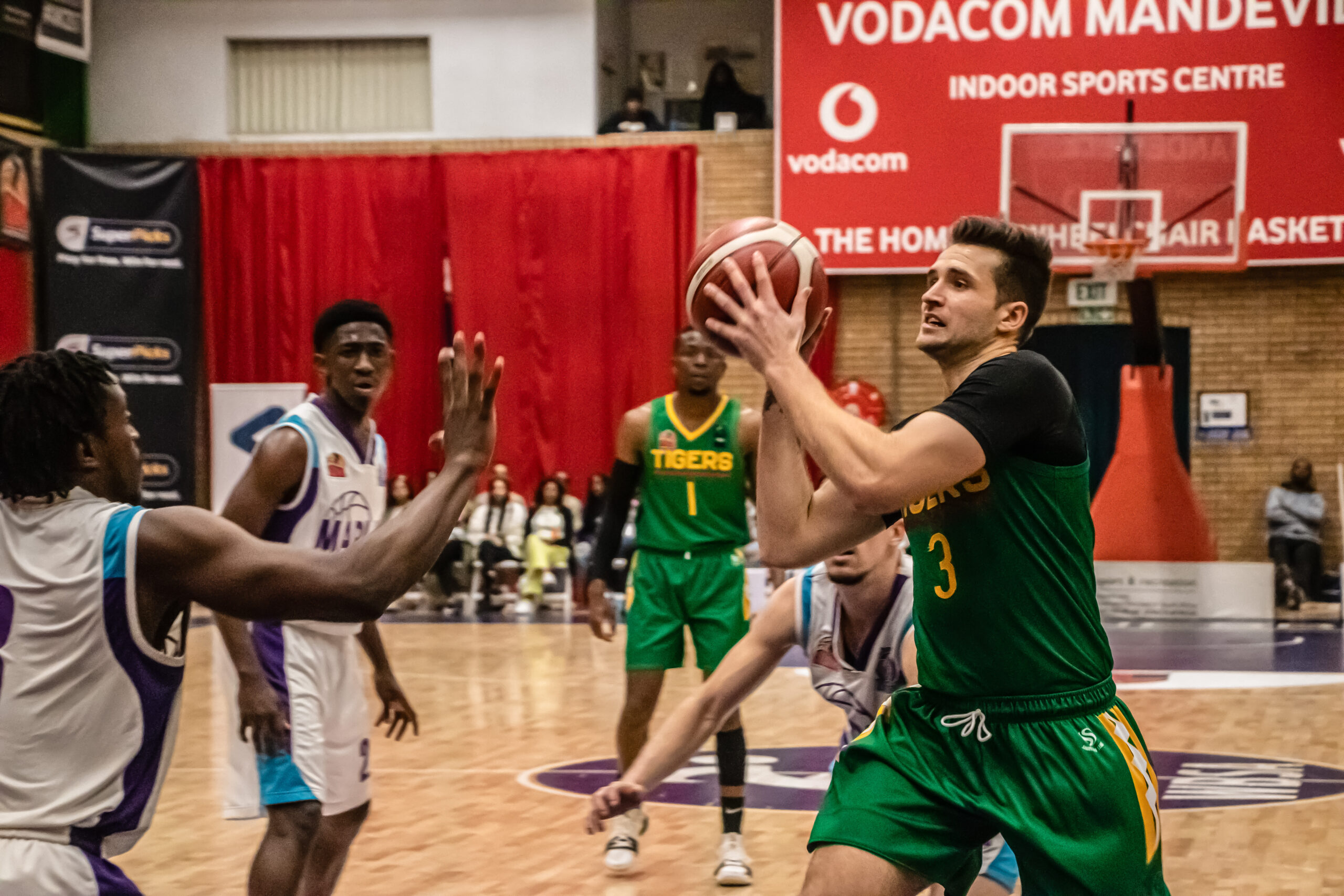
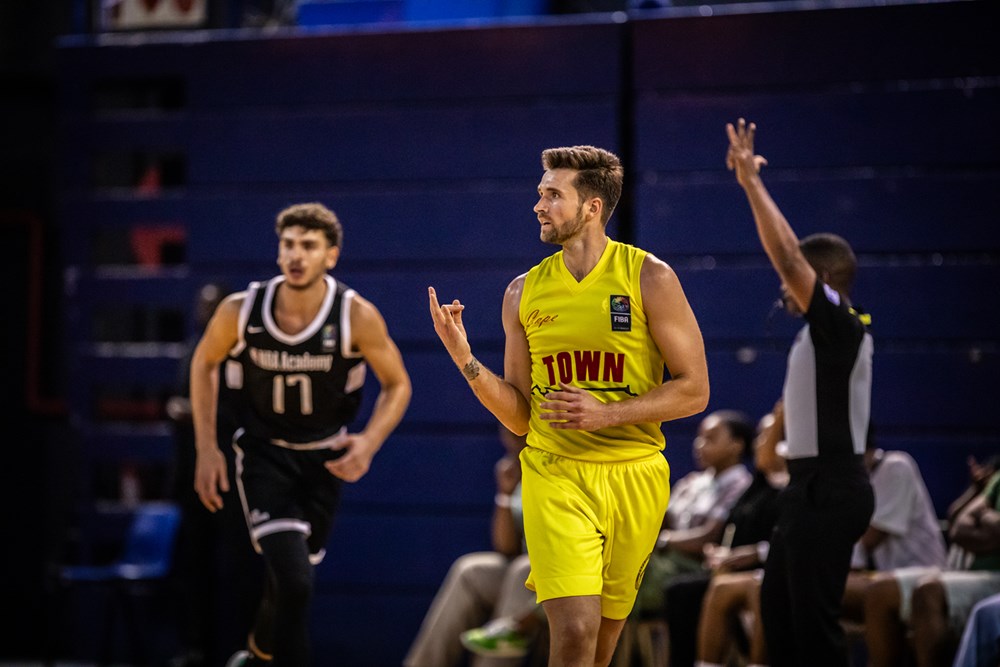
Star player: Evans Ganapamo is the star player for the Bangui side. He has already donned the national team colours and is playing in the BAL for a club from his home country for the first time. In the past two instalments of the BAL he played with the Cape Town Tigers of South Africa. During the Road to BAL qualifiers with Bangui, he established himself as one of the best scorers on the continent, averaging 17.8ppg in the West Division. He will be looking to lead his team to silverware whilst becoming a household name on the continent.
THE Cape Town Tigers are a young club on the African basketball scene. They head to Season 4 of the Basketball Africa League (BAL) as hosts of the Kalahari Conference, where they hope to improve on their past performances. The Big Tip Off previews the South African team ahead of the BAL.
Team: Cape Town Tigers
Country: South Africa
History: The Tigers are one of South Africa’s youngest clubs. Founded in 2019, the team has garnered much attention for its success in the past four years. They will be making their third appearance in the BAL.
Tigers coach Florsheim Ngwenya is a proven winner and is well-versed in international basketball. Pictures: FIBA
The South African side has had its fair share of stars adorn their roster, with most recently having former OKC Thunder player Josh Hall and Zaire Wade, the son of NBA Hall of Famer Dwayne Wade, suited up for them in Season 3 of the BAL.
But the Tigers have not managed to get past the quarter-finals in their two BAL appearances. Can the third attempt be the charm for them?
The Tigers secured their spot in Season 4 of the BAL through Road to BAL. The South African Champions went undefeated in the tournament and defeated the Oilers in the final game.
Coach: South African coach Florsheim Ngwenya will lead the Tigers in their quest to become a title contender in their third BAL appearance. The experienced Ngwenya previously led the South African National team from 2007 to 2011 as head coach.
He has also won multiple BNL titles as the Head Coach of the Egoli Magic club, making him the most successful coach in BNL history. Ngwenya led the Tigers to two Division East Road to BAL Championships and one BNL title.
Star Player:Samkelo Cele is a standout player on the South African team. As a small forward and guard, his athleticism and high motor impact both ends of the court. He can quickly shift the game’s momentum in favour of the Tigers.
Despite coming off the bench, Cele leads the team in most statistical categories. Cele has averaged 13 points, 3.7 rebounds, and 1.7 steals per game during the Road to BAL. He was among the best defenders in Season 3 of the BAL and earned a place in the League’s All-Defensive Team.
AL Ahly are one of the favourites ahead of Season 4 of the Basketball Africa League (BAL). They also head to the tournament as defending champions. The Big Tip Off offers some insights into one of Africa’s premiere teams in basketball.
Team: Al Ahly
Country: Egypt
History: One of Egypt’s great sporting institutions, Al Ahly has seven Egyptian Super League titles, 11 Egyptian Cup trophies, and four continental titles.
The Egyptian giants won the Basketball Africa League Season 3 title, a FIBA Africa Clubs Champions Cup and two African Basketball Cup Winners Cups.
Ehab Amin embraces coach Agustì Julbe after the final of last year’s BAL. Pictures: FIBA
Route To BAL: Egypt are one of six countries whose clubs have direct entry to the BAL, and as champions of their country, Al Ahly will defend the (BAL) title they won last year in their debut season.
Coach: Spanish coach Agustì Julbe will lead Al Ahly in their quest to defend their title. During his coaching career, Julbe has contributed to winning titles as an assistant coach. As head coach, he has also delivered silverware.
While at Barcelona, he contributed to a Euroleague trophy, three ACB League titles, three Spanish Cup trophies and three Spanish Super Cups as an assistant coach.
As coach of Zamalek, he won a league and cup, and when he took over the reins at Al Ahly, Julbe won back-to-back league and cup titles.
In the inaugural season of the BAL, he led Al Ahly’s rivals, Zamalek, to the championship. He did likewise with Al Ahly last year.
Star Player: Ahab Amin is one of the stars of the Egyptian game. The Egyptian international was one of Al Ahly’s leading scorers in their BAL title-winning season last year.
The shooting guard averaged 12.7 points per game. He was among the team’s top players in other statistical categories. Amin averaged 3.9 assists and 4.7 rebounds, and led the team in steals (averaging 1.9).
ANDREW Tendo says his recent appointment as the head coach of City Oilers elicited in him two feelings: “anxiety” and “excitement”. The dual emotions engulfing him are understandable as leading the storied Ugandan club will demand that he is also successful during his tenure.
His excitement emanates from his desire to lead a team, which has now become a reality. His anxiety, on the other hand, stems from taking over the position vacated by the accomplished coach Mandy Juruni, who joined Rwanda’s Kepler University last year.
Juruni won nine titles as head coach of the Oilers, and Tendo, as an assistant, was part of three of those championship wins. Having played a part in building the Oilers’ culture of success and now being the man in the hot seat, his state of mind is warranted.
“I have mixed feelings. Like any human being, you are happy to get this opportunity (to coach the Oilers). But you are anxious too because you want to do well,” said Tendo, who has led Uganda’s senior men’s team. “That is why I say mixed feelings… I am happy and anxious regarding the appointment.”
All eyes will be on Andrew Tendo as he takes over from Mandy Juruni. Pictures: The BTO
Tendo expanded on his feeling of anxiety. He knows Juruni left an indelible mark at the Oilers and for him (Tendo), the only foot to get off on, is the right one.
“I was assistant to coach Mandy, who has now moved on to another club. He won nine championships in a row, and that will not be easy to emulate. But you also don’t want to be the coach who starts with a record that is on the negative side. You want to do just as well as your predecessor,” said Tendo.
“The excitement comes from the fact that I have always wanted to be in charge of a team. I have been a part of the club’s history from the start. I desired to be a coach of the City Oilers, but I have had to wait my turn. Finally, here I am. It’s a dream come true.”
Before turning to matters in the court, Tendo, also a lawyer by profession, explained that he is a detail-orientated coach. When asked how being a lawyer has helped with his coaching, he pointed to the aspect of details.
“There are some good things I took from my profession, like planning. I like to plan things as I do not like surprises. I like to picture a lot of scenarios and to figure out how to deal with them accordingly,” said Tendo.
With the commencement of the Uganda National Basketball League (NBL) around the corner (January 25) and the Basketball Africa League (BAL) tipping off in March, Tendo knows he has to get the ball rolling.
He says from a preparation perspective, not much has changed – the only difference is that a new coach will be giving instructions.
“The beauty of how things are run in our club is my involvement (as an assistant) in all the processes regarding the league and the BAL. I gave my input and suggestions for the head coach to consider. Now, I am one of the guys that makes the decisions and the buck stops with me,” said Tendo, who won five league titles as a player for the Falcons Basketball Club. “For the preparations of the local league and BAL, we will do what has worked for us. There will not be many changes. We will be okay during this transition.”
Concerning playing personnel, Tendo says they will introduce more youth ahead of the NBL competition. He will also continue with senior players like forward and team captain James Okello, point guard Fayed Baale and shooting guard Tonny Drileba who are part of the Oilers’ core.
“James Okello is one of the pillars of the team. He has been with us for ninety per cent of the Oilers’ existence. He is one of our senior players. We will need him to help us transition the new players,” said Tendo. “Tonny and Fayed are part of the younger generation. They have now grown to become contributing players. So their services will be vital to our local league and BAL campaign.
Andrew Tendo converses with Mandy Juruni during the Road To BAL Elite 16 Division East.
For the BAL competition, Tendo says they are most likely to retain the international players who did battle for the Oilers at the Road To BAL qualifiers in South Africa last year.
“For the BAL, we will retain the majority of the guys. The team management was at the BAL Combine (in Morocco 5 – 7 January), so we will discuss if they identified players that we can add to the team,” said Tendo.
Finally, Tendo hopes to continue the club’s track record of winning. He implored on the players to be up to that task.
“I appreciate the support I have gotten so far (from management and players). We should all work together because we are writing a new story… And this new story should be about making more history,” concluded Tendo.
DYLAN Whitbread describes finding basketball at 13 as a life-saving moment for him, especially as he was experiencing great adversity before entering teenagehood.
As a nine-year-old, his mother held the fort when his father left the family, but a young Dylan needed an outlet to cope with his sense of loss. So, when basketball came into Whitbread’s life, then a King Edward VII pupil, it gave him a second family and would later open avenues beyond his wildest imagination.
“I was blessed to have a mom who did her best for my brother, sister and I. My dad left when I was nine, so finding the game gave me a sense of refuge,” said 29-year-old Whitbread. “When you have your four teammates around and the rest of the squad – you feel like you have a family that supports you and it gives a space to forget about the problems at home.”
The Cape Town Tigers player says his mother is his inspiration. He also credits her for instilling a strong work ethic, which helped him chase his dreams.
“When my dad left, she could have easily given up, and it would have altered our lives. She woke up everyday to go to work and came home late. It was just to put food on the table… and put her kids through school. So I gained that work ethic from her and I also want to make a difference in the world,” said Whitbread.
Dylan Whitbread says the BNL’s success hinges on buy-in from players and fans. Pictures: The BTO
As things on the home front stabilised, he experienced an upward trajectory in basketball. Whitbread got to captain the Under-18 Gauteng team and also played for the Under-20 South African team. Another feather on the cap for Whitbread was being part of the 2011 Basketball Without Borders (BWB) class that launched the careers of NBA MVP Joel Embiid.
Whitbread says the experience at the BWB taught him to be ready when opportunities are presented to him – even at the drop of a hat.
“I got the call quite late. I could have done a little more preparation if I had known sooner. It taught me to be prepared and not to wait for those moments to get ready. But I will say it was great getting advice from professional coaches, and you understand what it takes to get there,” said Whitbread. “The NBA is so far away, and the closest you got to it was watching two games a week at 3 a.m. So when you experience something like that (BWB), you can dream and understand what it takes to get there.
“That is why I am excited for the youth because they have the chance to see professional teams, the NBA Academy and the Basketball Africa League (in South Africa). So they have some examples and they can dream big and go for those opportunities,” said Whitbread.
In terms of dreaming big, Whitbread also decided to pursue an education and play basketball in the United States. While the playing part is the most exciting thing for most, Whitbread, who graduated with a BSc in Physics at New York-based Colgate University, is an advocate for education.
Whitbread, a walk-on player at Colgate, understood that sport could change an individual’s economic conditions, but he emphasised being in a classroom can open a myriad of opportunity.
“Any chance you get to travel in life helps change your perspective. It opens up your worldview. As I said earlier, I was at BWB, but when you get to the United States, you learn that basketball is a different machine, and you must understand how that machine works,” said Whitbread.”
“My college experience was great and I went to a fantastic school. I got a good education, and I graduated. I am a big supporter of education because it opens many doors.
“Even for the kids that watch us play… Yes, sport is important. It can be a way out of poverty and other situations, but education is just as important, if not more. I would not trade that experience for anything.”
Since returning to South Africa, Whitbread has continued his playing career in the country’s Basketball National League (BNL). In his spell in the BNL, he turned out for Egoli Magic and later the Tshwane Suns, where he won his first league title last year.
Earlier in the year, he found a new home at the Tigers – a move that broadened his playing horizons. Whitbred got to experience the BAL Nile Conference in Cairo and playoffs in Kigali.
He also won a second BNL title with the Cape team. He reflected on the ups, downs and potential solutions with the league.
“If you play basketball, it is a gift you have. You have to utilise it. I was initially of the mindset that those challenges were keeping me away from the game,” said Whitbread. “When I spoke to my family and people close to me, they asked me, ‘What are you getting from stepping away’?
“By persevering through those moments, it has given me another opportunity. The frameworks here will improve, but you need buy-in from people. The top players have to play in the league, and that is how it will improve.”
Whitbread also spoke about his first championship at the Suns. “It was fantastic, but I was thinking what is next. I can tell you the novelty of winning a league title wares off quickly. But it did means a lot in terms the work I put in over the years to get to that level,” he said.
Dylan Whitbread feels the Tigers will bring intensity at the BAL next year. Pictures: FIBA
The move to the Tigers, earlier in the year, coincided with the team’s second appearance at the BAL. The competition was, as Whitbread reflected, an “eye opener”. The continental experience has also helped Whitbred change his approach to the game.
“Initially, I was recruiting guys to come join Suns. I had no intention of joining the Tigers, but I got an invite to work out with some of their guys,” said Whitbread. “I think my work ethic was what won the management over. And they were like, ‘listen, why don’t you give it a try’. As someone that wants to grow I would be remiss not to take that opportunity.”
“It (the BAL) was an eye opening experience. Watching it on TV and being there is not the same thing. I wish I had more time to prepare, even though I don’t know what I could have done. After that I went back to the drawing board. I am working with a skills trainer and working on my body.”
Looking ahead, Whitbread and the Tigers will prepare for another BAL adventure next year after they qualified with a 5-0 record at the Road To BAL Elite 16 in November. This time, the expanded tournament sees South Africa hosting the Kalahari Conference.
Whitbread, looks forward to the competition, but he took a pragmatic tone because a lot of change tends take place ahead the BAL. The volatile nature of international basketball has seen players come and go, and this impacts team chemistry.
“When there is a lot of time between when we qualified and when the tournament starts, things can change. We have seen it before where import players return and some don’t. So it’s on us as individuals to stay ready,” said Whitbread. “We will always bring intensity, effort and professionalism. So, wherever we play, I think South Africans will be proud of how we represent the country.
“We want to put South African basketball on the map. I think that is starting to happen. We want to play with pride and as a band of brothers.”
The adversity of his life has shaped him for the challenges of life, the game has and continues to teach him to stay ready and he can be proud of himself for staying focused and reaching for his dreams.
IN the final game of the Road To BAL Elite 16 Division East between the Cape Town Tigers and City Oilers (Uganda) – won by the Tigers last Sunday – the DJ played a familiar tune synonymous with victory in certain sporting quarters, Nkalakatha by Mandoza.
The popular Kwaito classic marked the national rugby team’s – the Springboks – Rugby World Cup triumph in October. Now courtesy of the Tigers’ third Basketball Africa League qualification, basketball got to enjoy Mandoza’s timeless banger.
Amidst the music and posing for team photos, Tigers’ star player Samkelo Cele went courtside to catch up with former teammates and friends.
He also took a few minutes to engage with some teenage fans before heading to the changeroom to take more team photos. Once there, they popped open and sprayed celebratory champagne. Whilst the celebrations continued in the changeroom, head coach Florsheim Ngwenya, his assistant Vincent Ntunja, team manager Elvis Ukpong, and other Tigers players sprinted to half-court.
As the changing room emptied, Cele was among the last few to leave. After freshening up, he caught up with The Big Tip Off to discuss his role at the Tigers, the support he got upon returning to South Africa, being a role model to younger players, his Elite 16 experience, and how the Tigers can improve their chances in Season 4 of The BAL.
Samkelo Cele has embraced his sixth-man role at the Tigers. Pictures: FIBA
Twenty-five-year-old, Cele was impactful at both ends of the court during BAL season 3 and the recently concluded Elite 16. He positively contributed every time he was on the floor, despite taking the sixth-man role – one he fulfilled at this year’s BAL Season 3.
Prior to joining the team, the former Durban High School (DHS) student met with the coaching staff, who explained their expectation of him. He knew he had a much bigger role to play on the team. And even when he is having a bad game, Cele is still the go-to guy.
The electrifying small forward contributes to the bulk of the scoring in most of the games they play. He intimated that he was not concerned about not getting a starting role.
Cele, a former University of Science and Arts of Oklahoma Drovers player, knows he has to continue doing a good job on the court.
Playing in an arena where you could hear a pin drop on most days, Cele could not help but notice the cheers from a handful of fans who trickled in to watch the Tigers’ games. Whenever the former All-American made a steal, shot from deep, or even threw it down for an electrifying dunk, it drew cheers from the small crowd.
This energy reminded Cele of his DHS days and made him feel at home. However, this time around, the support was a little different.
“When I played here in high school, I never felt the support and now I see it, I feel it and I am trying to embrace it as best as I possibly can,” said Cele who averaged 23 points and three rebounds per game during the Elite 16.
He recognized familiar faces and voices from his days at DHS amongst the crowd. One, in particular, was Dali Dzingwa, the general manager of the Basketball National League (BNL). Dzingwa is also his high school best friend’s father.
Cele shared: “Sicelo (Dzingwa) is my best friend and was a teammate in high school. His dad used to be very involved in our games and would talk to us from the sidelines. For the first time in years, when we played the NBA Academy, he called my name from the side and was coaching me again. It felt like high school all over again.”
Cele appreciated the support he received and recognized the impact it had on aspiring basketball players. Reflecting on his journey, he acknowledges the lack of role models for him to follow. Now he is grateful to be in a position where he can inspire and guide the next generation.
“I think that it is good for the kids coming up to see me being one of the main guys on the team. Them being able to interact with me has been cool,” said Cele.
In preparation for the Elite 16 competition, Cele and the Tigers faced a scarcity of scrimmage games, especially at the BAL level. Instead, they only played a few games against local clubs, which they won by a large margin. Although this seemed like a risky strategy, Cele believes it brought the team together.
“There is a saying that you’ve gotta stay ready to get ready, and I feel like all of us were always like that. We just had to adjust on the fly, and the more games we played, the better we became,” said Cele. Despite the lack of high-level competition, Cele doesn’t believe it impacted their readiness for the Elite 16.
The team’s reliance on each other and ability to adapt to different situations helped them bond. It ultimately made them one unit. As Cele put it, “I doubt it affected us, but it did force us to be a team. I don’t know if anyone noticed, but we moved the ball a little more than the previous times.”
Two days before the Elite 16 tournament, the Tigers faced off against the NBA Academy in an exhibition game. The young prospects surprised the Tigers with a win over the South African champions. However, Cele didn’t seem too concerned about the loss. He believes it wasn’t significant as they beat the Academy in their final group game later that week.
Samkelo Cele says winning rebounds will be key if the Tigers are to succeed at next year’s BAL.
According to Cele, “It was just an exhibition game, so we didn’t take it too seriously. We saw how they played in the first game and made the necessary adjustments in the second game (Elite 16), which we won.”
“We treated it as a game against the kids… To help them improve, because they represent the future of our continent.”
The Elite 16 final was a showdown between well-acquainted opponents. The Tigers and Oilers faced each other in last year’s (Elite 16) semi-finals and group stages of BAL Season 3. Having secured their tickets to next year’s BAL, the battle between the two teams was for bragging rights.
“When you play, you always wanna win so the final did matter. You always want to be able to say how many times you beat a team. When they had the chance to beat you – they couldn’t,” said the former Marist College Red Foxes player.
Regarding their victory, Cele recognizes its significance for setting the standard of preparation for the Kalahari Conference in South Africa.
Reflecting on the Tigers’ performance last season, he pointed out the team’s lack of rebounding as a major issue.
“I think that both times we lost, it was due to rebounding. The more we rebound, the better our chances are. I feel like we can play against any team on the continent,” said Cele.
Cele recalls the experience of playing against Stade Malien, who eliminated the Tigers in the quarter-finals. “I feel like talent-wise, they did not match up to us, but they out-hustled us and won every 50/50 ball. They out-rebounded us on both ends of the floor, so it’s rebounding,” says Cele.
“Most of the games we won were where we were good at rebounding. We give ourselves a chance if we rebound the ball well.”
Cele and the Tigers have ample time to fix their deficiencies and by the time the Kalahari Conference begins next year, they should be ready to roar.
AGINALDO Neto and his NBA Academy teammates closed out practice with a free throw drill. When a couple of players missed their shots, the entire team had to sprint the length of the court. Of course, the budding prospects must complete their sprints within seconds and under the watchful eye of coach Alfred Aboya, who keeps count.
After a few more misses, they again have to sprint, this time, to the half-court, back to the baseline and then the length of the court. Much to the relief of some tired players, some already hunched over with their hands on their knees, South Sudanese centre Khaman Maluach scores the free throw to end the Friday practice at the Mandeville Sports Centre in Johannesburg, South Africa.
Aginaldo Neto has had a smooth transition into the NBA Academy. Pictures: The BTO
Neto, who spoke to The Big Tip Off ahead of the Academy’s Road To BAL Elite 16 Division East participation (21 November – 26 November), says this is the norm in their practices.
“This is something we are used to – running after we miss shots, no matter who is watching, this is what we do,” said Angolan-born Neto.
The 17-year-old point guard joined the Senegal-based Academy after last year’s FIBA U18 African Championships in Madagascar. Neto feels privileged to be part of the Academy setup and says he was undaunted when he left home to chase his basketball dreams.
“It was an easy process (joining the NBA Academy) because I lived in an academy before I left Angola. I always call my family on weekends. I talk about my experiences, and we share jokes. It’s been easy because I have support from my family and the Academy,” said Neto.
“I am feeling blessed to have (joined the Academy). It shows that hard work pays off. If I did not work hard, I would not be here. I feel like I am one of the best point guards on the continent. I also have the best teammates in Africa and the world.”
The Academy players are playing in the Elite 16 to showcase their talents for the 12 teams playing in the Basketball Africa League (BAL) next year. According to Neto, who was part of last year’s Academy exhibition team, there is much to play for at the Ellis Park Arena.
“We always want to win even if we are here to participate. This mindset never changes. We are here for business,” said the floor general. “Some of our alumni, Ruben (Chinyelo) and Thierry (Darlan) played in this competition. We learnt from their experience and we want to put on a show.”
The young prodigy also reflected on representing Angola at the junior continental competition in Madagascar last year.
“It was a great experience. I was one of the youngest players at 16 and playing against 18-year-olds. Also, everyone is here to support you, from the federation, coaches and teammates,” said Neto, who averaged 4.9 points, 1.4 rebounds and 1.1 assists in the island nation.
His present situation in West Africa is a stepping stone to opportunities. Neto also walks on the shoulders of giants in his home country of Angola.
The golden generation of Carlos Morais and Kikas Gomes, who won multiple AfroBasket titles, are an inspiration to Neto. While the duo spent most of their careers in Angola, Neto on the other hand has cast his vision beyond the shores of his country of birth.
Aginaldo Neto says he and his Academy teammates are for the Elite 16.
“I dream of being one of them and more. My desire is to play overseas, in the NBA or take my talents as far as possible. I want to be greater than them,” said Neto. “They inspired me when I started playing. I used to watch how Carlos Morais executed his pull-up jumpers and how he drove to the rim. Kikas Gomes is a great centre.
“They inspired me to work hard. Because of them and many others, we have 11 Afrobasket championships in Angola.”
Since their last AfroBasket title in 2013, Angola has experienced some lean years, but Neto feels he will be part of the generation that turns the corner.
“We want to be better. I believe my generation has a lot of talent and people should look out for us. We will work hard to reclaim our place on the continent,” concluded Neto.
JERMEL Kennedy wants a return to the Basketball Africa League (BAL). In his quest to achieve this desire, he has returned to Ferroviario da Beira. But before he can even dream of a second BAL appearance, Kennedy and Beira must navigate the Elite 16 Division East tipping-off in Johannesburg, South Africa (21 November – 26 November).
The veteran forward, who played for the Mozambican club in their BAL debut (2022), spent time overseas and in his home country, Canada. He spoke to the Big Tip Off about his return to Beira and the upcoming Elite 16. Kennedy also talked about his experience of the basketball scene in South Africa.
The 34-year-old’s decision to rejoin coach Luis Hernandez’s team results from a strong and positive relationship between the two. Despite having offers from elsewhere, the prospect of playing in the BAL swayed Kennedy’s decision.
The relationship between Kennedy and his Spanish coach begun a few years earlier. Although Kennedy couldn’t recall the exact year, he and Hernandez have stayed connected from around 2019. “We see basketball for the most part through the same lens, so we mesh well,” Kennedy recalled.
Jermel Kennedy says his bond with coach Luis Hernandez led him back to Beira. Pictures: The BTO
In their debut season, Beira failed to progress past the group stages, ending with a disappointing 1-4 record. Despite this, Kennedy viewed the experience as a valuable lesson. It taught him and the team the importance of making an impact within the short window that the BAL provides. He acknowledges that the team needs to improve rapidly to compete against other African clubs. Also, they cannot take their time for granted – whether on the court, watching film, or in the weight room. Unlike countries with longer leagues, they must progress quickly.
After that season, Kennedy had various options to consider, including playing in the United Kingdom’s British Basketball League (BBL). However, he ultimately decided to return to Canada to join The Saskatchewan Rattlers for his fourth season in the Canadian Elite Basketball League (CEBL).
Kennedy has previously played in the CEBL during the offseason to stay active and improve, and he felt that playing at home would be a bonus, allowing his family and friends to see him in action. As he explains, “Although I had the option to play in the BBL, which was appealing at the time, it’s always great to have the opportunity to play at home.”
In an impressive Elite 16 Road to BAL performance last year, Beira proved their mettle as a serious contender, finishing second only to the Cape Town Tigers last year. Emboldened by their success, Beira set out to conquer the BAL Season 3 with renewed vigour.
Despite a valiant effort that took them to the playoffs, Beira was unfortunately eliminated by Senegal’s AS Douanes in the quarter-finals.
Kennedy’s initial visit to Beira left a lasting impression on him. The strong bond he had developed with Coach Hernandez and his team members left a lasting impact. This connection made his decision to return to Southern Africa an easy one.
“The coach approached me about the prospect of coming back, and I knew that my good friend Will Perry was also planning to return. I’ve always enjoyed playing alongside him, and our shared history of winning only made the decision more obvious.”
Kennedy, it seems, has found it easy to settle in with the team. He feels like he has never left Beira.
“I have built strong relationships with all my teammates and it’s as if I’ve seamlessly picked up where I left off,” said Kennedy. “We have great camaraderie. There are a few changes to the team… But I’m excited to see the impact we can make this time around”
Kennedy shared his thoughts on the growth of basketball on the African continent. His views come in light of the expanded BAL Season 4, which will see South Africa host the new Kalahari Conference early next year. He contrasted this with the CEBL, which is also in its early stages of development.
“Despite operating on different continents, both the CEBL and BAL share similar frameworks that have led to solid growth. They offer opportunities to players worldwide, fostering diversity and talent exchange. Innovative marketing, fan engagement, and partnerships contribute to their success,” said Kennedy.
Jermel Kennedy says Beira has to improve vastly if they qualify for the BAL.
Kennedy got a taste of the South African basketball culture when he participated in the 2022 Ashraf Lodewyk Memorial tournament alongside Beira teammate Will Perry. From that experience, Kennedy feels teams that will qualify for the Kalahari Conference are in for a treat.
“I think the energy and the passion of the fans in South Africa is underrated,” said the forward. “I think teams will be surprised by the number of fans that will be in attendance and their knowledge of basketball.”
With Kennedy’s versatility, a readiness to take on any role, and a winning mindset, he can make the team tick. The Canadian will be a key piece to Beira’s quest for a third BAL appearance.
* Beira are in Group B in the Elite 16 alongside COSPN (Madagascar) and City Oilers (Uganda), JBC (Zimbabwe).
THE Basketball Africa League (BAL) today (Wednesday) announced that the league’s expanded fourth season will tip off in March 2024 in South Africa.
The 2024 BAL season will feature the top 12 club teams from 12 African countries playing a record 48 games across four countries – South Africa, Egypt, Senegal and Rwanda – over four months. This is a milestone for South Africa, and the league, as the competition touches North, East, West and South corners of the continent.
Also, for the first time, the 12 teams will be divided into three conferences of four teams each. Each conference will play a 12-game group phase during which each team will face the other three teams in its conference twice. The inaugural Kalahari Conference group phase will take place in March, followed by the Nile Conference group phase in April and the Sahara Conference group phase in May. The top two teams from each conference and the top two third-place teams from across the three conferences will travel to Rwanda for four seeding games followed by an eight-game single-elimination Playoffs and Finals from May – June.
The BAL will announce the host cities, venues, dates and information about how to purchase tickets for the 2024 BAL season in the coming weeks. Beginning today, fans can register their interest in tickets to games in all four markets atBAL.NBA.com.
The BAL also today announced Afreximbank as an official partner of the 2024 BAL season. The BAL and Afreximbank will collaborate on “BAL Advance,” a new program that aims to support the holistic development of BAL players and teams based on their specific needs, goals, projects and interests. The program will offer players professional development opportunities within the broader sports industry, including in event management, broadcasting, analytics, technology, and more.
WHENEmmanuel Mavomoleft his country of birth, the Democratic Republic of Congo for South Africa, one of the passions he carried with him was his love for basketball. He did not know where the game would lead him, and after jumping through some of life’s hoops, he then arrived at his ah-ha moment.
Initially a football fan, the feats of the superstar-laden USDream Team at the 1992 Barcelona Olympicsmade him a convert. “It was when Michael Jordan and the Dream Team played at the Olympics. It looked nice and was played at a fast pace. I believed I could do this,” Kinshasa-born Mavomo told The Big Tip Off. “Like every kid in Africa, I played football first. But I decided I like this sport (basketball) and I was going to start playing it.”
As he played the game, life would take a twist. Political instability in the Democratic Republic of Congo, saw Mavomo shaken out of his comfort zone and forced him to trek south to start a fresh new life in South Africa. In South Africa, the themes of sacrifice, reality checks and a career detour were the order day for Mavomo, but what did not dissipate was his love for basketball.
Mavomo’s initiation in South Africa Cape Town was the first setting of Mavomo’s new life. In the Mother City, he pursued his studies at Cape Technikon, nowCape Peninsula University of Technology, where he encountered a catch-22 situation. Mavomo was working to fund his studies and playing for the institution’s team. He battled to balance all three, so, something had to give.
Thierry Kita, his team coach in those days, dropped a pearl of wisdom that informed Mavomo’s next move. “Unfortunately, I could not combine studies, work and basketball. I had to work to pay for my studies. My coach back then, Thierry Kita, told me I had to choose. ‘You are working to pay for your studies… That is the priority. So you have cut the less important thing,” said Mavomo. “… it was basketball. I did not go far as a player, but I still loved the sport. I did know I would be come a coach one day.”
Emmanuel Mavomo, picked some of life’s hard lessons while living in South Africa. Pictures: Supplied
After completing his studies, he worked for a while in Cape Town, but eventually, Mavomo headed north to Johannesburg to seek new opportunities.
It was also in the City of Gold that he realised he had a knack for coaching. Being in Johannesburg also reignited Mavomo’s involvement in the game.
“I continued my studies and worked in the food and beverage industry in Cape Town. I then moved to Joburg to seek better pastures. That is where I met Cabby Magongwa (owner) ofDarkchild Productions,” said Mavomo.
“He had the contract for the branding and marketing ofBWB (Basketball Without Borders). He showed me the ropes in the marketing space and later put me in charge of that portfolio,” said Mavomo. “So, seeing the NBA guys come to South Africa reignited the flame. I realised this is the world I belong in.”
When he parted ways with Darkchild, Mavomo struggled to make ends meet, and at the same time, his ah-ha moment arrived. “I had to find something to keep me going. A friend asked me, when we coincidentally walked by some basketball courts, ‘Hey, you love basketball. How about we organise events, and you coach the kids?” said Mavomo. “We got started with some weekend events. That is when I decided to make this (coaching) my passion. I also started coaching at schools, and I took some FIBA other online courses. And the rest is history.”
While South Africa was his initiation school, Mavomo’s relocating to Angola was the pathway to him realising his coaching dream. When his then-wife got a job in the Southern African country, it was, as Mavomo says, “a blessing in disguise”. Armed with new knowledge, he knocked on the doors of two of the country’s big clubs and one opened after three months.
“I had taken basketball courses online through a school calledSports Management World Wide. Through that school, I learned video editing, analytics and analysis. Also, my wife, at the time, had to go to Angola. She told me, ‘Look, my work is taking me to Angola. Are you coming with me or staying behind?” said Mavomo.
“Of course, I told her she could not go there alone. For me, Angola was a blessing in disguise because it is one of the best basketball countries in Africa. “In 2015, I went to Petro de Luanda and introduced myself and what I had to offer. During that time in Africa, not many teams cared about scouting or video analysis. I was more shocked at Angola they also lacked those expertise.”
The season Mavomo joined Petro, the Angolan giants achieved instant success, winning the FIBA Africa Clubs Champion Cup (now the BAL), Angolan League and Super Cup. While his pioneering efforts brought success to Petro, Mavomo felt it was a joint effort. “I don’t want to say it was kudos to me; everything just worked in our favour. The coach (Lazare Adiengono) was good, and there was good chemistry among the players,” said Mavomo.
Angola’s best challenge Mavomo
In light of Petro’s success and the innovation brought by Mavomo, the management of Angola’s national team did not waste time and hired him. He had arrived, but he knew he had to keep his feet on the ground, as working with stars like Carlos Morais, Olimpio Cipriano, and Leonel Paulo would be no cakewalk.
“When I think about it, it’s still a dream. I still remember the time I knocked on the doors of Primero de Agosto and Petro. My attitude was, ‘Let me try’,” said Mavomo. “Now doors were opening. I was part of the team as a scout and video coordinator for three years, which was until the 2019 World Cup. I still can’t believe that happened and I am grateful.”
He also reflected on working with some of Angola’s best players. “When you first come to the job, you are a fan. You are like, ‘There is Carlos (Morais), Olimpio (Cipriano) and Leonel (Paulo)’. As you get into it, they look at you as a coach. Now you have to deliver a message. You have to teach, and everything you say has to mean something,” said Mavomo. “These guys are intelligent and will challenge you. So everything you present has to be on point. The honeymoon phase faded on the third day, and I had to give a presentation about our opponents. From there your job is on the line and you have to be professional.”
Mavomo says basketball teams around the continent have since seen the value of having people with similar expertise as he does.
“From the 2017 AfroBasket, not many teams had video coordinators, but the year after, I believe the number grew. Now you see, every team has one. I think Angola helped Africa today,” said Mavomo. “Even at the BAL, teams have video coordinators. The game is growing, and if you don’t have somebody that analyses the game for you, you are two or three steps behind.”
From that time, Mavomo’s reputation has grown. He served under Sacramento Kings coach Mike Brown on the Nigerian men’s team and went to the Tokyo Olympics with the West African country’s women’s side, who led by Otis Hughley.
Emmanuel Mavomo was proud to lead Espoir Fukash during BAL Season 2.
The BAL and serving the DRC
In the debut season (2021) of theBasketball Africa League (BAL),Mavomo, who had already established himself as a coach, was an assistant to Allan Major at Rwanda’s Patriots Basketball Club.
The following season of BAL saw him return home to the DRC and assume the coaching reins at Espoir Fukash. Mavomo says that was a proud moment for him.
“It was the most beautiful thing. When you lead a team from your country, it’s a proud moment. You have made your grandmother proud. Your uncle proud. You have made your country proud,” said the former Democratic Republic of Congo coach. “We did what we could with what we had, but that moment is one that will never leave you.”
Rodeo with the Austin Spurs
Mavomo, now based in the United States, hit another career milestone. He was recently appointed assistant coach of theG-League’s Austin Spurs. His appointment to the Spurs reunited him with former Angola coach Will Voigt.
While he is happy with the opportunity, he hopes this is another stepping stone to greater things in his career.
“I’m grateful to be here and hope my path inspires many people. But I’m never satisfied. I want to get better. I have known Will for a while. Now we are in a different league,” said Mavomo.
“Our team did not do well last season. We have young players trying to go somewhere with their careers, but you have to remind them that they have to be grounded.
“The time is now to try and get wins for the organisation. While doing that our one of our goals is to develop these players to either becomeNBAplayers or good European league players, but most importantly, to be good human beings. I look forward to the challenge and I hope it will be a fun season.”
This site uses cookies - small text files that are placed on your machine to help the site provide a better user experience. In general, cookies are used to retain user preferences, store information and provide anonymised tracking data to third party applications like Google Analytics. As a rule, cookies will make your browsing experience better. However, you may prefer to disable cookies on this site and on others. The most effective way to do this is to disable cookies in your browser. We suggest consulting the Help section of your browser or taking a look at the About Cookies website which offers guidance for all modern browsers
Functional
Always active
The technical storage or access is strictly necessary for the legitimate purpose of enabling the use of a specific service explicitly requested by the subscriber or user, or for the sole purpose of carrying out the transmission of a communication over an electronic communications network.
Preferences
The technical storage or access is necessary for the legitimate purpose of storing preferences that are not requested by the subscriber or user.
Statistics
The technical storage or access that is used exclusively for statistical purposes.The technical storage or access that is used exclusively for anonymous statistical purposes. Without a subpoena, voluntary compliance on the part of your Internet Service Provider, or additional records from a third party, information stored or retrieved for this purpose alone cannot usually be used to identify you.
Marketing
The technical storage or access is required to create user profiles to send advertising, or to track the user on a website or across several websites for similar marketing purposes.