Basketball Africa League

Time for Cele and Sibanyoni to make the most of their careers

SAMKELO Cele and Nkosinathi Sibanyoni have established themselves as basketball stars in South Africa and Africa. The Cape Town Tigers duo have had an exceptional BAL Season 4 – especially from a statistical perspective.

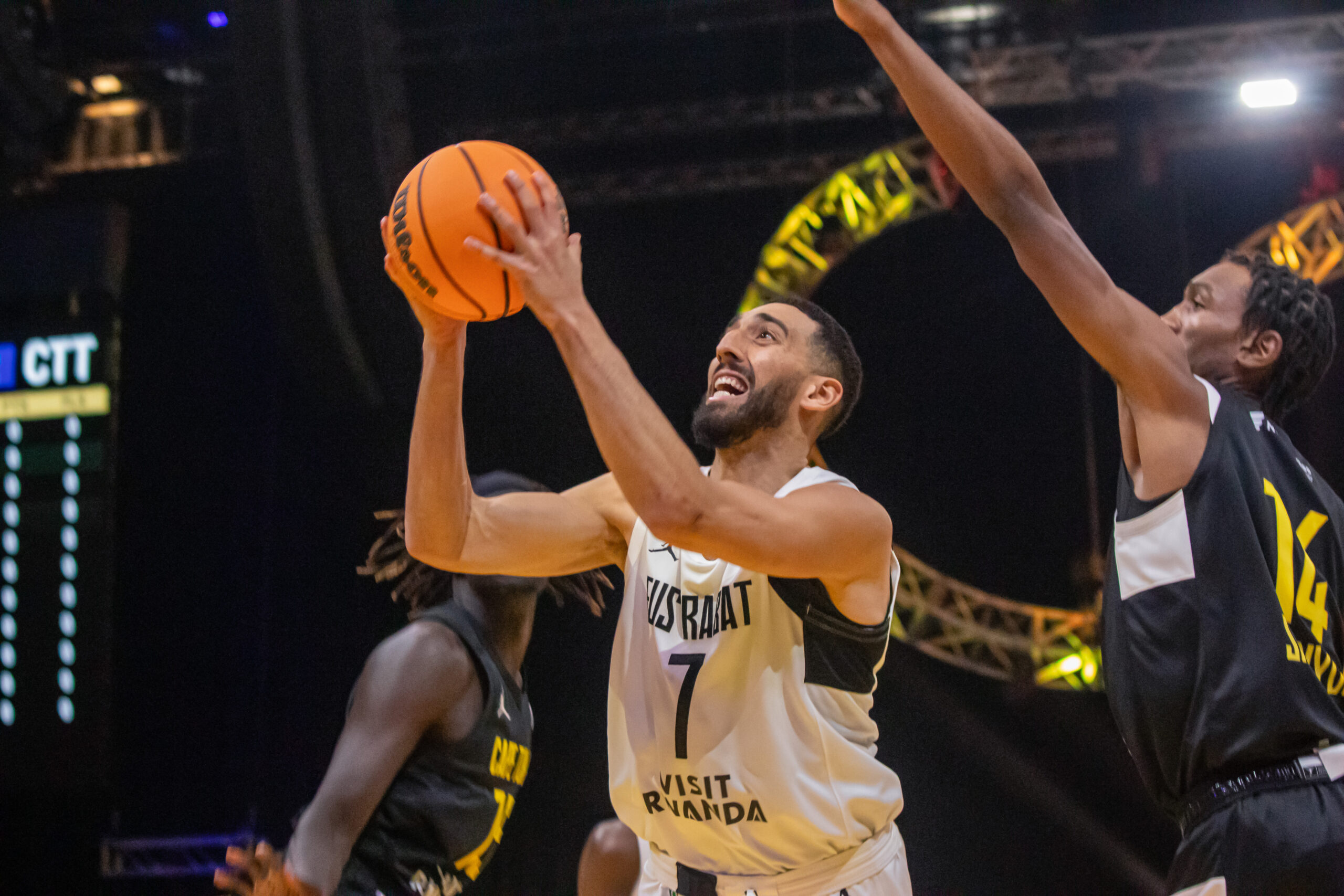
Small forward Cele, who attended college in the US, plays with enthusiasm and energy on the court. He also exudes confidence and is not afraid of the big moment. In the quarter-final of Africa’s premier club competition against FUS Rabat, the tenacious Cele took it upon himself to make a contested buzzer-beater three. This sent the game to overtime, where the Tigers eventually won.

His boisterous celebrations after every highlight reel dunk or shot made with a degree of difficulty make Cele one of a kind in the South African game.

Samkelo Cele in action for the Tigers
Samkelo Cele made it to the All-BAL Team and All-BAL Defensive Team this year. Pictures: FIBA and BAL

Cele, one of two All-Americans from South Africa, has seen increases in some of his production this season compared to last year’s BAL. His points per game jumped from 13.5 to 21. His assists per game went slightly up from 2.5 to 2.7, while his steals per game shifted from 2.2 steals to 2.4. He also returned to the All-BAL Defensive team and debuted in the All-BAL First team.

Power forward, Sibanyoni is the polar opposite of Cele’s on-court persona, in that he quietly goes about his grind. Last season, with Rasheed Hazzard at the helm, Sibanyoni suffered a dip in minutes (9.4) and production (2.2 points per game and two rebounds). It comes against the backdrop of the 26-year-old, averaging 21.7 minutes per game, 4.6 points per game and 7.2 rebounds per game in his BAL debut (in 2022).

Under Florsheim Ngwenya this year, Sibanyoni has thrived, posting 30.9 minutes per game, 9.4 points per game, 1.6 assists per game, 1.3 steals per game and 0.8 blocks per game.

But, the one aspect of his game – which saw a dramatic increase – is his rebounding, his strongest asset. The 2.08m big man, who ranked second behind South Sudan prodigy Khaman Malauch in crashing boards, averaged 12.4 rebounds per game. Sibanyoni also owns the BAL rebounding record after grabbing 25 boards vs FUS Rabat in the quarter-finals. 

Part of the reason Cele and Sibanyoni had a successful BAL Season 4, especially in the playoffs, was the inclusion of point guard Dhieu Deing and big man Abdoulaye Ndoye. South Sudanese player – Deing, along with Cartier Diarra, took some of the scoring load and playmaking pressure off the shoulders of Cele. Ndoye provided rim protection and shot-blocking at the centre position, which allowed Sibanyoni to play his role at the four.

Nkosinathi Sibanyoni of the Tigers
Nkosinathi Sibanyoni was ranked number 2 in rebounding in Season 4 of the BAL.

The duo have had a career season for the Tigers and are still in the prime of their playing careers. Could it be time for the duo to expand their horizons beyond South Africa? Both players have spoken about this desire at different stages. Recently, Cele told Newzroom Afrika about his ongoing wish and dream to play in the NBA. But at 26, is there a market for his services in the elite league, or does Cele see himself playing in another league?

In Season 3 of the BAL, Sibanyoni told The Big Tip Off he wants to play outside of South Africa. “I have seen how guys play in other parts of the world, and I believe I have the potential to get where I want to be. It’s a matter of working on my game more and being able to advertise my ability,” said Sibanyoni. “In the next two to five years, I would like to see myself play in different countries and learn from other coaches and players. That way, I will mature as a player.”

In the troubled context of South African basketball, Sibanyoni and Cele have exceeded expectations. Given their career aspirations and exploits in the recently concluded BAL, both players are perfectly positioned to explore playing opportunities outside the country. Hopefully, with the right representation and advice, teams from lucrative leagues in Africa or elsewhere will line up for their services. It would be a just reward for their talents.

Time for Cele and Sibanyoni to make the most of their careers Read More »

Eke banks on Hoopers’ BAL run to lift image of Nigerian basketball

FOLLOWING the Rivers Hoopers’ BAL third-place final game win against the Cape Town Tigers, which earned them a podium finish, the post-game press conference started unconventionally.

Guard Devine Eke initiated his own press conference while waiting for coach Ogoh Odaudu to emerge from the locker room with his Coach of the Year trophy. He posed questions to the media for about 2 minutes before jokingly concluding the short proceedings, saying he should stop before he gets into trouble upon Odaudu’s return.

Eke’s energetic presence provided insight into the team dynamic, balanced by a laid-back atmosphere and mutual respect. This has defined the team’s DNA in the Cinderella story for the Rivers Hoopers this season.

In an interview with The Big Tip Off, Eke discussed his initial impressions of the league and the team’s goal for the season.

Devine Eke at the BAL
Devine Eke led the Hoopers to a third-place finish in Season 4 of the BAL. Picture: The BAL and X Ball

Eke, who joined the team in February, admitted he was initially sceptical about the readiness of the league. However, after having a superb BAL tournament, he acknowledged his misconceptions about the BAL were incorrect.

“I didn’t think the BAL was ready yet, but man, I was wrong. This league is amazing, and I love it. I’ve met so many great people. My expectations were wrong. Everyone who told me to come was 100% right… I’m happy I listened to those who advised me.”

Hoopers, returning to the BAL since last appearing in 2021, wanted to shift how Nigerian basketball is viewed, especially after the national team’s dismal performance in the first round of AfroBasket qualifiers in February.

“The goal coming here was changing the narrative of our country’s basketball. We want the next time a Nigerian team comes here to believe they can do what Rivers Hoopers did or even better.”

From the first game, it was evident that it was a different team. Over and above the obvious changes made to the roster and additions to the coaching staff, there was a strong sense of unity that is often scarce amongst teams in this competition.


View this post on Instagram


A post shared by G A T S I N Z I (@gatsinzi__dan)

Eke, who made the All-BAL Second team, pointed to chemistry and a selfless desire to win, as the North Star that guided them to their Cinderella run.

“I think our team chemistry is one of a kind. From the local players to import players, everybody had the same goal. So when you have a team that has the same goal, it’s easy to bond, it’s easy to win, it’s easy to just be successful,” said Eke.

“Everyone had the same goal of winning, nobody cared about scoring. Nobody cared about their minutes. Nobody cared about rebounds or assists. We all just came together as a collective and wanted to win. And that made it easy.”

This unity began at the top, from the coaching staff and management led by Odaudu. From the outside looking in, it would have been easy to perceive Odaudu’s impact on the team as purely tactical. But to Eke, his coach had a far-reaching effect. Each player was encouraged to keep taking shots and find the open man, whether they had a lead they were trying to maintain or cut down on one.

“He gave us confidence and faith, and he believed in us. There were a lot of times during the games – obviously, you guys don’t see it… But there’s been a lot of times during the games when guys had their heads down, even myself, but the way he encouraged us was just tremendous,” explained Eke. “Having coaches that encourage you and don’t just bring you down because you’re missing shots or bench you when you turn the ball over, that’s something really big.”

Devine Eke believes the best of Rivers Hoopers is still to come.

After the Hoopers lost to Al Ahly Benghazi in the semi-finals, they identified the key areas that needed to improve to clinch a podium finish.

“I think we improved our rebounding and limited our turnovers. When we look at the games we lost, it’s because of rebounding and turnovers. And when we focused on that, we could win,” said Eke. “We focused on ourselves, we wanted to keep having fun. You know, from the beginning like, the reason why we were winning was because everyone was having fun. Everyone was touching the ball, everyone was swinging a ball, everyone was scoring, and our bench was going crazy. So we just wanted to keep the same mindset that we had in Dakar.”

Reflecting on his BAL debut, Eke says the tournament has improved his skill level and raised his stock.

“There is a lot of amazing talent in this league, everybody is strong, skilful and physical. This helped me because I had to really think the game through. There are a lot of great players coached by great coaches and this helped my game a lot,” said Eke.

He also hopes the Hoopers will improve on this season’s BAL performance.

“We just want to grow from this season. See what we did wrong, what we did right and just keep striving for greatness,” said Eke. “The main goal is to come back next year. We want to put Hoopers somewhere special. This year we finished third, but we want to be able to win the BAL.”

The Rivers Hoopers’ goal for next season is ambitious but achievable. With no back-to-back champions yet, three new teams in this year’s semi-finals, a team from the Road to The BAL making it to the finals and the crowning of a new champion, the evidence is clear that the championship is anyone’s for the taking.

Eke banks on Hoopers’ BAL run to lift image of Nigerian basketball Read More »

Petro’s BAL triumph opens a new chapter for Angolan basketball

(KIGALI) The Petro de Luanda team woke up on Sunday with that championship feeling. They will head home to Angola, knowing they are Africa’s number 1 club. After three frustrating years of consistently finishing in the top four in the BAL, winning the continental title at the fourth attempt, in Season 4 of the competition must be extra sweet for Petro.

The Os Tricolores secured a thrilling 107-94 victory over Al Ahly Benghazi, who made BAL history by becoming the first Road to BAL team to make it to the final.

Losing coach Ivan Jermic of Al Ahly praised his team’s effort and acknowledged Petro’s superior defence. “They played a really good game tonight (Saturday). We were in the game for the first three quarters but they played good defence. They pushed us away from the basket and gave themselves opportunities to score on fast breaks,” Jermic reflected. “My players gave the maximum but tonight Petro won.”

Childe Dundao at the BAL
Childe Dundao played his part in Petro’s successful BAL Season 4 campaign. Picture: BAL

The Serbian acknowledged the significance of their journey, “For Al Ahly, this is a big deal. This is the first time they have played in this kind of competition. This is good quality basketball, the organization is really good. We are happy that this kind of competition exists. I believe Africa will be exciting in the next 20 years,” Jermic stated.

Standout performances from key players drove Petro’s victory. Nicholas Faust was exceptional, scoring 27 points, while Markeith Cummings added 20 points, demonstrating his leadership on and off the court. “I was one of the leaders in the locker room and our main thing was to always stay confident and together whether we are down 30 or 40. Just believe in each other and we showed it,” Cummings stated.

Reflecting on the depth of Petro’s roster, Cummings added, “Our bench – we have a lot of guys so we can go up to the ninth or tenth man in the rotation and I think they go up to four or five and that’s about it. So we used all our firepower.”

Petro’s captain, Carlos Morais, expressed his pride in the team’s achievement. “This means everything to us. We’ve been trying to get this trophy for four years. And to get it now, it means a lot not just for Petro but for Angolan basketball. Now we see hope at the end of the tunnel. Next year Angola is going to host the AfroBasket, so winning this trophy means a lot for everybody,” Morais shared.


View this post on Instagram


A post shared by Basketball Africa League (@thebal)

Reflecting on their journey and the impact of former coach Neto, he explained, “I’m never gonna compare coaches and philosophies, but I’m gonna take this moment to thank Coach Neto for everything he did for us because he is part of what just happened. He is part of the group that we have. He is the one who put everything together.”

Jo Acuil, who won the Defensive Player of the Year, the Scoring Title, and the Most Valuable Player awards, spoke about his mixed emotions.

“I think I am gonna need a couple of days to process the impact of what really just happened. Obviously, the emotions are still very raw after the loss. I lost in game 5 in Australia as well, so it has been disappointing and that is all I can think about now,” Acuil said. “As far as what I have won? They hold significance but I am naturally a winner, and very competitive so I would give away all three of these to get the main trophy because as much as anything, I know what it meant to me, what it would have meant for Libya but the people of South Sudan as well.”

Jo Acuil in action at the BAL
Jo Acuil won individual honours, MVP and top scorer at the BAL despite Al Ahly’s loss to Petro.

Yanick Moreira emphasized the importance of teamwork and resilience in their victory. “I don’t know if you remember but last time I was here after we lost. And I have seen many faces who thought we were done. All we did was talk in the locker room because we knew we weren’t playing our basketball but when we started the third quarter – we made some stops and we kept running and that is how we won,” Moreira explained.

He also highlighted the significance of the win for Angola. “It means a lot for our country. We haven’t played great basketball – we have been coming for four years straight and many people were saying that Angolan basketball is done. So, we have done this for our country.”

As Petro de Luanda celebrates their hard-fought victory, they look forward to future challenges with renewed confidence and determination. The triumph marks a milestone for the team and the start of a new era for Angolan basketball.

Petro’s BAL triumph opens a new chapter for Angolan basketball Read More »

BAL Season 4 Final: Who will have the edge? Petro or Al Ahly

(KIGALI) The final game of the BAL will see Petro de Luanda and Al Ahly Libya battle it out for the championship. Both teams demonstrated exceptional skill and determination in their semi-final victories.

Petro de Luanda:

Path to Semi-Finals: Petro secured a narrow 66-65 win against AS Douanes in the quarter-finals, showcasing their resilience and ability to perform under pressure. Nicholas Faust’s clutch three-pointer in the final seconds was crucial to their victory.

Semi-Final Recap: Petro showcased their depth and tactical acumen, in their semi-final battle victory over Cape Town Tigers. Despite a back-and-forth battle, Petro’s Nicholas Faust hit crucial three-pointers in the second quarter to build a lead. The Tigers fought back to tie the game and force overtime, but Petro outscored them 19-9 in the extra period, securing a 96-86 win.

Carlos Morais BAL final
Carlos Morais will provide experience coming off the bench in today’s final: Pictures: The BAL

Al Ahly Libya:

Path to Semi-Finals: Al Ahly pulled off an upset against defending champions Al Ahly Egypt with an 86-77 victory. Robert Golden’s 23 points, nine assists, and strong performances from Jo Acuil and Majok Deng, were paramount to their success.

Semi-Final Recap: Against the Rivers Hoopers, Al Ahly demonstrated their ability to adapt and overcome adversity. Despite losing an 11-point halftime lead and trailing briefly in the fourth quarter, they rallied to tie the game and push it into overtime. Their composure in the extra period, highlighted by clutch free throws and defensive stops, led to an 89-83 victory.

Key Players to Watch:

Petro de Luanda: Carlos Morais’ leadership and scoring will be critical, and Nicholas Faust’s timely shooting can change the game’s momentum.

Al Ahly Libya: Robert Golden, a key playmaker, and Jo Acuil, whose inside presence can dominate the paint.

Jo Acuiel of Al Ahly Benghazi
Jo Acuil has been phenomenal on the boards and scoring for Al Ahly Benghazi.

Strategic Insights:

Petro de Luanda: Petro needs to maintain their defensive intensity and ensure shooters, like Nicholas Faust, get open looks. Controlling the tempo and limiting turnovers will be crucial.

Al Ahly Libya: Al Ahly must capitalize on their strong inside game and maintain pressure on Petro’s guards. Effective ball distribution and exploiting mismatches can break down Petro’s defence.

Final Thoughts:

The BAL final will be a clash of titans, each vying for the ultimate prize in the BAL trophy. Fans can expect a display of athleticism, and strategy, but most especially of heart as these teams lay it all on the line.

BAL Season 4 Final: Who will have the edge? Petro or Al Ahly Read More »

Diarra and Tigers find a new swag ahead of Petro battle

THE Cape Tigers Town have not let their wild card qualification for BAL playoffs go to waste. The South African team has gone on a mini-dream run in Kigali and they look like a team that has risen from the rubble of a forgettable Kalahari Conference two months ago.

After their seeding game loss to Libya’s Al Ahly Benghazi, it would have been easy to count out the Tigers from being BAL title contenders. Instead, the Tigers continue to be the authors of their own story. They grappled and ground out a (91-88) victory over FUS Rabat, a team that clinically dealt with them in two Kalahari Conference battles.

Today (Wednesday), another Kalahari Conference adversary, Petro de Luanda lies in wait. And with Tigers having discovered their roar, this semi-final duel should be one for the ages.

Cartier Diarra in action
Cartier Diarra will lead the Tigers’ charge against Petro in the BAL semi-finals tonight. Picture: The BTO

Before speaking on the clash against Petro, a hopeful Tigers captain, Cartier Diarra, felt they should have beaten FUS by a wider margin, given how they stifled the Moroccans.

“When I look back at the game against FUS, we should have at least won by 15 points. We missed free throws, lost a ten-point lead with two minutes left, and it was not a great shooting night for us. But we still got the win. It was a show of effort and determination to win,” said Diarra, who has Malian roots. “Of course, Nathi (Nkosinathi Sibanyoni) had 14 offensive rebounds, which allowed us to get second-chance points. That is why I feel hopeful. Also, we look at this journey as the right pathway for us to get revenge on the teams that beat us in Pretoria (where the Kalahari Conference took place). Now we will play Petro. They beat us once, and we beat them, so this is the tie-breaker.”

The Tigers had five players scoring in double digits against FUS. Nkosinathi Sibanyoni, who crashed a record 25 boards in that game, scored 16 points. Samkelo Cele, who dropped a three-point buzzer-beater that sent the game into overtime, had a massive 30 points. South Sudanese duo Ngor Mayang (13) and Dhieu Deing (12) also made solid contributions.

Diarra, who scored 15 points and had eight assists, says Sibanyoni got them going against FUS. He also recalled how Cele’s heroics kept them alive.

“It started with Nathi. I have already spoken about what rebounding did for us. He was running in transition and forcing people to guard him, which put our shooters in a position to get open looks. So he was our focal point,” said Diarra. “Sam is always ultra-aggressive going to the basket, whether you foul him or not. He hit that big shot with seconds left. It was either him or me taking that shot. When he got the ball, I knew he would make the shot.

“The way he shoots is so amazing. He has a high release, which is difficult to block. He did a double clutch pump – he said it felt so good he wanted to turn around. We are just happy he got the shot.”


View this post on Instagram


A post shared by X Ball Africa (@xballafrica__)

Diarra and the Tigers have had two extra days after their exploits on Sunday. They look forward to taking on a Petro team that overcame a 20-point fourth-quarter deficit against Senegal’s AS Douanes on Monday.

It must be said, that the Angolans have looked shaky from the beginning of the Kalahari Conference, and the Tigers would be justified in fancying themselves to win the game.

Cartier Diarra in action
Cartier Diarra believes there has been more pride and focus in the Tigers unit during the playoffs.

Also, it would be safe to say the Tigers and Petro are evenly matched ahead of their semi-final clash, but Diarra disagrees.

“I don’t believe we are evenly matched. I think we have better guards and bigs. They play well in their system because they have been together for a long time. However, I think we have the advantage,” said Diarra.

“I know (Childe) Dundao will be guarding me. I feel like he is too small. That’s how we won the last time, with me being aggressive on him and putting him in tight situations – it forced their bigs to help. Samkelo also played great defence on Carlos (Morais) last time, holding him scoreless. We need him to do that again.”

Diarra intimated further on the advantages the Tigers have over their last four opponents: “I know they added Nick (Faust), who scored 13 last night. We need to stop him from having that run. If we minimise their ability to get threes and force them to go for layups, a big like AB (Abdoulaye Ndoye) will be able to stop them because of his length. He had five blocks in the last game. I feel like we have the advantage. All we have to do is execute and do what we do best.”

Diarra and Tigers find a new swag ahead of Petro battle Read More »

Nouhi carving his own path, inspired by his father

AYOUB Nouhi did not need to look far for inspiration when he decided basketball would be his first love. The inspiration was in front of him in the form of his father – a former professional player.

Nouhi, like his father Hassan, has gone on to carve out a career of his own. He’s played on the 3X3 circuit, college basketball in the United States, and joined a professional team in his country of birth, Belgium. 

The 25-year-old, now playing for FUS Rabat, current champion of the elite Division Excellence in Morocco, says he grew up watching his father, who was also his “first coach”.

“I started playing basketball because of my dad. He was a professional basketball player. I remember going to watch his games when I was as young as five years old. He is a big inspiration and a source of motivation. He was my first coach. My dad is the main reason I play basketball,” said Nouhi.

While Nouhi’s father laid the foundation, the 2017 U18 3X3 World Cup tournament in China set Ayoub up for an opportunity of a lifetime.

Ayoub Nouhi in action for FUS
Ayoub Nouhi was a factor in FUS Rabat’s successful qualification for the BAL. Pictures: The BTO

Nouhi led Belgium to victory in the competition and finished as tournament MVP. There was one more surprise! The tournament in China would be the gateway for then-17-year-old Nouhi to achieve his dream of playing college basketball in the United States.

“One of the coaches was watching, and he really liked my game. He asked me to come to the college (University of Texas at Arlington) for a visit. During that visit, I practiced with the team and got a feel for the environment,” said Nouhi. “The visit was great. They loved me and loved my game. It was awesome being there.”

Nouhi, who spent two years at Arlington, says the moment he received the news of a scholarship offer almost brought him to tears.

“Man! I remember it vividly. I was so, so happy. It had been my dream since I was a kid. I have always wanted to play college basketball. I almost cried when they told me they offered me a scholarship. It was a big accomplishment for me and it was the beginning of yet another chapter of my basketball story,” said Nouhi.   

He described the exposure to basketball in the United States as “tough” and “intense”.

“At first, it was hard because the intensity of the practices and the workouts in America are things I had not prepared for. You wake up at 6 a.m. to get ready for conditioning practice. You have your breakfast and then class. After that, there is individual workout and class again, followed by team practice,” said Nouhi. “It’s intense, but I think it makes everybody mentally tough. That experience groomed both as a player and person.”

When COVID-19 hit, Nouhi decided to cut his college career short because of the uncertainty of the NCAA season. He joined his first professional team (Circus Brussels) in Belgium before heading to Morocco.

“I signed my first professional contract during the first year of COVID because we did not know if the college season would continue. It was a tough transition (joining the pros) because although I was used to a European style of play, I had adapted to the American way. Then I had to re-adjust to Europe play again,” said Nouhi. “It was definitely a good experience getting the opportunity to play against grown men in the game. It was a little physical, and I had to play smarter.

“In my second season with Brussels, I got a back injury, so I missed most of the season. After that, I felt I needed a change, and that’s when I had the opportunity to sign with AS Sale (in Morocco) last year. At the time, they were also competing in the Road To BAL. Unfortunately, we did not make it, but it was a great experience. I loved it. So, I decided to stay a little longer in Morocco.”


View this post on Instagram


A post shared by Ayoub Nouhi (@ayoubnouhi3)

Nouhi, who is now wearing the colours of FUS Rabat, has not let the second chance to make it to the Basketball Africa League (BAL) go to waste. He says the journey to the continental tournament was difficult.

“The first thing that comes to mind is that the Road To BAL is getting tougher each year. When I looked at it three years ago, the level was not that high, including that of the imports. I think we did not make it (with Sale) because we thought it would be easy,” said Nouhi, who put solid numbers in last year’s Road To BAL (11 points per game, 3.5 rebounds per game and 3.3 assists per game). “Last year’s qualifiers had players like Solo Diabate, Ater Majok and Zach Lofton, something which had not happened before. Thankfully, we (FUS) recruited well, and with players like Aliou (Diarra) and Jonathan (Jordan), it led to our success and we qualified for the BAL.”

Ayoub Nouhi
Ayoub Nouhi believes FUS Rabat has right attitude to win the BAL.

Nouhi and FUS have had an impressive BAL debut and finished top of the Kalahari Conference in South Africa with a 3-1 record. They also made a strong statement with a win over Petro de Luanda on opening day in March. While the Moroccan club surprised many, Nouhi says their outstanding results boiled to their preparation.

“Honestly, we were happy, but we were not surprised. We worked hard for that moment (to beat Petro). Our win was seen as an upset by many because of Petro’s popularity but we were locked in and ready,” said Nouhi.

FUS have remained locked in during the playoffs in Kigali and caused yet another upset by humbling reigning champions Al Ahly (Egypt) on Friday. Speaking ahead of that game (against Al Ahly), Nouhi said they dotted their i’s and crossed the t’s for the seeding clash.

“Ahly won it last year. They need no introduction. But anything can happen in the BAL. We have a good chance because of our preparation. We have scouted them, so all that’s left is to go out there fight,” said Nouhi.

From an outsider’s perspective, FUS look like a serious contender for the BAL title, but do they believe they can bring a continental club trophy to Morocco since AS Sale did it in 2017?

“We have the same coach who won it that year (Said el Bouzidi). We have four or five players from that team. So we are a team with experience and a winning mentality. Everybody here wants to win,” concluded Nouhi.

Nouhi carving his own path, inspired by his father Read More »

Amin betting on Al Ahly to do a first BAL title repeat

MANY champions can often recall a particular moment when they knew they were close to achieving their goals. For Al Ahly guard Ehab Amin, the moment came during the fourth quarter of the Season 3 BAL final. 

His recollection of the sequence leading to the defining moment captured the essence of why Al Ahly is a lethal team. The Egyptian club’s ability to quickly capitalize on the defensive mishaps of Senegal’s AS Douanes helped points on board in quick succession in last year’s BAL final in Kigali, Rwanda.

“It was late in the fourth quarter when Corey Webster hit a three in the corner. The other team (AS Douanes) inbounded the ball. I got a steal and hit another three. At that point, it was a five-point game, and then suddenly, it jumped to 11. That possession was exciting and at that moment, we knew that we were going to win the championship. It was our main focus and goal for a long time,” says Amin. 

Following their performance in the recently concluded Nile conference, Al Ahly secured a spot in Kigali for the playoffs at the end of May. The North African giants hope to become the BAL’s first back-to-back champions.

In an interview with the Big Tip Off, Amin reflects on his childhood, the challenges he faced early in his career, and the impact of the BAL on Egypt.

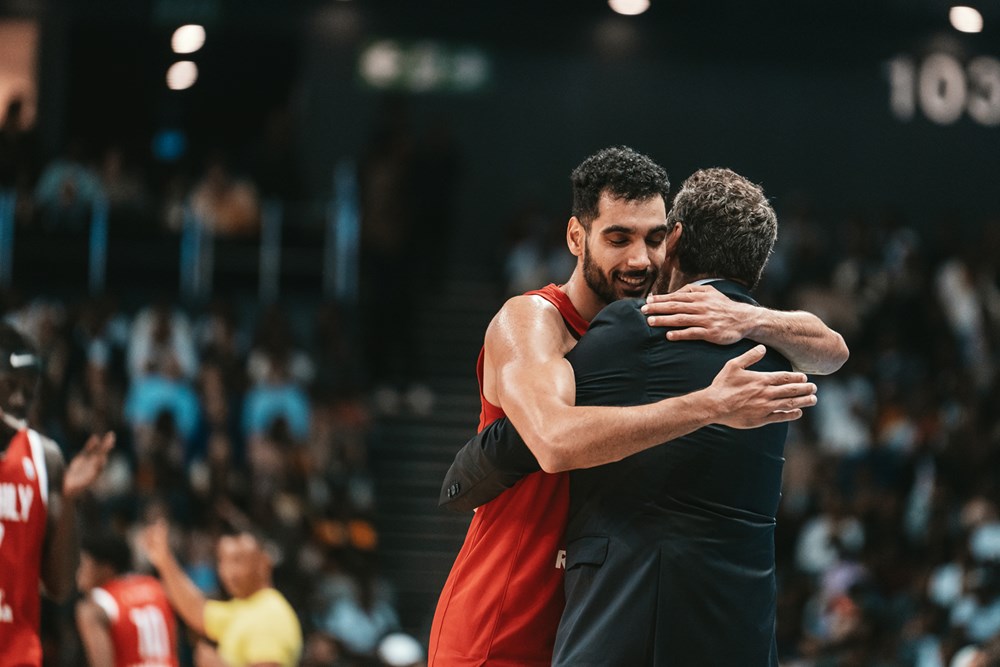
Ehab Amin hugs coach
Ehab Amin embraces coach Agusti Julbe after winning their maiden BAL title. Picture: FIBA Africa

Amin grew up in Alexandria, Egypt, where he started playing basketball aged six for Alexandria Sporting Club. He also enjoyed playing soccer and swimming until he was 11 years old.

“I started playing basketball early in Alexandria. The city and the club I started at [Sporting] were great factors for me to start my basketball career. Basketball was always my favourite, and it was love at first sight. I was good at it, so I kept playing it in school, and my parents supported me when they found out that I wanted to pursue it after school.”

Aged 13, Amin dreamt of studying abroad and pursuing a basketball career in the USA despite the lack of role models from Egypt who had made a similar move. After three years, his dream became a reality as he joined St. John’s Northwestern Military Academy. He then went on to play collegiate basketball at Texas A&M-Corpus Christi and ended his career at the University of Oregon.

“Back then, it was not very popular for Egyptians to go play in the USA, like in high school, college, or even the NBA, I think. So, it was my dream. Watching the NBA and even watching college basketball – the Spurs were my favourite team, and my dream was to play at the highest level. I knew at that time that college could lead me to that, and it was a big step for me. When the chance came, I took it.”

But Amin had his fair share of challenges, especially with injury. First breaking his back, he then sustained a hip injury four years later. There was also adapting to the cultural and environmental changes after leaving Egypt. The 28-year-old credits the support system he had. The former Oregon Ducks player says the people around helped him stay focused and overcome the potential career roadblocks.

“Those challenges built my character. It helped me grow my personality, and helped me be a lot stronger mentally to get to where I am. The people around me at the time also helped me. They knew I wanted to get through those tough times and pursue my dream of playing (basketball),” says Amin. “I knew that I had a long-term goal, and I stuck with it, and that shaped my career after.”

Amin has reaped the rewards of his perseverance and is fulfilling his dream of playing at the highest level in the BAL. He says the competition has helped generate interest in the game in Egypt.

“The BAL has influenced Egypt a lot and in a positive way. It has brought a lot of attention to the game of basketball,” says Amin. “Egypt, like many other African countries, is a very football-dominant country so getting to host the Nile conference has put a spotlight on basketball. I think that is helping the game big time here and it can only go up.”

It is a unique opportunity for Egypt, as the domestic league does not allow spectators at games. As Amin describes it, “It’s fun to play in front of friends, family and players from other sporting codes. And even some celebrities. It’s nice to have them that close to you and it brings the best out of you for sure.”

What makes hosting the Nile Conference extra memorable for Amin is that former mentors and coaches also saw the fruits of their labour in action.

“It’s really special, seeing the old coaches. You get to show them that they did a great job coaching you and they got enjoy that at the arena,” says Amin. “I think they feel like proud fathers. It was great to catch up with them before or even after the games because you don’t get to see them often. Those are moments I enjoy.”

On the court, Al Ahly finished their Nile Conference campaign with a 5-1 record. They suffered an upset defeat against the City Oilers. But the telltale signs began in the game against Central African Republic’s Bangui Sporting Club, where Al Ahly narrowly pulled off an 85-79 win but subsequently fell 82-81 to the Oilers.

“We took things for granted, starting with the game against Bangui. But we managed to come out on top in that game. Against the Oilers we fell into a trap. We thought we could win at any point by double digits,” says Amin. “They deserved to win. They were present the whole game. It was a game with a lot of lead changes and we felt like we could turn it on at any time and win the game. But in the game of basketball, you’ve got to respect the opponent and the game and we made a lot of mistakes at the end of the game offensively and defensively so we paid for that.”

Ehab Amin at BAL season 4
Ehab Amin celebrates winning the BAL Season 3 title with Al Ahly.

Despite the hiccups they faced during the Nile Conference, Amin is confident that in the weeks leading up to Kigali, Al Ahly will improve.

“We are going to get better. There is enough time between now and Kigali to sharpen up. It is just about having everyone on the same page and being cohesive,” says Amin. “We want to be at our peak at the most important moment. That will lead us to our main goal which is to get better and win games.”

Looking beyond the finals, Amin hopes to cement his legacy with Al Ahly on the court. 

“I want to do more than just win titles for Al Ahly. I want help to build a legacy with this team. One that everybody in Egypt or even in Africa will talk about for a long time. A lot of teams have done that before and I want this generation of Al Ahly to be the same,” said the Egyptian international.

Off the court, Amin hopes to create opportunities for kids residing outside of Cairo and Alexandria. He hopes to help them gain access to the same facilities he had growing up.

“I have always wanted to give back to the community… To the kids, especially in places outside of Alexandria and Cairo because we have a lot of clubs, coaches, and courts but there is some raw talent in other cities,” concluded Amin. 

Amin betting on Al Ahly to do a first BAL title repeat Read More »

Miller’s refined skills to help City Boys navigate Nile Conference

THE last time we caught up with Dane Miller Jr, he and the City Oilers were fresh off a successful Road To BAL Elite 16 campaign. They finished second behind the Cape Town Tigers to clinch a ticket to Season 4 of the Basketball Africa League (BAL) behind the moniker the “City Boys.”

After spending time in Indonesia with Prawira Bandung in the Indonesian Basketball League, the forward is back with the Ugandan club. The Oilers will open their Basketball Africa League Nile Conference on Friday (tonight) at 7 pm CAT at the Hassan Mostafa Indoor Sports Complex in Cairo, Egypt.

In an interview with The Big Tip Off, Miller reflected on his time with the Guinean club SLAC and how his time in Indonesia prepared him to take on a leadership role at the Oilers. Miller also spoke about his growth and playing alongside projected 2025 Lottery Pick and Duke commit, Khaman Maluach.

Dane Miller Jr at BAL Season 2
Dane Miller felt like he was in a comfort zone playing for Guinea’s SLAC. Pictures: FIBA Africa

In his first two seasons, he improved from 14.7 points per game, 5.8 assists and 1.5 steals to 21.2 points per game, 7.6 rebounds, and 3.4 steals, an effort which earned him the BAL All-First Team Honours. Coming into this season, Miller feels ready to take things to the next level.

“I feel much more comfortable now. In my first BAL season with SLAC, we had a great team. I made the second team by just waking up off the couch. Honestly, I wasn’t playing anywhere before that. Last year, I played somewhere, and my team allowed me to play. But this year, coming off of playing in Indonesia, my body looks different even when comparing it to the [Road to BAL] qualifiers,” Miller explains.

The 34-year-old spent the window between The Elite 16 and Season 4 playing for Prawira Bandung in the Indonesian Basketball League, an experience which Miller, already a prolific scorer, credits for sharpening his defensive skills.

“Defensively, I’m in great shape due to the role that I played in Indonesia. I was focused and locked in, and I knew that I’d be asked to guard the other team’s best player. I’m more confident now, having played in this league for two years. I feel that I’ve done enough to earn the other team’s respect when I step on the court, which makes me even more confident,” said the American-born player.

The Oilers team has made some changes to their coaching staff with the departure of Mandy Juruni. They have welcomed a new coach, Karim Nesba, a former Moroccan national team player. In addition to the coaching appointment, new players such as Randy Culpepper Sr, Muhammed Bashir Ahmed, and Patrick Ronald Rembert have been acquired. The Oilers have also retained most of the local core from the Road To BAL. After a week of training camp in Cairo, Miller is happy with how the new additions have adjusted.

“We have had good preparation for our upcoming games. Some days we had two practices, while other days we had one. During this time, we have been bonding as a team. We are working hard on different strategies and techniques that we are learning on the fly,” says Miller. “Our coach is putting us in positions that push us out of our comfort zones, but overall, it has been a positive and valuable experience. We feel confident going into our upcoming games.”

The Oilers also welcomed Khaman Maluach, the projected 2025 NBA Lottery pick and Duke commit, who will be an asset to the team.

“Having him on the team is a big advantage. He has a bigger body and can do many things. The last time I saw him, I noticed that he was a great rim protector. Despite being young, he is very competitive and eager to learn. These are the reasons why he is considered an NBA lottery pick,” says Miller.

“I believe we will work well together because passing is one of my strengths. I can teach him different ways to set screens and roll and help him gain confidence on the court. We are counting on him to enjoy the game, be competitive, and contribute to our team. We already have a great team, and he will only add to it.”

The Oilers will have a true test of their strength and preparation tonight (Friday) when they take on the defending champions, Al Ahly Egypt, who are favourites coming into the match. But this task has in no way dulled the Oilers’ confidence.

“The underdog approach I guess is what is sparking some motivation for ourselves, I could say. We have a really good team. I know that everyone is talking about Al Ahly and the other teams and that is okay,” says Miller.

“Bangui Sporting Club is also gonna be tough but it’s okay for those teams to be the favourite – one team is a returning champion and the other team is historically good but it’s still basketball. You still have to go out there and play and figure out who can do what. We’ll see, anything can happen but they put their shoes on the same way we put our shoes on.”

Dane Miller in action at the Road To BAL
Dane Miller says he has refined his skills ahead of the Nile Conference.

As for Miller, he has his eyes set on improving the small details he felt he neglected in last season’s BAL.

“One of the biggest disappointments for me about last year was not making first team all defence. I felt like I deserved that with the stats I had especially on the defensive end. I had the chance to win the scoring title and I lost that on my own. It was the little things like missing free throws,” says Miller.

With the Nile Conference set to start tonight, Miller spoke confidently about the prospects of the Oilers. He feels they will be among the two teams to gain automatic qualification to the playoffs in Kigali, Rwanda.

“When we get to Rwanda I feel like I can lead this team with what we have to a championship and lead a team of rebounders. I just want to be the best leader I can be.”

Miller’s refined skills to help City Boys navigate Nile Conference Read More »

Gatling talks becoming a referee and mentorship of women

IMPRESSIVE crossovers, long-range shooting, dunks, or chase-down blocks are elements of basketball that keep fans on the edge of their seats. Then, there is the part that always divides opinions. It often riles players, coaches, players and fans, but it is necessary for maintaining order in the game. Officiating!

Referee Gerda Gatling has taken on this high-pressure role. She was one of the officials during the recently concluded Basketball Africa League (BAL) Kalahari Conference.

In an interview with The Big Tip Off, Gatling talked about her time as a student-athlete, the importance of networking and relationship building, and the BAL4Her initiative.

Gatling started playing basketball at age seven in Virginia, United States. She was inspired to play by watching her father, one of her first coaches, and older cousin play pick-up games. But she was also an all-state track athlete. It is the sense of community that basketball provided that ultimately won her heart.

“I was naturally good at running track, but I decided to play basketball because it was more of a team sport,” says Gatling. “I liked the idea of working together as a team towards a common goal.”

Gerda Gatling officiating at the BAL
Gerda Gatling left her nine-to-five to become a professional referee. Pictures: Supplied

The idea for Gatling to become a referee took hold during and after her playing days at Stony Brook University, where she graduated with a Bachelor of Science Degree in Economics and Business Management in 2013. That college experience gave her something precious – the ability to handle adversity, a quality key to officiating.

She was also able to build and maintain connections within the Stony Brooks alumni network. She remained a part of the Black and Latino alumni network, even after graduating and starting a career in corporate finance. It is this connection that ultimately opened the door to officiating and also led to her leaving what had become an unfulfilling office job.

“I attended a bi-monthly meeting of the black and Latino alumni group. It was an in-person meeting, and during a conversation with one of the board members (Morgan Cato) about our plans for the weekend, I mentioned that I would be refereeing. Little did I know that she was working on a program within the NBA office,” explained Gatling.

Gerda Gatling at work
Gerda Gatling says basketball and tech go hand in hand.

The conversation proved life-changing, as Gatling signed up for an early career development program (Referee Development Program), which assists former players to become referees. This opportunity allowed her to transition out of corporate and back to the game of basketball.

“It was good to get back on the court but to now be working professionally in a different craft,” says Gatling. “It feels like you are a player because you are constantly working on something. Working on a skill. Whether it’s working on the different roles, on knowledge, positioning, signals, court presence, it was just awesome to get back into that mindset.”

Gatling now works across various competitions including; the G-League, The BIG 3, Athletes Unlimited, as well as Division 1 Women’s Basketball games across the BIG10, The Big East, Atlantic 10, The MEC, The Ivy, The Sun Belt, and most recently the BAL’s Kalahari Conference.

Gatling – who has Nigerian heritage – has paid close attention to Africa’s premier club basketball competition. She says nothing could have prepared her for the experience.

“I did not know what to expect. But my initial expectations got completely blown out of the water. The experience was awesome, the games were competitive and the atmosphere was electric. But what is most exciting is that it is only going to grow bigger and bigger,” says Gatling. “I am grateful that I got to be a part of the South African leg… It’s an honour to get chosen to work at the BAL. It is a great experience and an opportunity to grow as an official.”

During the Kalahari Conference, Gatling was one of 20 mentors who participated in the BAL4Her Career in Sports Workshop. BAL4Her is a platform created by BAL to promote gender equity in the African sports ecosystem.

Gerda Gatling
Gerda Gatling was impressed with the BAL Kalahari Conference. Picture: The BTO

The workshop highlighted opportunities for young women and gave them tools to tackle day-to-day challenges. “There is a lot of opportunity to work in sports and the realm of basketball. And you don’t have to be on the court. A lot of times you do not know what is possible unless you have those conversations, especially with people who look like you and have had those experiences,” says Gatling.

“It is amazing that in year four and even before, it (the BAL) has prioritised giving women the opportunity to engage with other influential women in the space to get that exposure and mentorship.”

The workshop debunked the idea that only sports management degrees can lead to a career in the sports industry. Gatling, a qualified software developer, echoed this point.

“People are multifaceted, and there are multiple things that a person can like. I feel like sometimes we limit ourselves when it comes to our professions and what we do professionally,” says Gatling.

“It is tough to do both at times and it can be mentally exhausting. But I find it important to work in both industries. The tech space is parallel to the sports space in so many ways. Whether it is the on-court stuff that we test at Summer League or what our analytics team does in the office. Just like there is a push for women to be in sports, there is also the same push on the tech side.”

The popularity of women’s basketball has surged in recent years. Gatling hopes that the sport’s popularity will expand to the global stage.

“Women’s basketball is consistently growing. We hope to see more ambassadors like Jewell Loyd, who we had at the recent Kalahari Conference, come to the BAL. It’s crucial to continue expanding the sport, domestically and globally, especially for women. I believe the sport will continue to grow. It’s only a matter of time before it receives the respect it deserves.”

Gatling talks becoming a referee and mentorship of women Read More »

Thunder rocking Kenya and eyeing continental participation

DURING the Cape Town Tigers’ match against FUS Rabat two weeks ago, three men quietly walked into the Sunbet Arena clad in the colours of Kenya’s super club, Nairobi City Thunder.

Sitting courtside at the BAL Kalahari Conference match, the men surveyed the scene, making mental notes of the setting they hope to see their club participate in next year. The Thunder, who came under new ownership last year, have caused raptures in the East African country’s basketball landscape.

Colin Rasmussen, founder and CEO of Twende Sports INC (the company that owns Nairobi City Thunder), Stephen Domingo (co-founder and head of basketball operations of Twende) and team coach Bradley Ibs, who were in South Africa for a couple of days, are spearheading the Thunders’ pursuit for a place in the BAL.

Colin Rasmussen
Colin Rasmussen has lived in Kenya for 11 years. Pictures: The BTO

Rasmussen, born in the US but raised in Pakistan, has called Kenya home for the last 11 years. The lifelong hooper has been active in the basketball scene of that country.

“I love basketball and I am passionate about it. Throughout my time there (Nairobi) I have been involved in the basketball scene. I have built courts and been active in the game from a recreational perspective,” says Rasmussen.

The formation of Twende, which means ” let’s go” in Swahili, has helped Rasmussen and partners do their bit to help transform basketball in Kenya.

“Last year, I decided with my business partners to start Twende Sports – a company dedicated to building the basketball ecosystem and promoting the sport,” said Rasmussen, who is from the streetball circuit. “We believe this is also a unique moment for Africa with the NBA investing in the continent. We are now seeing some of the best players in the world coming from Africa.

“The game is growing on the continent, and we want to support that.”

American-born Domingo has family ties to Nigeria and had the honour of captaining the West African nation’s team during the 2021 Afrobasket in Rwanda.

The 28-year-old former Georgetown Hoyas player says he was searching for ways to give back to basketball on the continent. That is when he met Rasmussen.

“It’s been important for me to figure out how to reinvest in basketball on the continent. Colin and I met in 2022 before I graduated (with an MBA). He was working on another venture. Our focus has been working to grow the game in Kenya, East Africa and we want to achieve success on the continent,” said Domingo.

Rasmussen continued in a similar vein as Domingo. He feels the existence of the BAL has changed the game on the continent, and the aim is for the Thunder to compete at that level.

“I felt this is basketball’s moment with the Basketball Africa League. It’s a new platform, and we aspire to have the best team in Africa. We want to prove that through the BAL,” said Rasmussen. “We have created a professional team, which is a first for Kenya because club basketball there has been recreational. It is a professional environment with contracts for players, with long-term commitments to them, and a proper training environment that enables the existing talent to go to the next level.”

Acquiring top talents like Ariel Okall, Ariel Ortega, Faheem Juma, Fidel Okoth, Griffin Ligare, and Albert Odero has made the club a force. The six Thunder players were also part of the Kenya Morans team that played in the 2025 AfroBasket qualifiers in February.

Rasmussen stressed the importance of supporting the national team.

“Our goal is to elevate the game of basketball. Our investment also supports the national team and the ecosystem in Kenya. So, we encourage our players to be part of the national team,” said Rasmussen. “It also benefits us, because it puts the players on the next level platform.”

Stephen Domingo
Stephen Domingo captained the Nigeria national team at the 2021 AfroBasket in Rwanda.

While Kenyan players are the core of the Thunder, Domingo highlighted the importance of tapping into the expatriate communities for talent.

“Any good roster has a thesis behind it. Ours is that the Kenyan players are the backbone of the team. There is also a large South Sudanese population in Nairobi. Within that community are talented players who are looking for opportunities… So, it’s talent we should not lose out on,” said Domingo.

Rasmussen and Domingo are on track to fulfilling their ambition for the Nairobi-based club. The undefeated Thunder, who have a 16-0 record in the Kenya Basketball League (KBL), are on course to finish top. With a place in the KBL playoffs guaranteed, the goal is to win the league and set themselves on the path to the pinnacle of African club basketball.

Thunder rocking Kenya and eyeing continental participation Read More »

×
Verified by MonsterInsights