“Give us a chance and allow us to show you what magic is”
I live my life led by a mantra and love for the game. I think the most uplifting thing I can say is, DO NOT GIVE UP! Do not give up playing. Do not give up coaching. Do not give up officiating. Do not give up on being a leader in basketball. I say this because, every other day someone will question your judgement. Someone will put a red pen on the work that you do or have done. Someone will question or discredit your decisions. Someone will call you an emotional wreck because you cried. Someone wants you to fail!
There have been many times where I thought I was in way over my head. Maybe I still think that today, but all I have done and continue to do is what drives me to do more. And I can be that emotional wreck at times, but I would not be the woman I am today without the emotions that drive me EVERY SINGLE DAY. The emotions make me want to do more. The emotions are what push me to be a part of the rebuild that is long overdue in South African basketball.
Hale Bookholane officiating during the 2018 Varsity Basketball. Picture: THE BTO
I definitely cannot do it alone. We need to work together. We need to come together. There is power in numbers. Power only we can unleash, and not just for our benefit, but for the benefit of the generations to come. History will judge us for not doing anything. History will judge us for giving up.
I am also a referee
Refereeing takes a toll on you, especially when everyone is waiting for you to make that one mistake.
As officials, we usually talk about limiting those mistakes to as little as none, but we all know that is an impossibility. If we are right in our decision-making, then coaches, players and fans are happy, but if we are wrong, we are blamed and accused of the worst.
And on a bad day, I will get home, cry my eyes out, send a few messages and voice notes, post a few messages on social media, and go to bed. Surprisingly, the next day I will wake up and want to be better and do better. The love I have for this game is unimaginable and probably why I keep coming back, lol! I think of basketball as the sport that saved my life, and all that I do for it, is my way of saying thank you for all that you have done for me.
Men have to pick up the fight
The one part I have tried to ignore, is the side that many females never want to talk about. The uncomfortable comments you get. The sexual advances. Having to do double the work to prove your worth and capabilities. All because you are a woman. Most of us do not talk about it. But in a time where Gender-Based Violence is at the tip of our tongues and every day you wake up to shattering tales of women and children suffering the worst imaginable violence, it would not be right to sweep this topic under the rug.
Hale Bookholane is calling an equal level playing field. Picture: Supplied
I think we as women have spoken enough. We as women have reported enough cases. We as women have been raped, abused and murdered enough.
It’s now time for the men to stand with us and fight. Enough talking. We need action!
We talk about creating enabling environments for women to flourish
There is no other enabling environment that can be created for women other than equality.
Women do not need to be treated like a special project in sport, in fact in anything. Women should be given the same opportunities as men. I mean, the same rules apply in basketball for both men and women, right?
So why deny us those opportunities? Or better yet, why delay those opportunities for us? Women are also capable. Women are also hard working. Women can also do anything they put their minds to. Give us a chance and allow us to show you what magic is.
MY basketball journey started on St Thomas Road at the prestigious Durban High School (DHS). When I arrived, DHS was ranked the number one basketball school in the country and continued its tradition of dominance of on South African courts.
At the beginning of my grade 8 year, DHS head coach, Letha Zulu, made us aware that it should be an honour to don the blue and gold. We were told tales of the legends that had worn the uniform and how they never let the badge down.
Names like Nhlanhla Dlamini, Stenga Khumalo and Dumisani Gabashe, who have worn national team colours come to mind.
A lot of my peers zoned out during coach Zulu’s talk, but all I could think about was how cool it would be to leave a legacy there. Considering I had not played the sport before, I knew it would take a lot of work to make my hoop dreams come true.
I started with the under-14 D side and only made an A-side when I got to the 10th grade. There was no time to rest on my laurels, I worked out almost every single day. If you were looking for me, the best place to start was the basketball court. Eventually, the work I put in paid off when I made the KwaZulu-Natal team that won the SA Schools championship in 2013 and 2014.
Manelisi Mthiyane in action during the 2018 USSA basketball tournament at Wits. Pictures: THE BTO
Going forward, I knew that hard work and perseverance would serve me well on and off the court.
Earlier in my matric year, I received a letter from the University of Pretoria that my provisional application to study there had been rejected. Rather than sit in disappointment, I worked harder, improved my results and later was accepted at Tuks for a Bcom Financial Science degree.
My basketball career at Tuks did not start the way I had planned. I was disappointed to start in the second team but kept at it and before the year ended I laced-up for the first team. My time at Tuks also had its speed humps, including getting injured in my second year, which prevented me from competing in many competitions, and facing financial exclusion.
Manelisi Mthiyane in action for the Mpumalanga Rhinos
The one thing that remained constant throughout the hurdles was the work I put into my books and on the court. The work I put into the game never went unnoticed. I represented my city at the SALGA games for three years in a row and won gold all 3 times. This earned me a basketball bursary, which helped fund the last few years of my degree. I am grateful to the Tuks Basketball organization for the faith they put in me.
Over the years I gave the team and the club everything I had, and have no regrets.
I was fortunate enough to play alongside great players who represented the country. These men became mentors and eventually good friends. I had the opportunity to play for some of the best coaches in South Africa, including Danny Mokwena, Neo Mothiba and George Makena. These men made me a better student of the game and left life lessons that I will carry for the rest of my life.
I don’t know where the game will take me next. However, as I reflect basketball helped me continue my studies and graduate. I experienced playing professionally. And, I have met some amazing people along the way.
I recently got a job, and plan to apply the same work ethic I used in basketball to both my job and business (in the future).
Age is on my side and there are a bunch of things I want to accomplish on the court. Right now, I am grateful to God, my family and basketball for getting me where I am today.
FROM a city that never sleeps to a city that never wakes. From having gridlock traffic to empty roads and streets. This is the new reality in Lagos! I have never seen Lagos like this, until the Coronavirus pandemic.
The government imposed a lockdown and has instructed people to stay at home and only go out to get essentials. For a people that are always on the move, it felt like a deprivation of our existence. We could not even converge at our various religious houses to pray against this virus that has altered the way we live. I guess we will do the “casting and binding” from our various homes.
Before the pandemic, I was in Port Harcourt where my basketball club, Rivers Hoopers is based. As winners of the domestic competition in Nigeria last season, we gained the right to represent the country at the inaugural season of the 2020 Basketball Africa League (BAL). We were having intense training sessions, with the mindset of showcasing our talent at a high level and on a new platform. Little did we know that the pandemic was going to halt the commencement of the league and stop major sporting activities across the world.
Rivers Hoopers shooting guard Benjamin Ikechukwu believes it’s time for global citizenry. Picture: Supplied
I was disappointed because we had prepared our bodies and minds for the challenge. At first, I just wanted the league to start irrespective of what was going on, but in hindsight, that would have been selfish of me because a lot of people would be exposed to and endangered by the virus. This new villain in town watered down the thrill and excitement, even as our superheroes (COVID-19 first responders) combat, contain and find a panacea.
I miss playing basketball. I feel incomplete, being unable to do the very thing that brings joy to my soul. The absence of having fans around during practice, at games, being in the gym working out with teammates, the adrenaline pumping, while we go hard at each other, just so we can be ready to compete, has been a difficult adjustment. I miss the entire basketball fraternity.
It has been challenging to sustain the progress made in preparation for the league, before the lockdown. As a shooting guard, I need to practice my shots frequently, but without a hoop at home and not being able to utilise the local courts because of safety concerns, it hurts.
I have been putting in the work at home, and even with limited space, I have managed to stay in shape and eat right because you never know when the next opportunity to play will emerge, and like a boy scout, I have to be prepared.
However, I have used this period to spend quality time with my wife and our three-month-old baby. I have also been reflecting on how COVID-19 has elaborated the fact that we need each other, because there is more that unites us than separates us as humans. We need to treat the Earth better, as pollution drastically dropped due to the lockdown across the world. The need to be good global citizens cannot be over-accentuated at this time, as we collectively find ways to help each other get through this challenging time.
Life as we know it, may not be the same, but I look forward to the day when I can play basketball, shake hands, hug people freely and see the smiles on their faces without masks. Until then, let us all stay safe.
THE life of a pro basketball player is not as glamorous as sports fans would like to think. It does take it’s toll on you: being away from family, friends, hopping from one country to another, it’s all work. Another hoop I have had to jump through is the language barrier, which I have experienced in all the countries I have played in.
I am from Kenya and have played basketball in several countries: Oman for three seasons with two different teams and a stint in the Seychelles.
While it is all work, the experience has been deeply educational: new cultures, new people, and new food. All this has formed part of a life-changing experience off the court, and I would not trade it for anything.
Ariel Okall celebrating with a Kenya Morans teammate. Picture: FIBA
When I think about it, basketball has opened the doors for me to immerse myself in new surroundings and gain a different perspective of life and how I live it.
This year, my basketball journey has taken me to Algeria, where I joined Union Sportive Setifienne. While the move was great for me and my stay here has been good, unfortunately, it has come at a time when the world is going through a crisis. The COVID-19 pandemic has stifled the careers of many athletes, myself included. Without sports, our lives as athletes are impacted in certain ways. We can no longer play or practice the way we are used to, because gatherings are illegal now.
I have only played four games for my new team and I was adjusting well to the system. Honestly, I miss the action. The game is life to me and without it, I feel like a part of me has been ripped out and it causes me pain sometimes.
Mostly, I miss the intense practice where I am pushed to the limit. I feel that’s what brings out the best in me.
One thing I have noticed about Algerian basketball is that the teams are competitive and well invested in. It’s hard to say which team is better than the other. So, I hope to get back to that level of competition at some point.
In the meantime, to keep fit I have come up with various ways to exercise and also keep busy. I have a training program. I do all my training indoors with the help of my trainer and also from the team. It has worked well for me, I feel stronger, and I know I have to be ready, because we can start playing anytime.
To stay mentally sharp, I read a lot, I write on my blog, and I watch some of my past games to figure out how to improve my game. It’s always great to keep on studying your game.
During tough times it’s always better if you are close to the people, you love and care about. I miss my family back home, and the food there. East or west home is best!
I hope that the virus will be controlled, and we will be back in action soon to the game we love. In the meantime, let’s stay safe and keep working. Basketball will rise again!
IN The Big Tip Off’s question and answer (Q & A) interview, we speak to Mozambique and Ferroviario de Maputo basketball player David Canivete Jr. Canivete touches on how the COVID-19 pandemic has impacted basketball, his greatest triumphs and adversaries on the court.
Q: The COVID-19 pandemic has impacted the globe in many ways. How is COVID-19 being dealt with in Mozambique?
A: There has been a Stage 3 state of emergency since April. There are no recorded deaths and the number of recovered and infected people is low compared to other countries in the region (southern Africa).
The public is taking the situation seriously by following the government and World Health Organisation’s recommendations. That’s why the situation is a bit stable and I hope we don’t go higher than Stage 3.
Q: How long has it been since you last played basketball and how are you feeling about that?
A: It’s been almost 45 days. I feel sad because when you are used to doing something daily with love, pride and joy, it’s hard to stop. What is worse is, you did not create the situation and that’s difficult to manage sometimes.
Q: What were you and your Ferroviario teammates’ mood when you were informed that the Basketball Africa League 2020 season was being postponed? Explain those feelings?
A: We were expecting the postponement. Before the tip off, the number of cases in Africa were already increasing. When the Sahara Division tip off was postponed, it was only a matter of time before our division followed suit. We felt a mixture of disappointment and hope, but as the days passed, we realised that the best thing to do was to stop basketball activities, stay safe and wait for updates.
Q: What are you doing with your time, now that there is no basketball until further notice?
A: I spend most of the time with my wife and my kids, I read a lot of science and culture books. I watch new movies and series and I scout other teams to get as much information as I can on them. I also try to be updated about the COVID-19 situation in the world and of course I work out, daily.
David Canivete Jr in action against Jozi Nuggets at the Basketball Africa League qualifiers.Pictures: BTO
Q: What are you doing to stay in shape?
A: As I said, I work out. I try to run at least 10 km, three times a week. I also work on my speed, jumping, power and resistance two or three times a week. In between I make some drills and shoot around with my friend and skills coach, almost daily.
Q: How would describe yourself as a basketball player?
A: I am a team first player with a good IQ, which helps me find and create space for myself and my teammates to score. I am mentally strong and in good physical condition, which allows me to attack and defend the 3 and 4 positions. My long wingspan, helps with finishing lay-ups and in playing defence. I play well in areas near the basket and I also have a good three-point shot and mid-range jumper. I have a good ability to win offensive and defensive rebounds. So, in short, I consider myself a good two-way player.
Q: Are you superstitious or do you have something special you do before a basketball game?
A: I used to tap the roof at the entrance of the court twice when I arrived at the gym and before the game. I pray to God and I ask for blessings and protection.
Q: Who is the toughest player you have played against in basketball (locally) in Mozambique and international on the international stage? And why were they difficult to play against?
A: In Mozambique it’s Ermelindo Novela, who is my teammate. He brings a lot of intensity to the game and, he has a never-say-die spirit on defence and offence (sometimes he reminds me of myself). Internationally it’s Leonel Paulo, who plays for Angola and Petro de Luanda, for the same reasons I mentioned earlier about Ermelindo. Plus Leonel has a body type which allows him to attack and defend the 2, 3, 4 and 5 positions. I think every team should have a player or two like him.
Q: Who is your favourite player in basketball and why is that player your favourite?
A: You know back in the day, for the players of my generation and I, it used to be Fernando Mandlate. We called him Nandinho. He had amazing skills and he was a scoring machine. He was a pure one-man show. That man could make fans at the Maxaquene Arena go crazy. As a kid I imagined myself meeting and telling him personally that I am a fan of his and ask him for some tips. With God’s grace I had the pleasure of playing with him in the national team and at Ferroviario da Beira, in the latter stages of his career.
David Canivete in action against Jozi Nuggets. Picture: BTO
Q: Who is your favourite teammate at club level and who is your favourite teammate in the Mozambique national team? And why?
A: It’s hard to choose because I love everyone in both teams, but honestly, it’s Pio Matos Jr. He is my favourite teammate at club and international level. He has been one of my best friends for more than 15 years. We have experienced wins and losses together in life, but we never split and even when we played for different clubs, we remained tight.
When we first met, we understood each other and since then, together with his twin brother, we have always striven to elevate our game. He is also a strong character. I am one of the few, who can easily communicate with him on and off the court, sometimes with a word or by eye contact and he gets the message. I believe he’s got my back and I have his.
Q: What is your worst memory in basketball?
A: Being cut from the Mozambique team for 2007 FIBA Afrobasket in Angola. I respect coaches’ decisions, but honestly when I look back, I felt like I deserved to be part of the team.
Q: What is your best memory about playing for Mozambique?
A: My first game in the national team jersey. That was during the 2009 Afrobasket qualifiers in Maputo against South Africa. I know it’s your birth country (referring to the interviewer), but I knocked them out. Since that game, I promised myself that being called up to the national team will depend on my performances on the court.
Q: What is or was your greatest achievement in basketball and why?
A: The respect from the people who follow me, because respect is hard to earn and get nowadays, especially from people who do not believe that sports can change lives for the better.
Q: Outside of playing basketball, what is your favourite memory?
A: The birth of my children. I could not be there physically, but I was there in spirit. Honestly, I owe it my wife to be present for the birth of our next child.
Q: What would you be doing if you were not a basketball player and why that choice in career?
A: I would be a diplomat, because have I travelled a lot while playing basketball, which has allowed me to learn about different cultures and languages and I also studied international relations. I think that is a perfect match between the two fields that I love and I have a passion for both.
Q: What are the problems in Mozambican basketball? And what advice would you give, so that they are fixed or corrected?
A: Organisation, investment and commitment. Nothing is perfect, but let’s not focus only on the problems. The focus must be on the origins of those problems. Then we can find the solutions and avoid making similar mistakes in the future. We have to execute!
Q: What is your favourite holiday destination and why?
A: The Mozambican Islands. In my opinion, they are rarely explored and are one of the most beautiful in the world.
Q: What are your hobbies?
A: I love to have a good time with my family and friends. I love music, especially Mozambican hip hop. I am a die-hard fan of criminal investigation series, action and comedy movies… Also read, I like being up to date about current affairs.
Q: If you were president of Mozambique for the day what changes would you make?
A: Having grown up in the world of sports. That is the area where I would make changes. I would focus on infrastructure for sports; building multi-sport arenas and football courts in every city. I would make sport a very big industry, so it can be profitable and benefit the whole of society.
THE world has been brought to a standstill because of the COVID-19 pandemic. Life as we know it has changed drastically; with the prospect of never being the same again. Everyone is trying to adjust to the changes, even in the sports industry. Ideas about live streaming some sports at empty venues have been teased and I am sure other alternatives are being considered. It seems there is nothing that can be done about sports without tampering with sporting rules and contravening the law.
As most should know by now, the basketball governing bodies have postponed games indefinitely. The National Basketball Association (NBA); Basketball Africa League (BAL); and many other national and local leagues have issued statements suspending all games until further notice, to curb the spread of COVID-19. However, it would be irresponsible to be oblivious to how the lockdown has affected basketball players.
Personally, the impact of COVID-19 has been multifaceted. In terms of basketball, being off the court has meant that I have had to improvise my training. I can no longer practice as effectively and my love for competition cannot be satisfied. This has forced me to go back to basics and hone the skills I possess. I have found satisfaction in the cultural reset because it reminded me why I fell in love with the game in the first place. My daily routine consists of morning jogs; stretching; full body strength and conditioning exercises; and ball handling drills in the evening. I am still looking into getting a basketball hoop to practice my shooting. Under the current conditions, I believe that this routine is a winning formula as it helps my mental state. The basketball court has always been my haven, my escape from reality. Doing anything that is even remotely connected to basketball is enough for my peace during this time.
Siphumle Qanya on a Basketball Africa League quest. Pictures: BTO
My career thus far has been quite unpredictable, dependant on factors beyond my control. Nevertheless, it has been quite a success. Since captaining the University of Cape Town (UCT) basketball to a Varsity Basketball final in 2018, I have had the opportunity to represent Phenomenal Phenoms at the 2019 Annual Ashraf Lodewyk Basketball Tournament hosted at WITS university, in which we were victors. After that, I travelled back and forth between Johannesburg and Cape Town to represent Phenoms in the Johannesburg Basketball League (JBL) and CPUT Alumni in the Cape Town Basketball Association (CTBA). During both seasons, I left for Spain to attend the Europrobasket International Academy 6-week training program, which enhanced my experience and exposed me to a higher level of basketball. Upon my return, I continued playing for CPUT Alumni and lost the CTBA Championship in Game 3 of the finals. Earlier this year, I represented Phenoms in the JBL Playoffs and we lost in Game 2 of the semi-finals. Amidst my playing of the game I have also been involved in several basketball photoshoots, commercials and interviews.
Shortly before the lockdown was implemented, there was an opportunity to explore another career path in Johannesburg whilst furthering my basketball career. At the moment, these plans are lingering. I hope things come together and the opportunities align with my expectations, post COVID-19. However, if the status quo reverts, I will be looking into permanently joining a basketball team that plays in the JBL and hope to qualify for the BAL in 2021.
Currently, teams are gearing up to compete in the BAL qualifiers and many coaches are looking at the pool of players they can work with. As a professional player, it is your responsibility to ensure you are always ready for whatever may come. As such, I believe that professionalism is a state of mind; it is more than just a label. So, I am presently trying to make sure I stay ahead of any hurdles and plan on being the best player I can be.
Siphumle Qanya hustles for possession of the ball.
It is difficult to speculate how things will be post COVID-19. Will we ever get back to square one? Maybe, maybe not! The bigger picture involves recovery of economies and re-imagining how our societies will be structured. Post COVID-19 and post-lockdown have to be understood in the context of time. Focusing on the post-lockdown period, the pandemic will still be present but we expect to continue flattening the curve, exercising caution in public areas, and practising good hygiene. I doubt that sports will resume as before. Maybe, the live-streaming with no fans idea could be implemented. But even then, contact sports and team sports could still pose infection risk. Any current conclusive ideas on how to organise sports post-lockdown have to be taken with a pinch of salt, therefore.
To the basketball community in South Africa and at large, these are most certainly trying times for all of us. There is no formula to quench that thirst for the game, whether you are a player or fan. I would like to encourage you to take care of your mental health, protect your peace, and adhere to the lockdown rules and regulations. It is a tough journey ahead of us, but our collective behaviour will determine how long it lasts.
Find peace in knowing that we are united in the struggle as the basketball community.
Lessons can be learnt from the Rwandan genocide and COVID-19
RWANDA reflects during this time of the year. As a country, we have been through the most, having experienced a genocide that took almost a million lives, 26 years ago. I lost my two brothers, my father and other family members during the genocide waged against the Tutsi population. So, every year around this time, I reflect more on the lost lives of my loved ones.
Unfortunately, my compatriots and I are unable to come together to commemorate this period in Rwandan history due to the outbreak of COVID-19.
Once again, my country is involved in a war, but this time around, Rwanda is not alone in this battle against a global pandemic. As I write this, people are indoors, our movement outdoors is restricted to only going to the market to buy food and other essentials. People that are allowed to work, are in services like health and security. Also, the shops close at 6 p.m., no bars and no church. It’s a lockdown!
Because of the situation now, the emphasis is on social distancing and we are not allowed to gather in big numbers. So, commemoration of the genocide is done virtually. If there is a message that has to be passed on to citizens, it’s done through public and private media houses or social media.
Patriots player Aristide Mugabe believes human kindness is what matters now. Picture: FIBA
COVID-19 has interrupted our way of life here and has stopped me from doing what I love and that is playing basketball. I am a basketball player by profession and have been playing since 2001. I have played for a couple of clubs, and I have represented Rwanda since 2011, and later captained the national team from 2013.
Basketball, in a way gave me a second family. I got to meet new brothers, and elders that showed me love and stayed with me through everything I have encountered in life. It has also contributed to my growth as a person and allowed me to contribute to my society.
After my team, Patriots Basketball Club won the league last season and qualified for Basketball Africa League (BAL), we were excited as it was a dream come true to play in a big league like this and to represent our country and region. This league was going to and will change the game on our continent, like we hear the Euroleague has done for basketball in Europe. This is going to be one of the best leagues in the world.
We began our preparations early in the year, as the league was set to start in March in Dakar, but before the launch date the first case of COVID-19 was announced in Senegal and the situation got worse. I feel bad because my teammates and I can’t play, and it has been more than a month now. However, I understand the situation. All we can do is stay ready. We work-out and stay mentally in shape in our homes so that when this pandemic is under control, we will be ready to play again.
Before I close, I would like to tell you two lessons I have learnt on the impact of COVID-19 during this time that are linked to Rwanda commemorating the genocide. Firstly, from the genocide I learnt that, hate and division among people leads to nothing, it only causes destruction. Only in coming together, is society able to build something that can’t be broken. COVID-19 require exactly the same attitude if we are going to defeat it.
Secondly, nations and humanity need to come together for COVID-19 to be controlled. It also shows the world that we need each other to live a good life. And our planet needs for us to take care of it. We should also protect each other and stay together regardless of our differences. Right now, all borders are closed, we can’t do business and we can’t travel. So, life is now dependant on staying healthy. Money, power and our possessions can’t save us. Coming back from the ashes of the genocide has taught Rwanda the same lesson.
In parting, my message to everyone is: stay positive, this is still our year, and as the saying goes, ‘the game is not won in the first quarter’. I still hope that things will get better and we will go outside and play again. For now, let’s practice social distancing, stay healthy and try to follow what our leaders are putting on place to keep us safe. One love.
I have been playing basketball professionally for 10 years and my career has taken me to 12 different African countries including; Morocco, Tunisia, Seychelles, Mozambique, Burkina Faso, Madagascar, Nigeria, Libya and Togo, where I have roots and family. As an American, who also carries a Togolese passport, the latter has been a great benefit for my career on this continent.
See, my dream, while playing basketball in Africa was always that a Euroleague format tournament would be formed, where the best clubs on the continent could compete.
This year, that dream came true when the Basketball Africa League (BAL) was formed by the NBA. This is a great thing for me, because it will give me the platform to continue to build my name and brand in Africa.
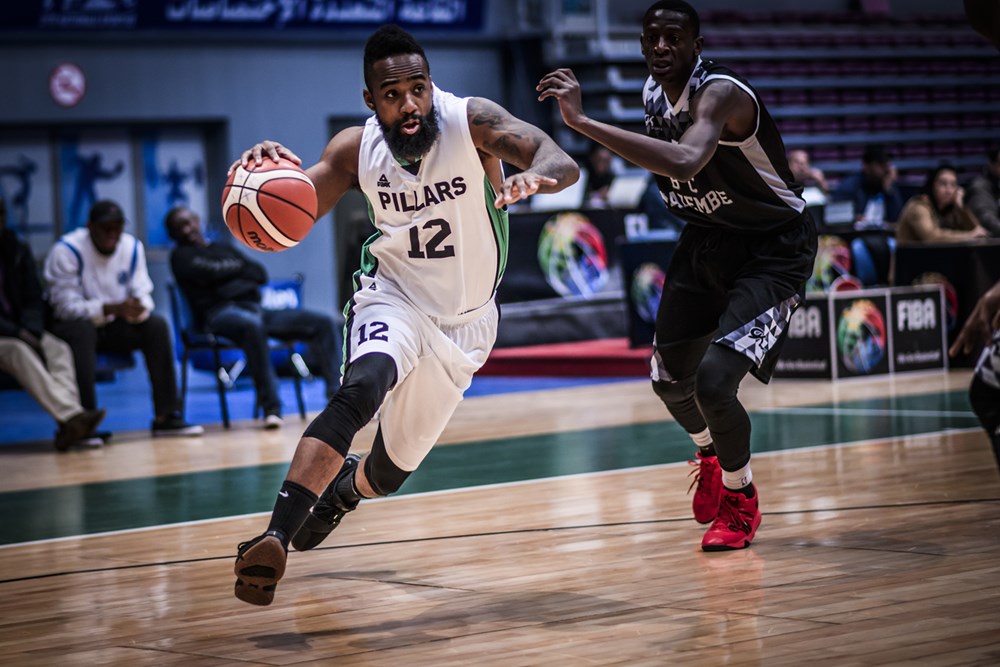
Jimmy Williams in action for Kano Pillars. Picture: FIBA Africa
I was very excited because I knew with me having an African passport, I would have many options to sign with a good team, because each team can sign two players from the rest of the continent and two overseas players. Two months after the league was announced, I remember clear as day, my agent calling me at 4 a.m. telling me he has a deal done for me to play for Senegalese club As Douane. In my mind, it was a perfect situation to play with a great team and coach Mamadou Gueye Pabi.
Two days later I got on a nine hour direct flight to Dakar. I reached Senegal on March 3, and the league was set to launch 10 days later. I practised with the team for a few days and was very excited. I had a feeling we would do well in the competition.
During this time of practice with the team, the cases of COVID-19 were beginning to rapidly spread globally. News was starting to filter through that the league was being postponed because of the COVID-19 spread uncertainties. There were already 12 cases at the time in Senegal and everyday the number was increasing.
Two weeks later I realised that the situation was only getting worse and decided to travel back to the USA. I am currently in Chicago where we are also feeling the impact of COVID-19 on a daily basis. We are all under quarantine and everything is closed: shops, schools, recreational facilities, you name it. You see, the disease knows no borders.
Hopefully, things can go back to a new normal. We all have to work together, stay home so this virus can be controlled and players can get back to the court, and people back to work. Right now, my focus has been training at home and doing all that is necessary to stay in shape. I know as soon basketball resumes, as players, we will have to return in the best condition to play.
The BAL dream may be temporarily deferred, but one thing is for sure: this virus won’t stop my plan to continue building my brand across Africa!
THE one thing I have always enjoyed about the basketball court is that it is a great leveller, it does not accept excuses and does not care about words, promises or social stature. It doesn’t care if you have had a good or bad day. It curries no favour!
As a player, all you need to do is think back to a moment where you thought you could cheat on preparation or sneak in a late night or disrespect the game or your competition; chances are that many, many times you came off second best. The opposite end of the scale is, of course, putting in the hard work and it translating into outstanding individual and team performances. I am simplifying here: the fact remains that the hardwood or concrete has taught many players and coaches tangible lessons about hard work yielding results. This is truly one of my favourite aspects because true mastery of this game requires work in so many facets, physical-technical-psychological, and it bears a striking similarity to the balancing act one needs to attain self-mastery: the meeting of mind-body-spirit. This, within a team dynamic, is what makes this game so compelling and enjoyable.
Why is this important? I think that post COVID-19, we are going to be challenged in ways never thought of before. The hard fact is that life will not be the same, it cannot be!
Social distancing will impact the playing, technical and spectating experience for every sport, not just basketball. We can be optimistic and know that the scientific minds will have a vaccine ready in the next 18 – 24 months. Meanwhile, we will all be challenged to think of creative ways to embrace the change that’s required because ignoring it could mean increased health risks and mortality. What that will mean practically, I don’t know, but it will be a challenge requiring collective effort never seen before.
The basketball community will be tested. We all want to see the game grow to heights we have imagined it reaching since the Premier Basketball League disbanded in 1998/9, and South African basketball was sent into a free-fall that it never recovered from. We have seen some positive developments and growth in tournaments and competition at high school, tertiary, club and 3×3 levels. This year presented so much hope for most of us in the basketball fraternity.
Former South African basketball player Quintin Denyssen. Picture: Supplied
The Basketball Africa League is supposed to pioneer continental competition and is the flagship tournament that has seen federations within the southern Africa region finally start to get their houses in order. Sadly, the gap between southern Africa and the rest of Africa is noticeable with Mozambique and Angola carrying zonal hopes in continental competitions. The question is, will they or any country in the region be able to compete against formidable competition from the rest of Africa? All one needs to do is look at moves made by South Sudan voting in Loul Deng as federation president, Rwanda’s investment in the game, Senegal’s strong development programmes, and a stern examination of club strengths in those respective countries, to understand that we are lagging behind.
COVID-19 has presented a viable opportunity, and I say this with hesitation and constancy, for basketball administration in South Africa to become a competent vehicle and not a swear word. This hard reset can be the biggest opportunity to get things right. We all have a role to play. Checks and balances can be put in place. Outstanding governance matters at all levels can be attended to. An opportunity presents itself for efforts to ensure that basketball is recognised by SASCOC and acknowledged when global or continental competition delegations are constructed. There will never be a window like this again.
A final question that needs answering is, what can individual members of this community do to contribute to basketball’s growth? If we truly want to see the game flourish, then active basketball community citizenry is required. We all have a torch to bear, the onus is on us to identify our role, sharpen skills needed and capitalise on the opportunity presented to do things differently. A journey anywhere starts with the first step and whatever the step, this is our challenge and I believe we can make it work.
SINCE the completion of theBasketball Africa League (BAL)Qualifiers in December 2019, when I assisted Rwandan club, Patriots BBC to the BAL East Division qualification title, there has been an immense sense of excitement from players, coaches, management and fans for the first season of the BAL.
After leaving Patriots, I had the opportunity to move to a powerhouse club that had automatically qualified for the first season of the BAL season. I was eagerly awaiting our first games in Dakar, Senegal when on March 4 2020, but the league was suspended due to COVID-19. Having spent the last couple of weeks preparing film, scouting reports, analytics & training sessions, I, along with all the teams and fans, was extremely disappointed that the league would not go ahead, especially as my team was considered one of the favourites to win the first season of the league. However, the decision made by the BAL executive team, proved to be the right decision, keeping the safety of the teams and fans as top priorities.
Liz Mills during her time at Patriots: Pictures: FIBA and Frank Ogallo
Through my coaching career in Africa, I’ve been able to build a network of coaches, players and managers, which means I’m in a unique position to be able to speak to players and/or coaches in all the teams that would have been competing in the 2020 BAL. Although, initially everyone was disappointed that the league was unable to start in March, there was and continues to be a sense of hope that the league will be able to run later this year. We are anxiously waiting to hear any updates from the BAL executive team. If they are unable to run the first addition of the league, I’d love to see them at least host a tournament for the 2020 BAL teams.
A two-week tournament, similar to FIBA AfroBasket, where one country hosts, and allows the 12 teams the opportunity to compete for the 2020 title. This would facilitate that the 2021 qualifications go on as planned for that season.
On a more positive note, with the league being postponed, it has given teams more time to prepare, enabling them to re-evaluate and re-strategise for the upcoming season. Team managers now have more time to bring on sponsors and scout players, while coaches can continue to build on their strategies and develop their players. The additional time also gives players the opportunity to work on their skills at home and evaluate their own performance by watching film. Whilst there is no date set for the BAL 2020 season, it is important for players to remember that they still have an opportunity to play for their national team for the upcoming 2021 FIBA AfroBasket Qualifiers in November 2020 and February 2021. Staying fit and healthy should be a priority during COVID-19.
Although currently back home in Sydney, Australia, I look forward to returning to Africa when basketball resumes later this year. During COVID-19, I hope everyone stays at home, stays safe and remains healthy.
*Confidential due to ongoing contract re-negotiations.