Author name: Sandisiwe Msibi

Basketball and data enthusiast with an interest in telling the stories behind the box score.

Thrills and records of the Kalahari Conference

AFTER 10 days of intense basketball, high-scoring and record-breaking feats characterised the BAL’s Kalahari Conference. The Big Tip Off’s Sandisiwe Msibi highlights the moments which shaped the Conference, which ended on Sunday in Pretoria, South Africa.

RSSB Tigers and Petro de Luanda both finished 4-1 to claim the top two spots, followed by Al Ahly Libya at 3-2 and Dar City at 2-3, securing the final playoff berths, while Nairobi City Thunder (2-3) narrowly missed out on qualification and the Johannesburg Giants (0-5) finished winless in their debut campaign.

Historic moments and broken records

The Kalahari Conference will go down in history for rewriting and creating BAL history. Tigers guard Craig Randall delivered a phenomenal performance, breaking a BAL scoring record of 54 points and 11 assists against Dar City. He finished the conference averaging 36.3 assists, leading the conference in scoring, despite not playing the last game against NCT.

“My teammates and my coaches put more trust in me than I could ask for,” Randall said. “I do not take that for granted. It is easy to come out here and play with confidence and have fun.”

Al Ahly Libya produced a record-breaking offensive performance, scoring 118 points against Dar City, one of the highest team totals in BAL history. In that same game, Damion Baugh registered 18 assists, setting a new league record and surpassing the previous mark of 16.

Baugh also achieved a historic milestone, becoming the first player in BAL history to record a triple-double, posting 11 points, 10 assists, and 11 rebounds in Al Ahly’s last game against the Johannesburg Giants. He finished the conference as the assist leader with 10.0 assists per game.

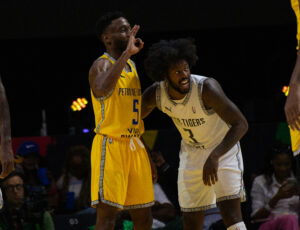
Petro vs Tigers 06 April 2026
Petro de Luanda and RSSB Tigers finished the Kalahari Conference with identical (4-1) records. Pictures: The BTO.

RSSB Tigers (Rwanda)

The most remarkable story of the Kalahari Conference was undoubtedly the RSSB Tigers, a team that didn’t even exist in the BAL ecosystem until two weeks before the tournament began.

To finish the conference with four wins, only losing their final game against the fifth-seeded Nairobi City Thunder (in which conference-leading scorer Randall did not play), represents one of the most improbable success stories in BAL history.

When asked about his team’s performance in this conference, head coach Henry Mwinuka summed up by saying, “This is for our country, Rwanda.”

Petro de Luanda (Angola)

The 2024 champs continued to build on their legacy of excellence, securing the second seed with a 4-1 record. Their consistent performance reaffirms their status as one of the premier clubs in African basketball.

Petro’s coach Sergio Moreno was left impressed by the depth of his squad, emphasising their collective strength: “We finished the competition doing well in defence.” In my team, there aren’t only one or two important players. Everyone is important, whether we lose or win.”

Al Ahly Benghazi (Libya)

After starting 0-2 with losses to RSSB Tigers and Petro de Luanda, the Libyan champions were staring at elimination. Then came their dramatic turnaround.

Coach Ahmed Soliman reflected on the challenging start: “Two losses were very hard for us, but everybody put in effort… we had to adjust as a team,” he said.

Forward Lual Acuil echoed that sentiment: “The first two games we did not play well…. We knew as time went on that we were going to have good chemistry.” He continued, praising Baugh for how he has been letting everyone get involved.

What was most notable with Al Ahly’s rotations was the limited minutes of reigning MVP Jean Jacques Boissy. Despite limited playing time, he still concluded the conference with a strong average of 12.2 points per game, shooting 31% from beyond the arc.

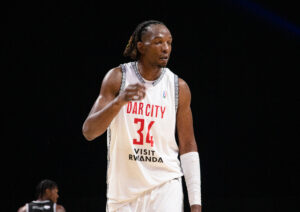
Hasheen Thabeet Dar City 2026 April 6
Hasheem Thabeet and Dar City earned a BAL playoffs spot on debut.

Dar City (Tanzania)

The Tanzanian debutants secured the last playoff spot with a 2-3 record. The team started strong with two wins but struggled to maintain momentum in the latter stages of the conference.

“We are a very young team, three years since we have been in existence. It’s our first time playing in the BAL,” said Dar City coach Pabi Gueye.

 When asked about potential adjustments ahead of the playoffs, head coach Mamadou Gueye emphasised the need to strengthen his frontcourt: “It’s too early to say, but we need to reinforce our front court and execute better in that area.”

Nairobi City Thunder (Kenya)

In their second BAL season, the Kenyans finished 5th in the standings, winning two games against the top-seeded RSSB Tigers and the last-seeded Johannesburg Giants.

Forward Josh Nzeakor, reflecting on his second season in the league, noted the increasing competition: “I played in this league five years ago, and the competition increases every single year. We had a lot of guys that were locally based, so it was a learning curve,” said Nzeakor. “Overall, I think we did well, and I think that next year we will be a lot better.”

To the fans, he expressed heartfelt gratitude: “We appreciate everything, we see all the messages, we see all the support and you guys could not have been any better.”

Johannesburg Giants (South Africa)

The odds were stacked against the hosts from the outset, as they finished the conference winless. Despite boasting a South African-first roster construction and coach Florsheim Ngwenya,  who led Cape Town Tigers to the 2024 semifinals, the Giants never quite adjusted to the pace and intensity of BAL competition.

After their fourth loss, a contrite Ngwenya apologised to the home supporters: “I just want to apologise to our fans who came out to support us from day one. They showed up in numbers and paid their money to be here. We are better than what we showed them, there was a lack of fight from our guys, and that’s disappointing. The fans come, they clap, they shout, and they spend their hard-earned money. We didn’t give them what they deserve.”

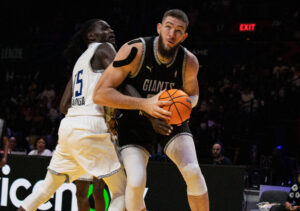
Nairobi City Thunder (NCT) vs Johannesburg Giants
Nairobi City Thunder and the Johannesburg Giants bowed out of the competition.

Yet at the conclusion of the conference, when asked to rate his team out of 10, Ngwenya offered a surprising perspective: “I’d give them 10. I am not saying that they are playing 10 out of 10, but they made it here.”

Ngwenya continued, emphasising the developmental nature of their campaign: “The Johannesburg Giants are still a work in progress,” he said. “Most of these guys got the experience, and we will be a different team next year because of the experience we accumulated.”

Giants captain Pieter Prinsloo offered insight into the broader challenges facing South African basketball: “All these teams are playing in professional leagues that run for 7-9 months. It is hard [for us] to simulate the speed, the execution and the physical toughness when it comes to preparations without leaving the country. As the coach said, we will have to travel and do a training camp outside of the country, where we will be able to face high-level competition and simulate what we will be playing against every single day.”

Raising the bar

The 2026 Kalahari Conference showcased everything that defines the Basketball Africa League: elite competition, emerging stars, passionate fans, and historic performances.

From the RSSB Tigers’ fairy-tale rise to Al Ahly Libya’s record-breaking night, and despite the struggles of the hosts, the tournament delivered compelling stories across the board.

As the focus shifts north to Morocco, one thing is clear: African basketball is evolving rapidly, and the road to Kigali promises even more drama.

Thrills and records of the Kalahari Conference Read More »

Al Ahly LY give themselves a lifeline

THE Libyan champions, Al Ahly Benghazi, endured a nightmare start to their Basketball Africa League season campaign, dropping their first two games in the Kalahari Conference and raising early concerns about an early exit from the tournament.

However, a dominant performance in their third game of the Kalahari Conference has reignited their playoff hopes and reminded everyone that their pedigree remains very much intact.

For a team that arrived in South Africa as one of the favourites, with former MVPs Jean Jacques Boissy (2025) and Jo-Lual Acuil (2024) as defensive anchors, and a perfect Road to BAL qualifying record, Al Ahly’s first two games of the BAL season felt like identity theft.

First, they conceded 103 points to RSSB Tigers on opening night. Then came another collapse against Petro de Luanda, where they lost 104-90, leaving them at 0–2 and staring at elimination.

Their 118-9 win against Dar City on Tuesday night changed their fortunes.

Six Players in Double Figures

Six players scored in double figures. Led by Damion Baugh, who finished with 18 assists, a new BAL single-game record, along with 16 points.

Walid Soliman at BAL season 6 2026
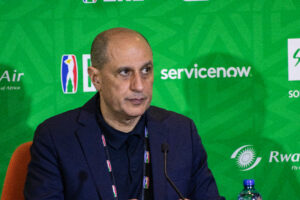
Ahmed Soliman will have been relieved with his team’s first win of the Kalahari Conference. Pictures: The BTO and Getty

South Sudan’s Acuil had a dominant double-double in the paint, alongside compatriot Majok Deng, who delivered an efficient 22-point performance. Donovan Williams added perimeter firepower, while Jean Jacques Boissy, the reigning MVP, embraced the sixth-man role with 18 points in just 19 minutes.

Currently, five players are averaging double digits.

What Changed in Game 3?

In the first two games, Al Ahly Ly relied heavily on Baugh as a scorer. Against Dar City, he transitioned into a facilitator role, allowing the offence to circulate through his playmaking. They recorded 28 assists in total, an improvement from their previous outings, where they had 24 in the first game and 14 in the second.

Bench production jumped from 21 points against RSSB Tigers to 32 against Dar City. Turnovers also decreased significantly from 10 in the opening fixture and 17 in the following fixture to just seven on Tuesday.

Another key difference was bench scoring: They recorded 32 points off the bench, compared to Dar City’s 18. Speaking to the media after the game, head coach Ahmed Soliman emphasised the adjustments made following their slow start.

“After the first two games, we sat down and focused on our weaknesses,” he said. “Offensively, we needed more teamwork and chemistry, and I think we showed that today.”

He also highlighted the defensive effort, particularly against Dar City’s key threat. “I liked the defence as well. Mohamed Sadi and Boissy did a great job on number six (David Michineau).”

For Soliman, the performance reflected the kind of balance his team is capable of. “When you have players who can contribute both offensively and defensively, it’s great for us.”

They seem to have found the formula; now they have to trust it. They must sustain this offensive balance rather than reverting to isolation basketball when pressure mounts.

Feeding their big men is key, as Acuil and Deng combined for 42 points on 17/28 shooting. And Boissy must build on his rediscovered confidence; the MVP cannot afford another 5-point outing as he did against the Tigers if this team truly aspires to lift the trophy in Kigali.

Jean Jacques Boissy at BAL Season 6 March 2026
Jean Jacques Boissy blitzed to an 18-point performance on Tuesday night.

Playoff Hopes

The win moves Al Ahly Ly to 1–2 in the Kalahari Conference standings, still precarious but breathing. With four teams advancing to Kigali from each conference, the path back to the playoffs, once appearing treacherous, now seems navigable.

Yet the margin for error remains slim. At 1-2, they are tied with Dar City and trail the conference leaders, meaning every remaining game carries playoff implications.

To secure one of those four precious spots in Kigali, Al Ahly must treat their remaining conference games as elimination contests, building on the offensive chemistry and defensive intensity that finally surfaced in Game 3.

Al Ahly LY give themselves a lifeline Read More »

Can Giants dig themselves out of 0-2 hole?

THE Johannesburg Giants have endured a difficult start to their Basketball Africa League Season 6 campaign, going winless in the Kalahari Conference. However, they still have a chance to reach the playoffs in Kigali this May – though that opportunity is quickly slipping away.

Knowing that their backs are against the wall after their 71–65 defeat to Nairobi City Thunder (NCT) on Sunday, coach Florsheim Ngwenya will be figuring out how to dig his Giants out of a 0-2 hole.

Unlike their 100–70 loss at the hands of Dar City in their opener, this was a game the Giants were firmly in. They matched NCT possession-for-possession, fought through momentum swings, and gave themselves a genuine chance deep into the fourth quarter.

But in any basketball game, being close isn’t enough.

Giants struggled against sharpshooters

In the loss to DarCity last Friday, the Giants could not contain Côte D’Ivoire shooting guard Nisre Zouzoua, who scored 35 points, 24 of them from the three-point line.

Their defensive woes against shooters continued a few days later. City Thunder’s South Sudanese forward Garang Diing also had a field day from the arc against the Giants. Diing caught fire in the fourth quarter, pouring in 12 of his game-high 24 points, which guided the Thunder to victory.

Nino Dim during the BAL 2026 sEASON 6
Nino Dim and his teammates know they have to get their act together. Pictures: The BTO

While the Giants can take credit for the defensive intensity and improved offensive execution that fuelled their comeback, their inability to deliver in the clutch once again proved costly. The late-game struggles – so often the difference in tight contests – left the Johannesburg side winless and anchored in sixth place

Head coach  Ngwenya acknowledged the improvement from the opening game but pointed to key details that ultimately cost his side.

“We showed more fight than in the first game, but it came down to a couple of mistakes,” Ngwenya said. “I thought we prepared well on both defence and offence, but one of the things that disrupted our rhythm was their offensive rebounding. They finished with 15, and that made a big difference.”

However, Giants centre Nkosinathi Sibanyoni delivered a commanding performance on the boards, finishing with 17 total rebounds in a strong individual effort despite the result. Ngwenya admitted the team now faces a shift in approach as they fight to stay alive in the competition.

“The script changes completely now from what we initially planned. We have to go back, reassess, identify weaknesses in the other teams, and prepare properly for the last three games.”

The former Cape Town Tigers coach also highlighted the experience gap between his side and more established opponents.

“We are battle-tested in our own way, but some of these teams come from more consistent leagues. For us, this is the first time playing together at this level in a competition like this,” said Ngwenya. “I believe with every game, we are making progress.”

Florsheim Ngwenya BAL 2026 media day
Coach Florsheim Ngwenya will have to use every trick in the book to revive the Giants’ BAL campaign.

What This Means

With the tournament now entering its decisive phase, the Giants find themselves in a precarious position that threatens to derail their historic BAL debut before it can truly take shape.

At 0-2 and at the bottom of the six-team standings, the South African champions have exhausted their margin for error at an alarming pace – each remaining fixture is now effectively a must-win, with a single defeat enough to end their playoff hopes.

With only three group-stage games remaining and the leading teams beginning to separate themselves, Ngwenya faces the urgent task of restoring the defensive discipline and offensive cohesion that powered their qualification campaign.

Failure to do so could see the Giants’ continental journey end prematurely. For a club that has invested heavily in a professional structure and stepped onto the continental stage within a year of formation, an early exit would represent a significant setback to their broader ambitions.

Can Giants dig themselves out of 0-2 hole? Read More »

Petro de Luanda: A model of consistency in the BAL

SEASON 6 of the BAL tips off with the Kalahari Conference in Pretoria, South Africa. The Big Tip Off’s new writer, Sandisiwe Msibi, analyses the tournament’s ever-present club, Petro de Luanda

Angola’s Culture of Dominance: Petro de Luanda Sets the Standard

For decades, excellence has defined Angolan basketball. Their clubs have consistently placed the Southern African nation on the map. Today, at the centre of that tradition is Petro de Luanda, a model of consistency in the BAL. Since the league’s inception in 2021, Petro has always finished in the top four.

They won the title in 2024. They were runners-up in 2022 and 2025. In addition, they finished third in 2021 and fourth in 2023. Beyond the BAL, Os Petroleos have also enjoyed continental success. They won the FIBA Africa Club Champions Cup in 2006 and 2015, adding to Angola’s rich legacy in the competition.

Therefore, Petro’s repeated deep runs are no coincidence. Instead, they reflect a system built for sustained success.

The anatomy of consistency

What separates Petro from the BAL’s rotating cast of contenders? The statistics tell part of the story. Through five seasons, Petro has compiled a 27-13 record across 40 games, the league’s best winning percentage among teams with multiple appearances. Locally, Petro’s stranglehold on the Angolan league, with six consecutive titles from 2019 to 2025, has ensured annual BAL qualification.

Yannick Moreira of Petro de Luanda
Yannick Moreira brings veteran experience to Petro’s lineup. Picture: The BTO

Four players that define an Era

However, Petro’s success is not just about trophies. It is also about the players who shape the team’s identity. Together, Childe Dundão, Aboubacar Gakou, Gerson Gonçalves and Yanick Moreira provide balance and continuity.

Childe Dundão

At 5ft6, Dundão is the team’s engine. He is also arguably the most impactful undersized player in BAL history. His 2025 season highlights his influence. He helped Petro reach the BAL final. Then, three months later, he won AfroBasket and earned MVP honours.

Moreover, his defensive intensity stands out. He has four All-Defensive Team selections in five seasons. At the same time, he led the Angolan league in assists for three straight years.

Aboubacar Gakou

Similarly, Gakou brings efficiency and versatility. In 2025, he earned All-BAL First Team honours and was named an MVP finalist. During the 2024 title run, he averaged 8.4 points and 5.8 rebounds in just 22.7 minutes. These numbers underscore his impact despite low usage.

Furthermore, as a three-time Angolan League MVP, he represents the modern big man. He is mobile, physical, and disciplined. As a result, he gives Petro defensive flexibility without sacrificing interior strength.

Gerson Lukeny

Every championship team needs a player who can deliver when the moment demands it – for Petro, that role often belongs to Gonçalves. He played a pivotal role in Petro’s 2024 BAL title run, scoring 16 points in the championship game against Al Ahly Libya. Known for his scoring ability, Gonçalves also holds Petro’s club record for the most points in a BAL playoff game with 28.

Yanick Moreira

At 34, Yanick Moreira represents the veteran presence every championship team needs. The 6 ft 10 centre took over as captain in 2025 and provides the defensive backbone that allows Petro’s guards to play aggressively.

Aboubakar Gakou at the 2025 BAL playoffs
Aboubakar Gakou can stretch the floor for Petro.

The 2025 Reckoning: Can Petro Reclaim the Crown?

As Petro prepares for BAL Season 6, which begins with the Kalahari Conference in Pretoria, South Africa (March 27 – April 5), the path back to the championship presents new challenges. They will face stiff competition from the hosts, the Johannesburg Giants, 2024 finalists Al Ahly Libya, DarCity, RSSB Tigers, 

Roster changes

The Angolan club has undergone significant roster changes for the upcoming BAL season. Syrian-American point guard Javion Blake and South Sudanese guard Peter Jok have since joined the club, who represented South Sudan at the 2024 Paris Olympics and the FIBA Basketball World Cup.

Petro de Luanda enters BAL Season 6 not as favourites, but as the league’s standard-bearers. However, if history is a guide, Petro will be there at the end, either lifting the trophy or setting the benchmark that others must try to surpass.

In African basketball, consistency is the ultimate currency. And as a result, no team has accumulated more of it than the Os Petroleos from Luanda.

Petro de Luanda: A model of consistency in the BAL Read More »

×
Verified by MonsterInsights