Author name: Manyehlisa Lehohla

African basketball enthusiast, founder and editor of The Big Tip Off and a freelance writer.

Nyatlo elevates her game after overcoming a series of injuries

FOR different reasons, Ipeleng Nyatlo says she has developed an appreciation for basketball. The reason for this renewed love for the game may have to do with two injury setbacks and getting to play in continental club qualifiers. The experiences have matured her as a player and a person.

Nyatlo broke new ground when she joined the Tanzanian club, Fox Divas for Africa Basketball Women’s League qualifiers. It exposed her to a higher level of basketball and made her question why the game in South Africa was so stagnant.

In an interview with The Big Tip Off, Nyatlo explains how she began to see the game in a different light after her second brush with injury and during her time with Fox Divas.

Ipeleng Nyatlo of Fox Divas
Ipeleng Nyatlo stepped into another level of basketball in Tanzania. Picture: FIBA and NBA Africa

Nyatlo came face-to-face with her body’s fragility during her first two seasons in South Africa’s Women’s Basketball National League (WBNL). A meniscus tear on her right leg (2021) and a broken right wrist (2022) derailed her progress in the game.

She says the setbacks were a teachable moment for her. She honestly reflected that the time on the sidelines re-emphasised why a team exists.

“My first year in the league, I tore my meniscus and was out for the season. In the second (season) I broke my wrist… That was challenging because it was my dominant hand. It was challenging. I was saying to myself, ‘I can’t believe this… First my hand and now my knee’. What’s going on?” Nyatlo asked herself.

“I told myself I was not going to break down because of the injuries. I was going to learn as much as possible. The biggest thing I surprisingly learnt was the importance of everyone in the team. Not that I did not know it before the injuries, but I realised the role players on the bench have and that they can be more useful for the players on the court. So, I learnt to appreciate the game from the sidelines.

“I genuinely learnt to be supportive of other people on the court.”

Nyatlo also learnt that instead of being self-reliant during her recovery, she could lean on others for support. After being out of the game for a year and a half, she told IOL Sport she consulted a therapist to help her reconnect with the game.

“Being at work I felt like something was missing. It got to a stage where work was no longer enjoyable. The schedule was hectic and I went on a downward spiral mental health-wise. I had stopped doing the things I loved so I reached out to a therapist who reminded me how I used to just go distress at basketball court when I was a student. But that with work all that was gone. She encouraged me to go back to doing the thing I love and get fuel from it so I could do the things I had to do,” said Nyatlo.

When she eventually returned to the court during the annual Ashraf Loedewyk tournament in the colours of the Rising Suns, Nyatlo felt she was a shell of her pre-injury self. To regain her on-court confidence, the point guard enlisted the services of skills trainer Nica Nicolae, who has worked with some well-known names in African basketball.

Nyatlo was overcome by nervousness ahead of the session with Nicolae, but she looked within for encouragement which led to a change in attitude.

“After the Ashies, I had a session with NIBA (Nicolae’s skills program). I had not touched a ball in a while… In his training sessions, you do a lot. Heading there, I did not know how I would do,” said Nyatlo. “So when he set the date, I sat the whole week thinking, ‘I am going to be terrible. This guy will post my workout on the net, while I am terrible’.

“Then I remembered this line, ‘Don’t write yourself off’. Whenever I feel something might be difficult, I remind myself of those words. So I’ll never think I am unworthy. I will not be the first person to write myself off. If I get cut from me team, it will not be because I thought less of my ability or myself.”

Following a productive WBNL season culminating in a final appearance with the Tshwane Suns, Nyatlo switched to the more competitive climes – suiting up for Tanzania’s Fox Divas to help their attempt to make the Women’s Basketball League Africa (WBLA).

“I was grateful to get the experience because in South Africa, we don’t get to play much international basketball. It reminded me of my first BWB. I was used to playing with players from South Africa. Then, I got exposed to the skill level of other players and realised there was a gap. I knew I was not doing enough so when I got back, I started working my game,” said Nyatlo. It was a similar experience when I played with Fox. We lost most of our games, but I was grateful for that experience and playing against competitive teams.

“In a similar fashion, I am going home, and I will work differently… You realise that there are different levels to this game of basketball.”

Ipeleng Nyatlo at Fox Divas
Ipeleng Nyatlo has questions about South African basketball.

The experience in Tanzania had Nyatlo wondering why basketball in South Africa was not progressing. She felt the country had sufficient basketball amenities to succeed on the court.

“Some of the big takeaways were probably off the court. South Africa is well-equipped (in terms of basketball), and we are blessed with facilities. It baffles me that some countries don’t have as much as we do, but they perform much better than us. So what is it?” asked Nyatlo.

“Do they have more leagues or better coaches? These are some of the questions I asked myself. What is also amazing is how people (in Tanzania) show up for basketball. For the local leagues, people pack those venues. They love basketball there.”

Nyatlo seems to have had her foundations shaken for the better in Tanzania. She is realising there is room for growth in her skillset. While her home country, South Africa, lags in basketball in some parts of the continent, the game keeps moving, allowing players like Nyatlo to broaden their horizons.

Nyatlo elevates her game after overcoming a series of injuries Read More »

Basketball South Africa executive fumble the ball

LIKE many in the South African basketball fraternity, I watched with great bewilderment on Friday as Basketball South Africa (BSA) made a comical and shoddy attempt to present their Annual Report and give feedback on their hosting of the FIBA U18 AfroBasket to the Parliamentary Portfolio Committee on Sports, Arts and Culture.

It was a disaster, to say the least, and probably set the game back. So the portfolio committee rightly had a field day – grilling and roasting the federation for what they offered.

Federation president Sanele Mthiyane and his secretary general Sibongile Fondini only succeeded in greeting and introducing themselves to the committee members. After the formalities, one elected official after the other tore into their sorry excuse for a report – leaving both men embarrassed.

Men's U18 AfroBasket
South Africa’s U18 men’s team had a poor showing at the U18 AfroBasket tournament. Pictures: The BTO

Terms like incompetence, ineptitude, and out of their depth traversed my mind as the committee members highlighted the cacophony of errors in the report the secretary general tried to present.

It (the report) seriously lacked attention to detail. The poor numbering of pages drew the ire and laughter of committee members in attendance. Portfolio chairperson, Joseph McGluwa pointed out the lack of indicators and targets on the report to show BSA’s performance. There was no way of telling whether any performance targets had been reached. He noted that it was erroneous for Fondini to be the sole author of the report. “Under normal circumstances, a report of this nature is prepared by all assigned or by all members,” said McGluwa.

It turned into a masterclass on how not to run a federation. It seemed as if BSA was keen to present box-ticking exercises of events without providing sufficient scope of how they benefited or progressed South African basketball.

Aware that BSA was trying to pull a fast one, the Portfolio Committee duly blocked the attempt by BSA to proceed with their presentation.

Sibongile Fondini at the BSA presser
BSA Secretary General Sibongile Fondini could not present the Annual Report on Friday.

Liam Jacobs, a portfolio committee member and former player, highlighted how BSA’s actions hindered basketball in the country. He was scathing in his assessment, given his attachment to basketball.

“This is what we call a generational fumble. In basketball terms, it is a fumble. This is a shame. It is completely wrong and if it goes on like this, South Africa is never gonna get its own Kobe Bryant. South Africa is never gonna get its own Michael Jordan. South Africa is never gonna get its own LeBron James. We will be stuck with the worst of the worst until Basketball South Africa gets its house in order. …Basketball has its own capacity to be part of Project 300. If we want to send more Olympians, we need to develop them in sports such as basketball. This is absolutely disgusting. It’s despicable. The report is airy-fairy. It’s wishy-washy,” said Jacobs.

The exasperated parliamentarians sent Mthiyane and Fondini packing, with the former offering a meagre apology. BSA was instructed to present itself to Parliament again and revise its report. The Department of Sports Arts and Culture was requested to accompany BSA on that visit. 

Anyone who listened to the remarks lambasting BSA would have cause to run to the hilltops and shout for the BSA executive to resign. Whether that will happen is another thing, but they (BSA) can no longer fly under the radar.

It comes against the backdrop of the unorganised way BSA delivered the U18 AfroBasket, a tournament they had known about for over six months. The 11th-hour announcement of the South African men’s and women’s teams ahead of the tournament bordered on the ridiculous. In the end, the poor results from both teams were not surprising as there was zero preparation time.

Irked and disheartened by the losses of both teams, especially the women (who suffered heavy defeats), Samkelo Cele, one of South Africa’s finest talents, tweeted on X (formerly known as Twitter). “These are not “tough losses” these are embarrassing losses and something needs to change. This song has been sung over and over again. Can we actually start doing something about basketball in South Africa because I am tired of things being like this. CAN THE FEDERATION WORK?”

The scathing statements of the Portfolio Committee and Cele’s comment indicate that the national federation is irredeemable.

Sanele Mthiyane
BSA president Sanele Mthiyane could only apologise to the portfolio committee for their poor report.

CAN THE FEDERATION WORK? It is a resounding Yes.

The basketball fraternity must select and elect the best among themselves. South Africa does not lack the intellectual, business and technical expertise to make basketball work. BSA can do with a dose of good fortune in leadership. If South Africa gets it right at the national level, this will have a cascading impact at all the other levels. 

A change in leadership is only the beginning. BSA must run a capable office that coordinates and drives basketball activities in the country. A fit-for-purpose office should enhance BSA’s communication with its key stakeholders in the basketball fraternity. That office can leverage commercial opportunities to support those activities. 

The Department of Sport Arts and Culture must support the federation’s revival.

That roadmap to recovery should include how districts and provinces can align to support the national program. Talent identification programs should be streamlined to support a common goal. Referees and technical officials should be capacitated to support the basketball program. Coaches should be empowered to maintain high standards in player development.

At a continental level, BSA must nurture a better working relationship with FIBA Africa. South Africa can benefit from the talent development programmes FIBA offers. An enhanced relationship with FIBA Africa will also be beneficial when South Africa hosts continental basketball tournaments. 

South African basketball deserves better. BSA can do better. 

Basketball South Africa executive fumble the ball Read More »

Boissy wants to give Urunani fans joy in Road To BAL

JEAN Jacques Boissy said when the opportunity to further his playing career in Burundi’s VBL came, he did not have to think twice. He saw the move as a chance to grow his game. But he did more than hone his skill set, he surpassed expectations on the court – Boissy played a pivotal role in Urunani Basketball Club’s championship run. 

The mercurial point guard wasted no time endearing himself to the club’s fans. When Boissy stepped on the outdoor Terrain Department concrete turf in Bujumbura, he was a show-stopper. He lit up the skies with star performances, which led giants Urunani Basketball Club to a 17 VBL title.

Boissy, the VBL leading scorer with 405 points in 21 games, capped off the marvellous season by scooping the MVP title. So impressive were his performances during the season such that the Sisi Wenyewe re-signed Boissy for their preliminary Road To BAL campaign in Tanzania (16-20 October).

Jean Jacques Boissy
Jean Jacques Boissy says it’s impressive how fans love basketball in Burundi. Pictures: Urunani

His decision to not take time off the game opened his eyes to a different culture. Boissy says how fans showed up for basketball in the East African nation is impressive.

“When I signed for Urunani, it was during the summer… Players either rest their bodies or take time to work on their game,” said the Senegal floor general. “When the opportunity came to help a new team reach their goals, I did not hesitate. It gave me time to work on my game and get better.

“I was also surprised at how much fans love for the game. It’s either you are an Urunani or a Dynamo fan here. They really love the game. I was also impressed with the level of competition.”

The 23-year-old reflected on the team and individual success he achieved. He expressed his gratitude and felt he fulfilled his obligation to Urunani. He was also equally chuffed with his MVP award.

“I feel great and I am also grateful for everything I achieved with them. I reached every expectation they had of me when I joined,” said Boissy. “The individual achievement is just a little spark for all the hard work I put in behind the scenes.”


View this post on Instagram


A post shared by Jean Jacques Boissy (@jay_1zer0)

Urunani will expect more from their star point guard in the Road To BAL in Kibaha, which is almost an hour from the Tanzania capital, Dar Es Salaam. Boissy says he wants to repay Urunani’s faith in him by leading them to the BAL. Should they achieve that feat, they will become the second club after Dynamo to qualify for the NBA-backed competition.

“I reached one goal with them. So I signed again because there is another goal I want to achieve with them. I want to help give Urunani joy – the fans deserve it for the way they love the game,” said Boissy.

He may be young, but Boissy has experience beyond his years, having led Senegal club AS Douanes to the final of BAL Season 3 last year. His feats that season earned him All-BAL First Team and All-BAL Defensive First Team honours.

So there is no doubt Urunani have a gem in Boissy, who reflected on his performances in last season’s BAL competition.

“I feel it was God rewarding me for my hard work. It was a confidence boost knowing how far I could reach. So I am going to keep trying till I get the BAL trophy,” said Boissy.

“It was a really good experience making the BAL final in my first year. When I came to the scene, I had a lot of work to do – I took time to learn from the best players whether they were teammates or not.”

Boissy looks forward to working with new coach and compatriot Pabi Gueye, who led Douanes to the BAL final and won coach of the year for his exploits.

Pabi Gueye and Jean Jacques Boissy
Jean Jacques Boissy says Pabi Gueye has what it takes to lead Urunani.

The star point guard describes Gueye, who took over from VBL winning coach Elvis Hakizimana, as “calm” and as one who has high expectations of the teams he coaches.

“Coach Pabi is a smart coach. He is calm. He is the type of coach who will keep players accountable, and he can get the best out of them as well,” said Boissy.

With an experienced player in Boissy and a task-master coach in Gueye, Urunani looks primed for success in the preliminary qualifiers of the Road To BAL. What could stand in the way of their success is themselves.

Boissy wants to give Urunani fans joy in Road To BAL Read More »

Almeida waxes lyrical about his music and success on the court

IVAN Almeida has wowed crowds in the colours of Cape Verde on the international stage and in the different vests of European clubs he has played for. His exceptional talent has been rewarded with an abundance of team and individual accolades at the club level. But there is more to Almeida than just basketball.

In an interview with The Big Tip Off, Almeida waxed lyrical about his success on the court, the pinnacle of his career and his excitement when his second love – music was shared on the biggest stage in basketball.

The Cape Verdean generational talent intimated that music is one of the defining characteristics of his homeland. As soon as the music bug hit, Almeida could not help but get in on the act, citing the late great Cesaria Evora as one of Cape Verde’s influences.

“Music has been a part of my life from a young age. Cesaria is one of our most impactful artists – I think we are born with music in our blood,” said Almeida, who has avoided confining himself to a type of music. It helps that he is also a well-travelled hooper, as the exposure has diversified his artistic repertoire.

“I don’t have a genre of music. The EP I made with my friend was mostly hip-hop, R&B and pop songs… I have traditional Cape Verde songs and music from all over the world.

“I see music as another way of expressing myself… Since I have been to many countries I have absorbed different cultures and fused them into my music. I feel I have freedom when I write or produce music. I love it.”

Ivan Almeida at the World Cup
Ivan Almeida heard his music being played at last year’s World Cup. Pictures: FIBA

His focus is on his first love, basketball, which gave him a taste of African club basketball. He was a key figure in helping Libyan club Al Ahli Tripoli (hosts of the preliminary stages of the Road To BAL) to qualify for the Elite 16 leg of the Road To BAL.

Almeida says he has watched the main course, the BAL, from a distance. And since its emergence, it has piqued his interest. So getting a bite at the starter Road To BAL was exciting for the 35-year-old.

“It means everything. Since the BAL started, I have kept track of it and how it has developed. It has been something at the back of mind to play in it. So being here is amazing, even if it’s the Road To BAL. The atmosphere has been amazing,” said Almeida.

Part of Al Ahli’s journey to success had a dose of sentiment for Almeida. In the last game, he had to help Al Ahli beat Kriol Star, a club he founded with his brother Joel, a player for the Cape Verdean club.

While he may have felt a tinge of emotion, Ivan, who averaged 14 points, seven rebounds and four assists in the Road To BAL, says he always plays to win.

“It was kinda weird, but I take basketball very seriously… Walter (Hodge) and I were talking at lunch. He asked, ‘You are going to play against your brother. Are you going to let him win?’. I told him, ‘no I am not. It does not matter who I play against, I play to win,'” chuckled Almeida.

He was also proud that a club from his country graced continental competition. “It is definitely a pleasure to have seen a Cape Verdean team there… My brother and I started Kriol Star – hopefully, sooner rather than later, I’ll be able to play for them to help raise our basketball,” said Almeida. “It’s amazing to see the professionalisation of the country’s (Cape Verde) basketball given where it was before… Seeing Cape Verdean players compete with other Africans is important.

“Back to the game, I take every game professionally – I told my brother we were gonna beat them.”


View this post on Instagram


A post shared by Road To BAL (@roadtobal)

While on a short-term contract with the side based in the Libyan capital (Tripoli), he is weighing his options – one of those is possibly playing in the BAL with the North Africans.

“I have signed a two week contract. My agent is still looking in places like Asia and Europe. Hopefully, I will stay here but we will see how things go,” said Almeida.

The 2019 Poland Basketball League (PLK) Finals MVP says he would like to follow in the footsteps of African greats who have played in the league. “I have watched many greats play there (the BAL) – like Carlos Morais and my teammate Walter (Hodge). I would love to be in the BAL like the African greats who have played in it,” said Almeida.

He is also one of the most accomplished players from Africa – winning league titles in Poland (2) and Portugal (3). Almeida is full of gratitude for a trophy-laden career, and he is still hungry for more.

“These last few years have been amazing for me. I finally figured out how to win, and in the last six seasons, I have won five championships,” said Almeida. “It’s been about figuring out what needs to happen to win a championship. What sacrifices do we have to make? We all play basketball because we love it. But we also want to win.

“Many players go through their careers without winning a championship. So I am grateful to have done it and at high level. Hopefully it keeps going.”

Ivan Almeida Benfica
Ivan Almeida won three Portuguese League titles during his time at Benfica.

He has achieved much at the club level, but Almeida says that it does not compare to playing in last year’s FIBA World Cup. It was a historical moment for the island – being the smallest nation to qualify for the tournament.

“It’s not one of the greatest moments of my career. It is the greatest – putting Cape Verde on the big stage like the World Cup. We did it as a team and it was more than being the smallest nation at the tournament,” said Almeida. “The journey to getting there and all the sacrifices that we had to make. Not having pleasant conditions at times and many other struggles made us achieve the impossible.

“People sent messages saying thank you for representing us and putting us on the world stage. It was a superb feeling to see the gratitude of the people.”

He also described the moment his two passions collided on the global extravaganza.

“One of the greatest feelings I felt was walking to warm up… The first thing I saw was the Cape Verdean flag… I was listening to my music on the headphones. When I took them off and heard the music I released playing at the venue. I was like ‘Wow this is crazy’. I am experiencing two of my passions basketball and music. It was amazing,” concluded Almeida.

Almeida waxes lyrical about his music and success on the court Read More »

Basketball, the ace that shaped Ogharanduku’s life

SHARON Ogharanduku has four roles to fulfil: being a counsellor, a wife, motherhood, and playing basketball. She says having a supportive family has helped her maintain the balance she needs. Being married in basketball is also a bonus for Ogharanduku – she described her husband, former Rivers Hoopers player Precious Saliu, as a pillar of support.

“My partner is really supportive. His family is also the same. When I travel for games, they stay with the kids. They have backed and encouraged me even when I wanted to let it (basketball) go – they reminded me how much I loved it,” said the 30-year-old.

Her love affair with the game goes way back and she has fond memories of her first big breakthrough. She remembers being a part of Nigeria’s U18 AfroBasket in 2010. That year, Ogharanduku and the J’Tigress had a finals appearance and a ticket to the 2011 FIBA U19 Basketball World Cup. Sadly, that trip did not happen for the J’Tigress team. “We were not able to get our visas on time for the trip to Chile. We were at the airport, but it did not happen,” recalled Ogharanduku.

Sharon Ogharanduku
Sharon Ogharanduku, right, says Women’s Premier League surprise package Aces are in a building phase. Pictures: Royal Aces

The experience was life-changing for Ogharanduku and her teammates. She says it was at the 2010 continental tournament that she realised that basketball was part of her life’s calling.

“It was another level of basketball for us. It showed us that we could compete. That was also the year I decided to pursue basketball as a career,” said the Ogharanduku. “I felt I could do this (play basketball). I also had a scholarship opportunity to study in America – unfortunately, I could not get a visa to travel.

“It also opened doors for many of us. Only a few of us are still in Nigeria – and all of us are doing one or two things successfully through basketball. Also, every one of us pursued an education.”

While basketball remained a passion for Ogharanduku, she chose not to confine herself to the game. She also understood the value of education and the avenues it could open for her.

“I did not have the target of going pro – I wanted to go to school. As I said, before I had the opportunity to go and study in the United States, but that did not happen,” said Ogharanduku.

She expressed her disappointment at losing out on the once-in-a-lifetime opportunity – she had to pick herself up and find a plan B.

“I was a kid at the time, so yes, I was a little discouraged. But I knew I had to go to school. It did not matter where or how. I needed  something to make me stand out,” said Ogharanduku. “I know all the great players are professional in one thing or another… That is why I decided to go to school in Nigeria and study to become a counsellor. In my final year, I got back to playing again.”


View this post on Instagram


A post shared by TAP BASKETBALL 🏀 (@tap_basketball)

After a stint with 2023 Women’s Premier League Champions Nigeria Customs, the floor general joined the new team on the block Royal Aces. Ogharanduku refers to herself as one of the veteran players and mentors the youngsters on the team. She acceded to the request of her coach to move from primary ball handler to being a power forward. However, this request was a shock to her system, given that she lacked the height for the position.

“I am one of the older players in the team. The younger players look up to me. They look to me and other vets for guidance on the court,” said the former Customs player. “I was a point guard in the team, but the coach converted me and explained that the team needed some experience in that department.

“I was like ‘Really coach, I have never played at the four… Also, I don’t have the size for that position.'”

Ogharanduku says her coach stuck to his guns on the position switch. “He was adamant and said, ‘Sharon, you are not as skinny as you used to be. You are a mom now – you can handle this,'” said the mother of two. “So, I have brought my motherly role into basketball. It has helped a great deal. The good thing is that my teammates are also ready to learn. When you are with teammates that want to cooperate with you it’s easier.”

Sharon Ogharanduku
Sharon Ogharanduku plays a veteran role within the Aces setup.

Ogharanduku and her Royal Aces teammates are in tandem ahead of their Final 8 of the Women’s Premier Basketball League. Four games in the Final 8 phase (10-13 October) stand between the Aces and a place in the semi-finals in Lagos. The veteran treaded on caution when discussing her team’s chances of winning the league.

“I would say we are 100 per cent ready. By God’s grace, we hope to triumph. We are a new team finding its feet. Yes, what we have achieved was above expectation,” said Ogharanduku. “… Because we have gotten this far, everyone sees us. We are also hungry, which is good. We have one another’s backs because we have the same goal. That is what will push us.”

Ogharanduku’s story is one of community, overcoming disappointment and starting afresh and all these elements she has brought to the Aces team also trying to defy the odds.

Basketball, the ace that shaped Ogharanduku’s life Read More »

Ongwae ready to rumble with Thunder in Road To BAL

TYLOR Ongwae is a heralded son in Kenyan basketball, from providing a historic clutch moment in a Morans vest to capturing domestic and continental success in Europe. He has done it all in his career. Winning the FIBA Europe Cup quenched his thirst for a major trophy and was a fitting end to his lengthy and storied career abroad.

Ongwae, who signed with Kenya Basketball League champions Nairobi City Thunder in August, says the reason for his return home – after 14 years away – was to be near his business interests and a strong desire to inspire a new generation of players in his homeland.

“Last year, when I won the Europe Cup (with Germany’s Niners Chemnitz), I knew I was done. I tried to win it (Europe Cup) with five different teams… So when I finally won, I said to myself ‘I am done’,” he said vehemently. “Also, I am 33 now… I felt it was the right time to come and settle down.”

Tylor Ongwae Niners
Tylor Ongwae decided to return to Kenya after winning the FIBA Europe Cup. Pictures FIBA and Thunder Media

Ongwae, a three-time Basketligaen league champion with the Bakken Bears of Denmark, says he wanted an opportunity to play in Kenya’s domestic league, something he has yet to experience.

“I have always wanted to play in Kenya… So this was a good time to do that and when I still have more to offer (on the court). When younger players see me playing here, it will encourage them…’ They will be able to see that, ‘this guy has played outside Kenya for 14 years and he was successful. I can learn from him’,” said Eldoret-born Ongwae.

Being home also means he can be hands-on with his business. “Regarding business – it’s good to be here rather than being outside,” said Ongwae, who has meat production as one of his enterprises. “We have a farm where we keep animals, and we sell the meat to people in Eldoret and Nairobi.”

Back to the business of basketball, before joining the star-laden Thunder, Ongwae had a few insights into the team. What made joining the Thunder more enticing for Ongwae was that the team had several Morans players in their set-up.

Bound for the Road To BAL, the addition of Ongwae to the Thunder’s roster bolsters the Nairobi team’s chances of successfully navigating the first stage of the Division East (15-20 October).

“Before I returned to Germany last year, I had a few practice sessions with them (City Thunder). I saw their professionalism and how they treat players. It excited me. I believe it’s worthwhile joining this team,” said Ongwae. “Also, eight of the players are my teammates in the national team (the Morans), so I had conversations with them about joining… I was sold and decided I want to be part of this team so we can chase the BAL.”

Ongwae has already tasted the BAL – having signed for Cote d’Ivoire’s ABC Fighters for Season 3’s playoffs. He says the level of competition surprised him.

“It was highly competitive that year. There were good teams… We lost by one point (against Petro de Luanda). It has gotten better each year. Teams have to prepare well,” said Ongwae.

In trying to become the first team from Kenya to qualify for the BAL, Thunder first has to get to the Elite 16 – their journey starts in neighbouring Tanzania. Host club JKT, Urunani (Burundi), Hawassa City (Ethiopia), Beau Vallon (Seychelles), Ushindzi (Comoros) and GNBC (Madagascar) all lie in wait for the Thunder.

“For the last month, we have been focusing on ourselves… especially the work we have to do on offence and defence – we know the group we are up against, and will focus on our opponents when the competition begins,” said Ongwae.

The two-time Danish Basketligaen Defensive Player of The Year and the Thunder have a decent amount of time to dot their I’s and cross their T’s before the start of The Road To BAL.

And as Ongwae embarks on this new journey, he also took a moment to reflect on his milestones.

While winning the FIBA Europe Cup was memorable for Ongwae – his game-winning deep two against Angola at the buzzer in the 2021 AfroBasket qualifier ranks much higher in his career.

Tylor Ongwae during the qualifier clash which saw him make the shot that qualified Kenya for the 2021 AfroBasket.

It was a shot that ended the Kenya men’s team’s 28-year hiatus from the continental tournament.

“Winning in Europe was one of the best feelings. I tried five times – four of them we lost in the knockout stages. Then there was the COVID year when we made the semi-finals, but we ended up not playing,” said Ongwae. “So just getting back on that stage and winning was an amazing feeling. It was really amazing.”

He reflected on the impact of his game-winning shot against the once-mighty Angola.

“I would say qualifying for the AfroBasket after 28 years was big-time. It was huge for us and the country. It restarted everything to do with basketball in the country. I hope in years to come there will be more talent coming out of Kenya and it will take us further than where we are now,” said Ongwae.

Ongwae is a certified legend in Kenya basketball. He has risen to the occasion for his country and the clubs he has played for abroad. Can he solidify his legacy by helping lead a club from Kenya to a first BAL? It would be a thunderous feat for club and country.

Ongwae ready to rumble with Thunder in Road To BAL Read More »

DUEP a worthwhile invesment for KZN basketball

SAZI Msane, the owner of the DUEP Academy, joked that revealing what he spent to start the basketball outfit would probably end his marriage. Jokes aside, Msane says his philanthropic endeavour (DUEP) aims to change young people’s lives, especially in his community of Richard’s Bay in KwaZulu-Natal.

In an interview with The Big Tip Off, Msane, a qualified project manager, discusses DUEP’s journey, its impact on KZN and its participation in the national club championships in August.

Asked what the name DUEP meant, Msane explained, that there was no real meaning to it, and he came up with the name to get kids “hooked” on basketball, which has seemingly worked.

“The name (DUEP) does not have a specific meaning – it was something to get people hooked,” said Msane, a former amateur basketball player. “I saw in my district there was a gap in basketball, so I started a team. Once the team began running, I realised the needs were more. Then it became an academy.

“We develop the basketball skills of players who are interested in the game and those that have the potential to go further. We have been doing that for two years.”

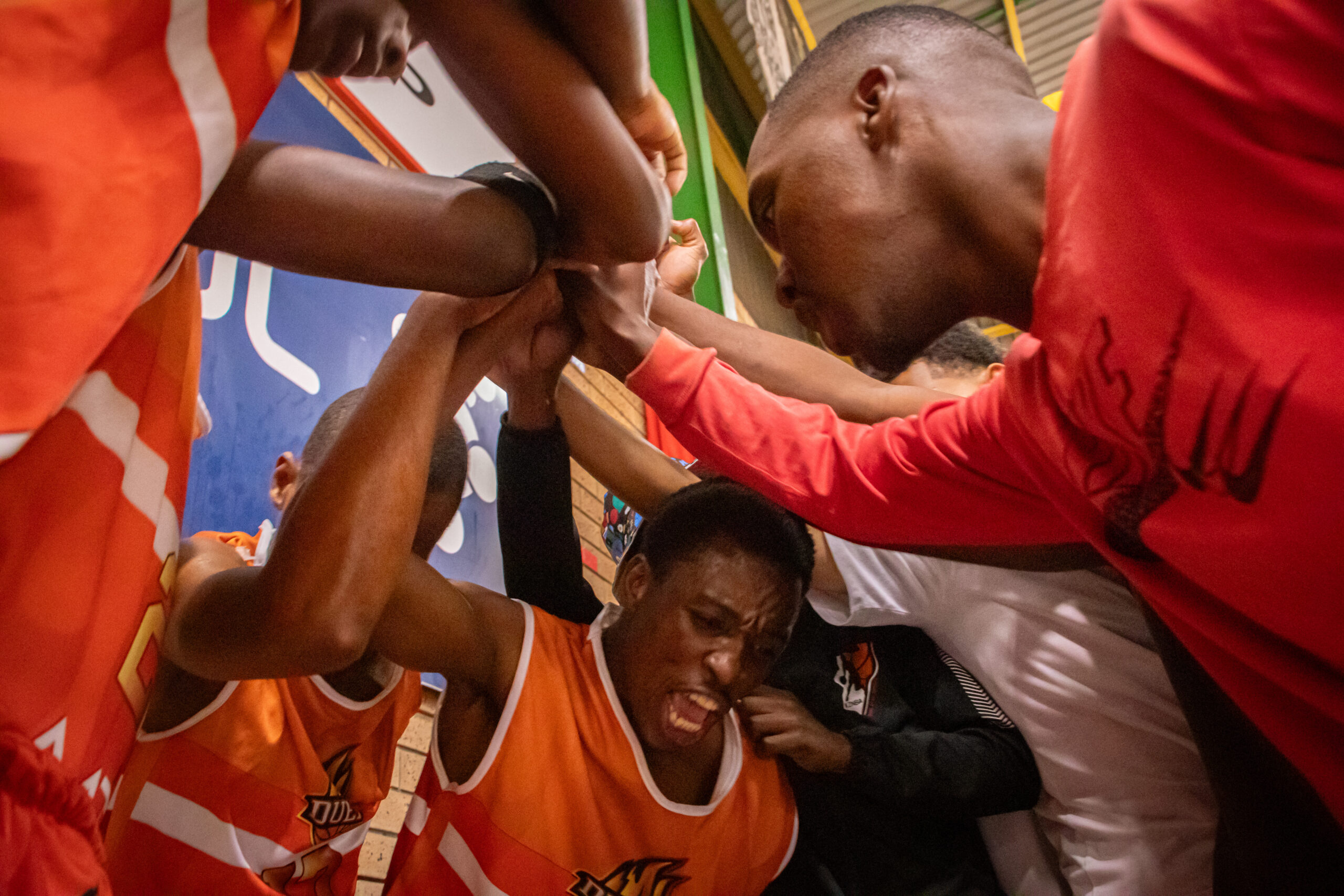
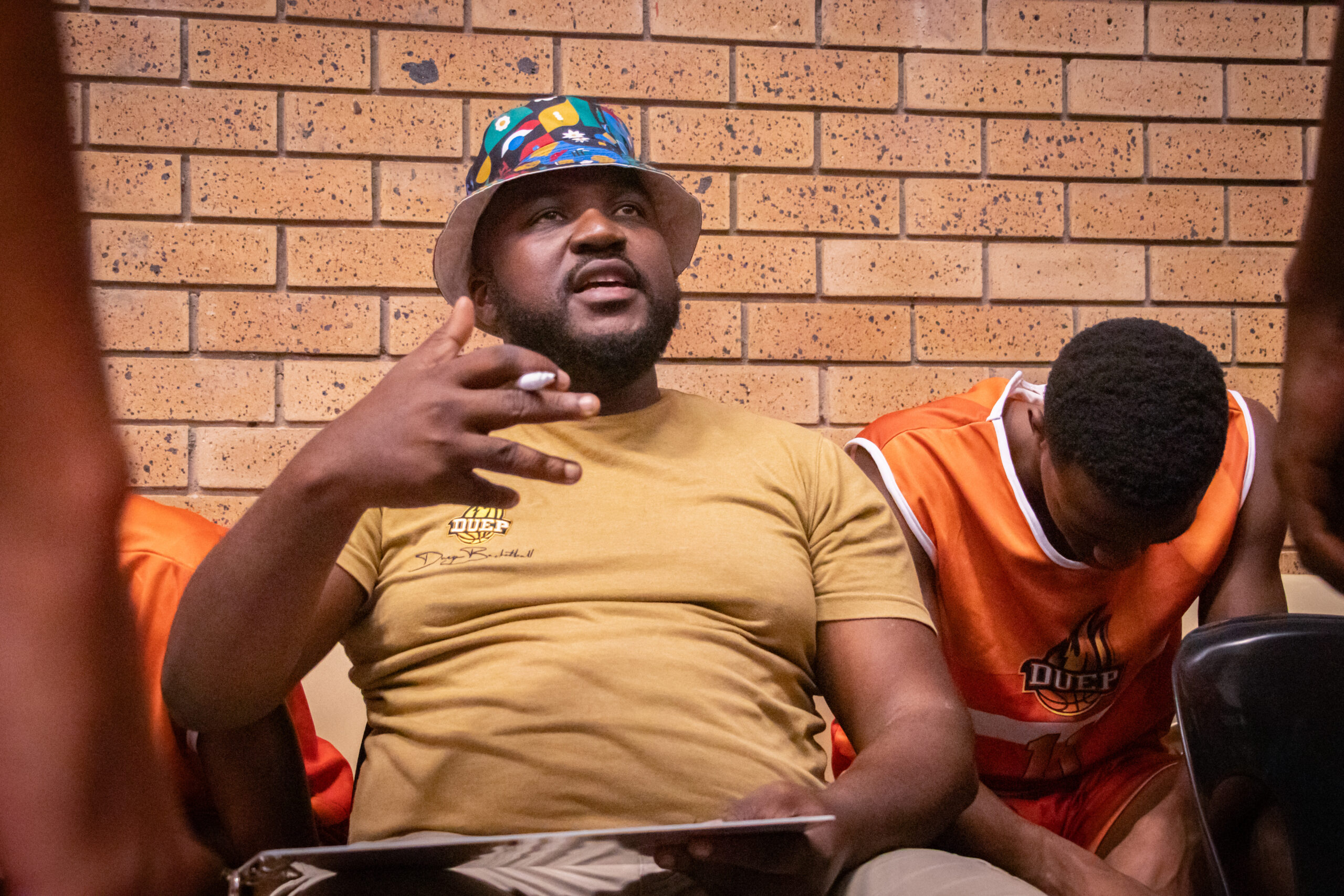
DUEP in action
DUEP Academy is dedicated to changing the lives of its players. Pictures: The BTO

Apart from growing his team’s structures, Msane says that beyond basketball, they also focus on the educational well-being of players, which has led to others successfully obtaining scholarships.

“We have four teams, from seniors to under-12 – our players have participated in competitions at all levels (district, provincial and national) – it is one of our biggest milestones,” said Msane. “Our program also focuses on education… We want to ensure our players also do well in school, and we work with them to access universities or get scholarships. Recently, we gave two players scholarships to the University of Cape Town Online High School.

“One of our founding principles is discipline… When a kid has discipline, they can adjust to life and grow. So, we have been able to change lives and save them too!”


View this post on Instagram


A post shared by The Big Tip Off (@the_bto_hoops)

If what Msane says is anything to go by, starting a passion project like DUEP was not cheap. So far, the only profit he has gained is changing the lives of the kids playing in his academy.

“If I told how much I spent opening this academy, my wife would divorce me,” joked Msane. “It takes a lot of time and money (to run DUEP). I have my profession, and every time I focus on basketball, it takes me away from the things that give me an income.

“As our logo says, “It’s worth it”… But I won’t disclose how much I have spent because my wife will divorce me.”

Msane took another step in growing the profile of his academy. Last August, he brought his senior men’s and women’s teams to Gauteng for the National Club Championships. Msane says the club championships – not on the itinerary of tournaments for the academy – were an eye-opener.

“The exposure was good for us. We did not plan to come to the (national club) championships. Fortunately, we made it. We gathered a lot of experience. Our players got to play against professional players and learnt from that. It is a point of growth for everyone,” said Msane.

He also harbours big dreams for DUEP and says the academy has already impacted the province of KwaZulu-Natal.

“We have run a lot of programs in our province. So, it’s hard to ignore us because of the work we have done. Some of our coaches and managers have been appointed to roles in provincial events. I have managed some of KZN’s best under-18 teams at national tournaments,” said Msane. “We have held coaches and referees courses, with the permission of local federations, since they provide the blueprint of what has to happen.”

Sazi Msane at the club championships
Sazi Msane has big dreams for DUEP Academy.

Finally, he spoke about his vision for DUEP. “We want to be part of a developmental provincial league. There are a lot of tournaments, but those are short-term,” said Msane. “We also want a sports school with basketball as one of the codes. We are looking for space to build an academy because other facilities cost us a lot. This is where we see ourselves in the future.”

DUEP a worthwhile invesment for KZN basketball Read More »

Udezue keeps the flame burning for young Nigerian ballers

(PRETORIA) As an entrepreneur, Ugo Udezue understands creating opportunities for people can transform their lives. So, upon learning that the Nigerian teams (men and women) were struggling to get funding to travel to South Africa for the FIBA U18 AfroBasket, he moved mountains to ensure the kids would not miss the golden opportunity.

Udezue, a former basketball player, says making sure the youngsters made the trip for the tournament was personal, as the U18 program in his country, Nigeria, changed his life.

The businessman, owner of the growing sporting apparel brand Africa For Africa (AFA), also serves as head of delegation J’Tigers and J’Tigress teams. He also expanded on why he put his business interests on hold to serve his country.

“It was personal to me because I am a product of the U18 teams in Nigeria. It allowed me to get a scholarship and attend college in America. So when I learned that the government had no funding, I took it upon myself to raise the money… To keep the flame going for girls and boys,” said Udezue.

Ugo Udezue at the U18 AfroBasket
Ugo Udezue says the Nigerian youth team remind him of his younger self. Pictures: The BTO and FIBA

The J’Tigress arrived timeously for the event, while the men’s team’s travel plans were almost in jeopardy because of visa issues. To Udezue’s relief, the team made the trip down south and arrived in the early hours of last Wednesday for their Group B opener against Egypt.

Breathing a sigh of relief, he described how a stroke of good fortune led to the J’Tigers making their flight to South Africa.

“It was a blessing when they got here. They only made it here because the flight they were supposed to board got delayed to 8 pm. It (the flight) was supposed to leave at 12 pm, but they only got their visas at 3 pm… So, they quickly had to get on that flight. So it is by the grace of God, the hard work of people that have been on the journey with me and those that invested for this to happen,” says Udezue.


View this post on Instagram


A post shared by Ugo Udezue (@ugoudezue)

The Nigeria men’s program has been one of the most successful on the continent – the U18 men have six AfroBasket titles to show for it. But it has lagged over the last decade. Asked why this was the case, Udezue could not offer a reason and chose to focus on the present.

“Honestly, I do not have an answer to that question. I can only speak on what is in front of us today. I think it is important for countries to have youth development programs and be involved in these competitions,” said Udezue. “We are taking the bull by the horns and want to ensure that this is not our only participation. We want a repetition.

“This is not for us – it’s for the kids and giving them an opportunity. When you save one kid, maybe they can reinvest back into the country, like I did. So, I am fully invested in this process,” said Udezue, a former NBA agent.

While investing his time to help Nigeria show up on the continent, he has ensured they do so in style by supplying AFA branded kit to the women’s and men’s teams.

Being a man who experienced broadened horizons, he says his brand goes beyond just supplying kits. He says the ethos of AFA is to support the African sporting ecosystem.

“We did not start our brand to supply kits. AFA means Africa For Africa… For the game to grow, we need indigenous sports brands to be part of the process. Nike and Puma will not always come to our rescue,” said Udezue. “So there is an opportunity for local brands to support or sponsor local leagues and international competition, especially at this level (U18). It’s a no-brainer. If we had the capacity, we would want to sponsor this competition (AfroBasket). That is what we hope to do in future.”

Roger Bidias of Cameroon
Cameroon’s Roger Bidias wears an AFA-sponsored kit during the FIBA Olympic qualifying tournament.

Udezue’s brand, adorned on the D’Tigress Olympic team kit, is beginning to have a footprint in neighbouring countries. AFA is a kit sponsor for Cameroon’s senior national teams. It (AFA) also supplied apparel to the Central African Republic team Bangui Sporting Club during their Road To BAL campaign last year.

For Udezue, it is only the beginning. “We are only getting started. Our mindset is not only Nigeria – it is Africa. I am a pan Africanist. I won’t say we want to dominate anything. We are setting up this brand to improve sports in Africa,” said Udezue.

The interview turned back to the kids and how they impacted him. “They have touched life because they have given me the opportunity to teach them. They have given me the opportunity to contribute to the world. I want them to be more successful than I have been,” said Udezue. “They have taught me so much and brought me back to the basics of who I used to be… That is humbling. I hope they able to change their own lives and that of their families.”

Udezue’s reinvestment in Africa has unlocked doors that seemed closed and opened a market that was bubbling under the surface. His pioneering and humanitarian spirit is inspirational and an example for the sons and daughters of this continent.

Udezue keeps the flame burning for young Nigerian ballers Read More »

Zambia bring good vibes and fighting spirit to U18 AfroBasket

(PRETORIA) Since arriving in South Africa for the U18 AfroBasket, the Zambia men’s team has been one of the vibrant teams at the tournament. From their excitement at their media day to how the Zambians sang in unison during pre-match training, they have soaked in every moment – in their tournament debut.

A day after his team’s memorable group stage victory over South Africa, coach Paul Mwale says his team is so upbeat because of the mantra they live by, boostele. The word is a fusion of English and the accentuation at the end.

“We thrive on what we call boostele. Boostele gets us in the mood (ahead of games) – it takes the fear out of us. We challenge each opponent that comes our way. So we are always upbeat because of that,” said Mwale. “We always want to be in a happy space and mood to be game-ready. Soccer and netball do the same. So this is our philosophy as a sports nation.

Paul Mwaleon the sidelines
Paul Mwale and Zambia will adopt a business-like attitude against Rwanda. Pictures: FIBA and The BTO

Mwale’s team has recorded a 1-1 record in the tournament, an opening Group C loss to Morocco (84-67) and a win (70-61) over the host nation, South Africa, which set off jubilant celebrations from the players and staff. On Monday, Zambia’s final game against Rwanda will hold the key to their destiny in the competition. The Zambian coach shared his thoughts on the first two games before delving into the final group battle against their East African opponents.

Against Morocco, Zambia chased the game but would eventually capitulate early in the fourth quarter. In a similar quarter against South Africa, this time in the final three minutes, Zambia held their nerve to get their first win of the tournament.

“The boys responded well, especially after the game against Morocco. We came out to play against South Africa. Now we have given ourselves a fighting chance going to the next game (against Rwanda),” said Mwale. “We used up a lot of energy on the defensive side against Morocco. Most of my key players burnt out, and the bench did not come to the fore. So, the bench needed to step up a little more. We did a little bit of that against South Africa.”

Mwale knows they have to maintain their discipline, especially in close games. So, a heart-to-heart discussion with his team ahead of the game against South Africa took place and it did the trick.

“We had long chats with players after the Morocco game… I think they understood the importance of maintaining the lead. For them to do that in the game against South Africa shows we are getting somewhere,” said Mwale. “It’s the first time these kids get to play at this level. So, with each game, there is a better understanding of what it means to play in a competition of this magnitude.”

Mwale also shared some insights he gathered for the crunch match against Rwanda. “They love to play a little fullcourt press. It’s been common (the fullcourt press) in this tournament and it’s something we have prepared for. What we need to do is execute our game plan and we will be ok,” said Mwale.

Also, some exciting prospects stepped up for Zambia in this tournament. Frank Siame, who ranks second in scoring (20.5 points per game), ninth in rebounding (9 rebounds per game) and sixth in rebounding (3.5 rebounds per game) has put his name on a pedestal.

Frank Siame in action
Frank Siame has been one of Zambia’s star players in U18 AfroBasket.

There are also the likes of Kelvin Mulenga (14 points and four assists per game) and Kelvin Mulenga (10.5 points per game), who set the scene alight for their country at this tournament.

“I am really impressed with these kids… It shows they have a bright future ahead of them. They have taken the challenge and told themselves, ‘We are gonna lead this team’. And they are doing that well,” said Mwale. “Game after game they have proved that they can play hard and push Zambia to greater heights.”

Zambia’s team unity and fighting spirit have made them worthy of a place in this tournament. A win over Rwanda keeps their hopes alive and for the fans, it will be a chance to enjoy Zambia’s competitiveness and good vibes.

Zambia bring good vibes and fighting spirit to U18 AfroBasket Read More »

Negedu confident J’Tigress are headed in a winning direction

(PRETORIA) The Nigeria women’s U18 program, which had languished in the wilderness for over a decade, has recently experienced a resuscitation, culminating in a third appearance at the ongoing U18 AfroBasket in Tshwane, South Africa.

Leading the revived Nigeria U18 team is Juliana Negedu, a 2004 Olympian and an assistant coach of the D’Tigress 2023 title-winning AfroBasket team.

Before speaking on the AfroBasket, she spoke glowingly about her experience at the Athens Olympics. The 45-year-old coach remembers the one victory they notched against South Korea in the classification game.

“We made history. We won one game – an African team winning a game in the Olympics. For me it was big. Going there, representing Africa and my country,” said Negedu.

Juliana Negedu on the sidelines
Juliana Negedu has the credentials and squad of players to win the U18 AfroBasket. Pictures: The BTO

Can Negedu’s experience as a player and contribution to the success of the D’Tigress in last year’s AfroBasket rub off on her team? The Nigerian coach felt the experience she had collected over time and working with the best people put her in a position to be successful.

“I know what happens on the court and off it. I have also played at the under-18 level and transitioned to the senior team. Apart from the Olympics, I have played in Europe. Those experiences put me in a position to coach the girls better,” said Negedu. “The AfroBasket success can also rub off on the group. Getting to work with Coach Rena (Wakama)… There are things I picked up that I can also implement in this tournament.”

The Nigerian coach and her team got their first taste of action in the U18 tournament against 2022 finalists Egypt in Group C on Monday – and the J’Tigress gave the North Africans a run for their money.

Negedu was far from disheartened by the 12-point loss (72-60) against the two-time champions. She felt following their long absence from the tournament, their performance against Egypt gave them a moral victory.

“It feels great. I know we were not able to get this one. Even though we lost, I believe we won. We have not been here for over a decade, and to perform the way we did is a sign of progress,” said Negedu. I feel the girls did well (against Egypt). We need to make a few adjustments, and we will be fine.”

Negedu spoke confidently about her team’s chances of bringing a maiden title at U18 level.

“My objective is to win. Win all the way and as I said already, even if we lose, I believe we have won. We are working on developing our talent and winning in the process,” said Negedu.”We are doing well, but we just need to get better in certain areas. The major goal is to win.”

Before the tournament in South Africa, Nigeria’s last participation in the U18 continental tournament was in 2008. Asked why this was the case, Negedu said, without being specific, that there were minor challenges.

“I think we were trying to figure out certain things to make that we get back here (to AfroBasket). I believe those small issues have been resolved and that why we are here today,” said Negedu.

The J’Tigress have two group phase matches left and they must Zimbabwe (on Thursday) and Uganda (on Saturday) to secure a place in the AfroBasket quarterfinals. Given Negedu’s confidence and how Nigeria held its own against Egypt, the idea of them being contenders for the title is not far-fetched.

Negedu confident J’Tigress are headed in a winning direction Read More »

×
Verified by MonsterInsights