Author name: Manyehlisa Lehohla

African basketball enthusiast, founder and editor of The Big Tip Off and a freelance writer.

Dr Moussi talks retirement U-turn and BNL finals return

Mountaineers prepared to match Suns’ veteran experience 

WHEN Dr Corinne Moussi arrived in South Africa over a decade ago as a student, the idea of becoming a superstar basketball player in the country was unfathomable to her. As she engaged in the sport, a competitive flame lit in her and a season of eye opening experiences and great reward would unfold.

When Dr Moussi narrates her journey into basketball, which started in Bamenda, Cameroon, you learn that the sport was not her first love. That honour belonged to to tennis. She describes her first encounter with basketball as accidental and upon the first, second and third bounce she realised she had a good feel for the game. From then, she has never stopped bouncing the ball.

“I always say basketball was an accident. Tennis was my the sport for me. My dad also enrolled me at a tennis academy. During the holidays, I would solely focus on tennis,” said Belgium-born shooting guard during an interview with The Big Tip Off. “I attended an all-girls school and physical education or sports was not encouraged. But once upon a time in high school, we had a basketball bouncing session. I saw then that my eye and hand coordination were perfect.

“I said to myself, ‘okay, there is something here’. So, I played occasionally when that session was available.”

Dr Corinne Moussi has started playing basketball in Bamenda, Cameroon
Dr Corinne Moussi has achieved individual and team success in the game. Pictures: The BTO

Being a part of the Maties revolution

When she journeyed to South Africa to pursue her studies at Stellenbosch University (SU), Dr Moussi’s arrival was in tandem with the institution’s embrace of basketball. It was a situation that worked well for her as she trained under the tutelage of coaches trying to build the basketball program of the institution.

“I have to give kudos to my former coach Aggrey Ofula. He did his best while he was there,” said Dr Moussi, who holds a PhD in Political Science from SU. When coach Kimathi (Toboti) and coach Masie (Ntlali) arrived, things began to change. The program became a high-performance code with more resources and a change in focus.

“Aside from that, coach Kim is the kind of coach that pushes you. I grew a lot under him, and like coach Nataly (September), he gave me the leeway to be myself on the court. I could make mistakes and eventually become the best version of myself.”

The basketball revolution at Maties sparked Dr Moussi’s competitive edge. It also led to her achieving individual success at the 2018 University Sports South Africa (USSA) tournament.

“We (Maties) seldom qualified for USSAs because the competition was tough. Coach Kim decided that we must compete outside the Western Cape. The Ashraaf (Loedwky) tournament was my first competition, and I was twice an All-Star at that tournament,” said Dr Moussi. I have never competed against Gauteng teams. They bring toughness that I had not experienced before. It certainly fuelled my competitive spirit.

“The USSA is a tournament on a national scale. In my first competition, I got my first All-Star award. It made me realise I enjoy competing. When I look at those awards today, I blush because I have always played, but there was no reward. So, the 2018 award in particular, was fulfilling.”

Scaling new heights with the Mountaineers

Dr Moussi’s cup of success continued to flow when she joined Women’s National Basketball League (WBNL) franchise, Western Cape Mountaineers. The Mountaineers, who joined the four-year-old WBNL a year (2021) after its formation, proved a formidable outfit. 

Last year, the Mountaineers lived up to expectations and were crowned league champions after beating Egoli Magic in the final. The lightning quick guard also took the MVP award. Despite the winning season, Moussi surprisingly says her debut season was her best.

“It was a ‘finally’ moment. We have been waiting, and finally, we have it. It was exciting and also my best season so far. Not only for me, the players we had. We had fun on and off the court,” said Dr Moussi reflecting on their first season. “Our approach was not business-like. We had fun and made it to the final, but we lost. That year was my best, and I think it was the same for my teammates.”


View this post on Instagram


A post shared by Mademoiselle Moussi (@caurely01)

The championship season saw the Western Cape team lock in, and with heightened ambition, Moussi says their preparation was intense.

“I think 2022 was a cherry on the cake because of how we got ready. The preparation was intense. We trained almost every weekend for three to four hours. We put in the work,” said Dr Moussi. “Everyone knew we sacrificed a lot, so we must reward ourselves. So winning the championship, I can tell you we worked. We did not just wake up and decide to wing it. So, knowing the work we put in, we can look back with gratitude for those sacrifices.”

She also reflected on her MVP award of that season: “Winning the WBNL Most Valuable Player award was not just a personal triumph but also a testament to the enduring power of determination and the pursuit of excellence. The award was not solely mine, but it is dedicated to my family, friends, teammates, and coaches who supported me throughout my basketball journey.”

The decision to retire and U-turn

Following that title win with the Mountaineers, Moussi had temporarily called time on her career. She stated to the Full Court Press that the team management’s lack of acknowledgement for their success disappointed her.

“I think that week was mentally taxing. I want to accentuate the mental health component when it comes to basketball. To be put in that position was something I was not used to. Mentally, it took it’s on me,” said Dr Moussi. “So one of the reasons I took that decision at the time was for my mental health. Secondly, to win the trophy that we sacrificed a lot for. We won it for the province, and I felt, ‘let’s recognise that’.

“So, it was sad when it did not happen. But by taking a break, going back home and putting things into perspective, I realised this is a platform I want to compete in. There will be a few hiccups here and there, but this a platform I want enjoy for the time I still have it.”

Second final run with the Mountaineers

The Mountaineers captain and her teammates are heading to their second WBNL final after steamrolling past inaugural champions Egoli Magic last Sunday.

Dr Corinne Moussi and team coach Nataly September.
Dr Corinne Moussi says coach Nataly September has allowed her freedom to express herself on the court.

Ahead of Sunday’s final against season two champions, Tshwane Suns, Moussi spoke about her evolution as a player.

“This season, I thoroughly enjoy playing defence. I did not know that I could be a thief. I enjoy doing money heists (stealing the ball),” said Moussi, who has averaged 20 points per game this season. “Offence is okay. Somedays, it is okay, and on others, it’s not. I believe this season my defence has been exceptional.”

To put her defensive work into perspective, Moussi, who has been a defensive juggernaut, has averaged 6.3 steals per game and 11 rebounds per game. This season 66 of her boards came at the defensive end.

The veteran player sets the tone for her team at both ends of the floor, and it’s something she acknowledges.

“As captain, you have to lead by example. Intentionally or unintentionally, it’s a role I have accepted. It’s not easy because sometimes you can be off. If that is the case, it means the team is off too,” said Dr Moussi.

Looking at the final, Dr Moussi did not give a definite answer on whether they will defend their crown. She did, however, say what it would take to retain it.

“When I look at the Suns, they have veteran experience. You can’t take that away from them. We also have our experience. So, I think we can match them,” concluded Dr Moussi match them.

Dr Moussi talks retirement U-turn and BNL finals return Read More »

Players, colleagues pay homage to the late Letha Zulu

Gumede: I could write a book about the guy

LETHUXOLO ‘Letha’ Zulu’s is one of the most revered basketball coaches in South Africa. The reason being, he has helped to mould and shape some of the country’s best and most promising talents. 

Samkelo Cele, Thabo Sithole and Liam Reid are among the players who had their game was shaped by Zulu, the head of the famed Durban High School basketball program.

When the news of his untimely passing last Sunday came to light, it was a cruel blow to the game in the country. A blow felt by his home province, KwaZulu-Natal, the players nurtured by him, his friends, colleagues and most importantly, his family.

At the time of his death Zulu was meant to lead South Africa’s men’s team at the FISU World University Games (28 July – 8 August) in Chengdu, China.

With this sad state of affairs, one can only imagine the pain of the players. The Games being close by and the man who was supposed to lead them not being there. Players and colleague spoke to The Big Tip Off about the impact of Zulu on them and the game.

Kwazi Gumede
Kwazi Gumede says Zulu knew how to engage with players. Pictures: The BTO and Getty Images


Players and colleagues spoke fondly of Zulu

Kwazi Gumede, shooting guard of the South African team, spoke of his sadness at the loss of Zulu and describes as being genuine with players.

“I think about the moments he shared with us individually or as players, and it breaks my heart that he is no longer with us. Coach will not be with us on the flight to China. He is not going to coach us. He is not going to be there,” said the Tshwane University of Technology player. “Coach Letha knew how to engage with players. South African basketball has lost a real one.”

“I could write a book about this guy. He is just amazing. We are going to miss him. I do not doubt that coach Mandla (Ngema) and ourselves as players will make him proud.”

The University of Pretoria’s big man Nhlanhla Vela, who is part of the student team, felt Zulu had a lot to give.

“Coach Letha was a great coach. The news (of his passing) hurt. I had known him for a while and I feel he still had a lot to teach. He believed in me and thought I have what it takes to become great in this game. I want to make him proud and finish what he has started (with the national team),” said Vela.

Cape Town Tigers players Samkelo Cele and Liam Reid, had nothing but praised their former mentor: “Coach Zulu was more than coach to me. He was more than a coach to anyone who played under him. He taught me the game, and he taught me how to love the game,” said Cele, who starred for the Tigers at this year’s Basketball Africa League. “Beyond the game, he was a great and selfless person. I don’t know any other person like that in the world.

“He is a guy who probably had opportunities to leave DHS. Instead choosing green pastures, he stayed to give kids, especially those from disadvantaged backgrounds, opportunities to see the world differently.”

Story image
Samkelo Cele says described Zulu as a selfless person.

Tigers centre, Reid says Zulu helped to set him on his present path in the game.

“Coach Zulu was the first to show me I could have a future in this game. His teachings have brought me far in life. He was a guy who believed in me. And believed all the players he coached,” said the former KwaZulu-Natal Marlins player. “He was an open-hearted and selfless man… A role model for many people in and around basketball.

“Whenever I reached out, he wished me the best.”

Another former DHS player, Thabo Sithole, developed under the tutelage of Zulu. He played many a game under Zulu from high school level, at the University of KwaZulu-Natal and the junior national team. Sithole described his former coach as a disciplined man who worked to “instill” the same principle in his players.

“On and off the court, he used to push us… Running suicides and doing other basketball drills. He was trying to instill that strong work ethic in us. Off the court, he was present for players. I would say he was great dude,” said Sithole, who represented South Africa at the 2017 AfroBasket.

Coaching colleague Craig Gilchrist says Zulu was one of the pillars of the game in KwaZulu-Natal and the district of Ethekwini.

“We were all shocked on hearing the news of the passing of Letha. He was one of the fathers of KZN Basketball. He has left a huge hole. The game survived the tough times thanks to him,” said Gilchrist, who led South Africa at the 2017 AfroBasket.

“Had it not been for him starting the EBA and providing a platform for the players to participate, basketball would not be what it is today in KZN. He was an inspiration and mentor to many young players who came through DHS in the past 15 years. It is truly a sad moment for KZN basketball as we mourn the loss of one of our own.

“Condolences to the Zulu family. They will be in our thoughts and prayers.”

The University of Pretoria’s junior program and second team coach coach Lesiba Molothane said in his memorial message: “We had the privilege of meeting Letha Zulu back in 2003 during the Olympic Solidarity Coaches’ program, and from that moment, a special bond was formed. Letha was not just an exceptional coach; he was a mentor, a guide, and a source of inspiration for all those fortunate enough to know him. His dedication and unwavering passion for basketball were unmatched, and he poured his heart and soul into nurturing young talents, moulding them into confident athletes.”

The overarching theme of Zulu’s character is that of a player’s coach. A man who gave his all to the game and expected the players he coached to do the same. The gratitude towards him is understandable, he left an indelible legacy.

Go well, Coach Zulu. You have served, and deeds of your work will forever live in those you impacted.

Players, colleagues pay homage to the late Letha Zulu Read More »

Dlamini’s basketball regret inspired new dream

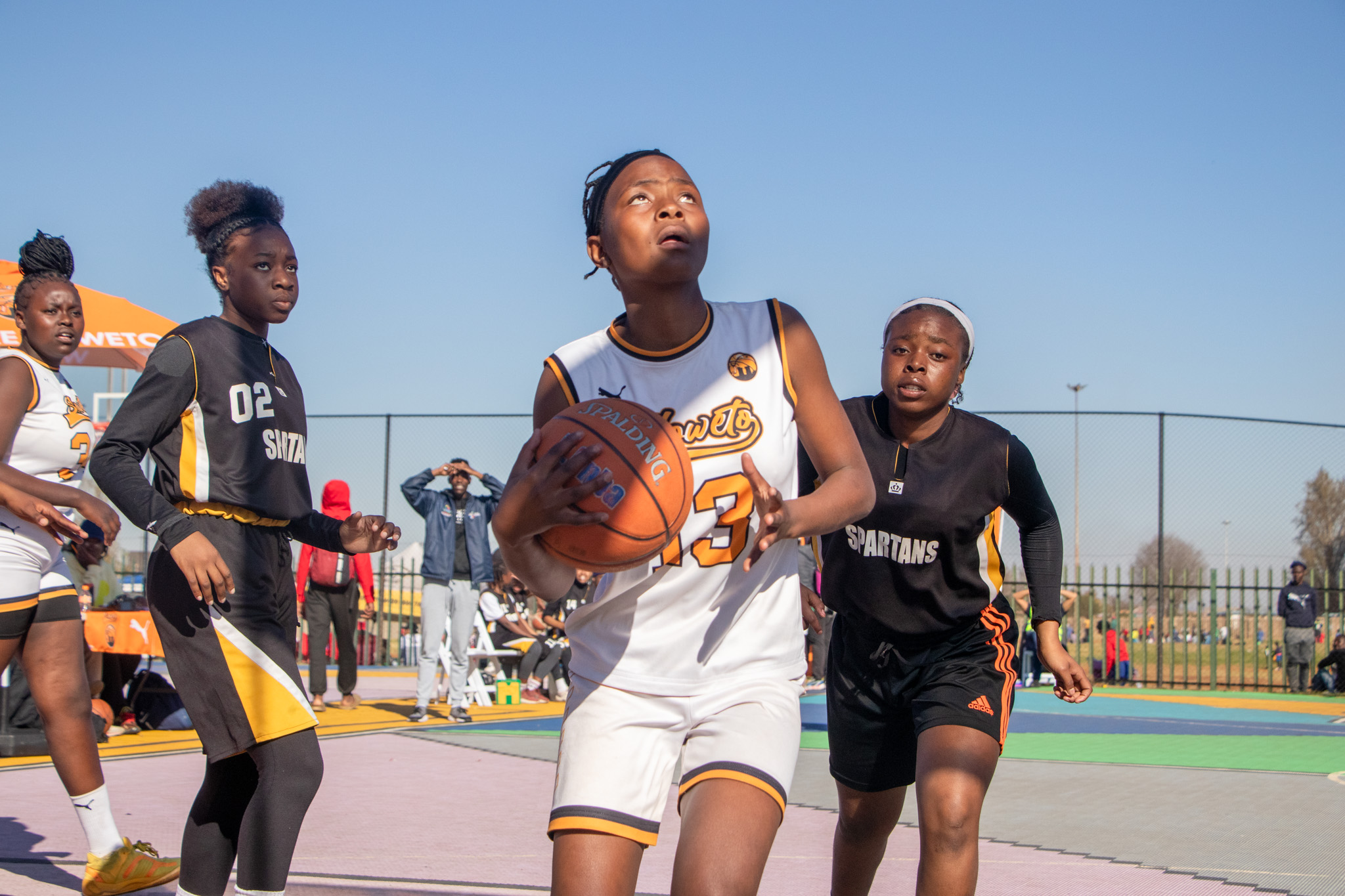
Soweto Basketball Academy has been a gateway of opportunity

AFTER discovering basketball late into his teens, Monwabisi Dlamini fell in love with the game, but he never fully realised his playing ambition. Noting this, he vowed to himself that children interested in playing the sport would have the opportunity to access it much earlier in their lives. This gave birth to what he termed his “baby”.

Originally a rugby player, Dlamini was drawn to basketball as an 18-year-old, but by then it was a little late to immerse himself as baller. Instead his desire shifted to help the kids from his community to play the game. And that is how the Soweto Basketball Academy came to life.

Dlamini, who spoke to The Big Tip Off on Youth Day (16 June) during the Soweto Basketball Uprising, a basketball event hosted by his Academy, described himself as a sports lover, but when he discovered the game, things began to make sense.

He says his dream took shape at Jabavu Basketball Courts, which happened to be in a poor state during the establishment of the Academy.

“I am a sports person and played all kinds of sports in my youth. But I had never played basketball a day in my life. After I completed high school, I was blessed to have found this facility we are standing on now. It was an old, dilapidated basketball court, and this is where my love for the game came alive. Fast forward to 2013, I started the Soweto Basketball Academy. And now my baby is the biggest basketball academy in the country,” said the Soweto-born Dlamini.

Soweto Basketball Academy
Soweto Basketball Academy has been a space where kids can learn the game. Picture: The BTO

He explained his inspiration for starting the Academy, which is now 10-years-old, and what it was like transitioning from rugby to basketball.

“I grew up tall, but I was 18 at the time, and it was disappointing that I had discovered the game that late in my life. So now, I want as many kids as possible to get exposure to the game. Especially when they are young,” said Dlamini.

“It was an easy transition [to basketball] because there was no pressure. At that time things began to make sense for me. The first day I played, I said to myself ‘this is it’.”

The Academy has been a basketball home for budding young talent. But the game is not the sole focus of the Soweto-based program. It is part and parcel of the principles that guide this Academy.

“We have three pillars that we abide by. The first one being basketball excellence, the second being academic excellence, and the last being life skills. Many kids are good athletes but struggle in the classroom and with life skills. So, we have to prioritise that for them to be well-rounded youths,” said Dlamini. “Our main focus is grassroots development, and I believe we have done a good job.”

Yes, the work done by Soweto Basketball Academy has been phenomenal that it led to sports apparel brand Puma being their kit sponsor. Dlamini says landing a brand like Puma is a big win for South African basketball, and he hopes other teams around the country land similar opportunities.

“We have worked so hard that we have managed to secure a big brand like Puma, and that is huge. In South Africa, no team has a technical partnership with a top two or three sports brand,” said Dlamini. “I hope other teams also get into these partnerships because it’s one of the ways basketball will grow in South Africa. These brands need to see there is value in investing in basketball.”

Also, coaching at the Academy was a gateway for Dlamini to coach South Africa’s under-18 men’s basketball team at the Region 5 Youth Games in Lesotho in 2020. He says coaching the team at the games was an eye-opener which encouraged him to rethink his program.

“It was a beautiful experience because it helped me to see how far we are as a country, in terms basketball development. It helped restructure our vision for the Academy. We don’t want to be the best in the country. We want to be the best in the world,” said Dlamini.

“To get there, we must see what everyone is doing, especially those countries that are ahead of us. That has helped us as coaches and the players in the national team because we were able to impart some knowledge. 

“They will let the other kids know that out there, there is Angola and they are good. That is all we want for ourselves as coaches and players. We need exposure to those kinds of competitions.”

The focus shifted to the Soweto Basketball Uprising and the significance of having the festival on Youth Day. Dlamini intimated that it’s a way of bringing people together to celebrate the country’s democratic gains. On a personal level, it was a way of honouring those who came before him.

“I’m not sure if you are aware, but where we are right now is the same trail that the youth of 1976 marched on. The likes Tsietsi Mashinini and Hector Pieterson through here,” said Dlamini.

“For us, this is more than a commemoration. We are celebrating the achievements that we have as country because of what happened in 76. My mom was part of that class. So for us to bring people to Soweto and spend their day in our beautiful township means a lot to us.”

Soweto Basketball Academy
Soweto Basketball Academy celebrates its 10 years of existance this year.

While the events of 1976 played a role in reshaping the political landscape of South Africa, Dlamini lamented that the day is losing its meaning. But hopes the basketball festival can be an outlet where young people engage in more positive activities.

“When we have days like these, especially for us people from Soweto, they spend the day partying and drinking. Yes, it’s a public holiday, but we have to remember what happened on this day,” said Dlamini. “So, if we grow this tournament, I’ll be happy because more youth will spend the weekend or holiday more constructively.”


Dlamini’s basketball regret inspired new dream Read More »

Ngobeni reflects on US journey and Mamba moment

… also sees the bright side despite losing two BNL finals

THE name Tsakani Ngobeni is synonymous with basketball in South Africa. So, it’s hard to imagine the country’s game could have seen his talents lost to other sports. Thankfully a growth spurt, and coaches of alternative sports deciding he was too tall, he went on to have a fulfilling career in basketball.

Soweto-born Ngobeni’s journey took him across the Atlantic to the United States on a scholarship. He also got to where the green and of South Africa in continental competition. When the Basketball National League (BNL) launched in 2013, many fans saw him show out firstly for Soweto Panthers and then Duzi Royals, who no longer exist.

The 39-year-old spoke to The Big Tip Off during a Jr NBA clinic held for 500 kids at the Klipspruit Sports Centre in Soweto on Youth Day (16 June). He gave some insights into his playing career and also used the opportunity to express his joy at sharing some pointers of the game with the kids during the clinic.

“We have kids here who are getting to learn the basic skills needed to play basketball. Passing, shooting, dribbling, communicating and life skills as well. Some of the things I have mentioned are the foundations of life,” said Ngobeni.

“I am happy that these kids have shown up, especially on this day [Youth Day]. For me, it’s special because I get to celebrate teaching a sport I love.” 

Tsakani Ngobeni giving out pointers
Tsakani Ngobeni shares some pointers at the Jr NBA clinic. Pictures: The BTO

Ngobeni also enjoyed the day with his son, who was among the kids participating in the drills.

“He chose the sport, and now he gets to enjoy himself while learning and doing the skills I mentioned earlier,” said the small forward.

The love for basketball

The former South African international player explained his journey into the game. 

“I discovered basketball when I was young. Also coaches of other sports said I was too tall,” said Ngobeni. “Basketball allowed me to be versatile and play multiple positions. It gave me the freedom to express myself, and coaches also gave me the space to do so.”

The American Dream

The 6ft6 (1.99m) Ngobeni got an opportunity many in his position could only wish for or dream of. A scholarship paved the way for Ngobeni to pursue education and basketball in the United States. 

He says the chance to go to the US came through a clinic like the one held by the Jr NBA. The journey had an initial hiccup. A hand injury would test Ngobeni’s resolve, but his determination ensured the door to the US remained open.

“Funny enough, it happened in a similar setting like this in Soweto at the Elka Stadium. Mike Finley spotted me and was impressed with some of my attributes, especially my height. Unfortunately, I had a broken hand, so it delayed the process,” said Ngobeni. 

“After my hand healed, I wanted to prove to him (Finley) that I could still ball. I showed up, and he felt I had something they could work with. That’s when I got the chance to attend St Anne’s Belfield School in Virginia and then the scholarship to study at Hamilton College.

Tsakani Ngobeni
Tsakani Ngobeni had successful college career in the United States.

The 2007 All-American explained that one of the main requirements for players to put on a playing vest is to do well in the classroom. Ngobeni says it is an aspect that is often not talked about.

“It was challenging, and one has to produce in the classroom to play. So, I spent time in the library and many late nights up. It’s another part that people do speak enough about – you need to show up academically,” said Ngobeni, who holds BA in Commutations. “You need good results, and on the court, you have to fight for your minutes because there is always someone to replace you. Always!

Clearly Ngobeni made the most of his playing time and he left an impressive legacy at the NCAA Division III college. A legacy that saw him score over 1000 points. Apart from being named an All-American, he was also an NABC first-team All-East region and the Liberty League Player of the Year after the 2006-07 season.

“Those years were a lot of hard work and fun when I look back. While I was doing it was something else,” said Ngobeni. “You need to show up. When you do that and compete at that level, good things happen. 

“I always strive to be in the top three in everything I do on the court. That is scoring, rebounding and cheering on my teammates. If you top three in those things, there is no way the coach can’t play you.”

The BNL … Close, but no cigar

In the inaugural season (2013) of the Basketball National League (BNL), Ngobeni, one of the stars of the league, was part of an exciting Soweto Panthers team. He would also spend two seasons at the defunct Duzi Royals, which also had high calibre players.

Those teams (Panthers and Royals) surprisingly fell short of expectations. As a Panthers player in season one of the BNL, Ngobeni would see his team suffer a semi-final loss to four-time BNL champions Tshwane Suns. The following two seasons at the Royals, Ngobeni would help lead the team to consecutive finals, but the KwaZulu-Natal team saw the Suns and five-time BNL champions Egoli Magic curtail their ambition.


View this post on Instagram


A post shared by DuziRoyals (@duziroyals)

Despite those disappointments, Ngobeni chose to see the bright side.

“Yeah, man… Close, but no cigar. It’s always been fun. The one thing I enjoyed about Duzi was the practices. They were the most competitive [practices] I have participated in. Credit must got to Kevin Mabanga and his ownership group for putting that team together,” said Ngobeni.

“At the Panthers, we had me, Thabang Kgwedi, Nyakallo Nthuphing and Jonathan Van Der Bijl. Those guys were some of the top-tier talents in this country, and I enjoyed playing with them and trying to win alongside them.”

The Mamba moment with the national team

Ngobeni played for the national team for over a decade and represented the country in four AfroBasket tournaments. While results have never gone South Africa’s way continentally, Ngobeni has always enjoyed donning national team colours.

“I loved it. To be among the top 12 in the country has always been an honour. To wear the green and gold is one of my proudest moments. Also, I enjoy that my peers are alive to tell my son about the good and bad games,” said Ngobeni. 

“I also enjoyed the friendships I made during those times. We have been through trenches and fought a lot of battles. I also learnt a lot about myself while representing the country.”  

In 2017, Ngobeni had one of the most outstanding games by a South African player. The national team faced Zimbabwe in a two-legged tie, and at stake was qualification for the AfroBasket tournament of that year.

In the first game at home, South Africa found themselves 20 points down in the second half, and Ngobeni explained to FIBA.basketball that he had his Mamba moment. What was also significant for him, was the sneakers he had on.

“I like to call it my Mamba Moment, and I happened to be wearing Kobes that evening. In that game, I played the role of a facilitator, but we had our backs were against the wall,” said Ngobeni, who finished that game with 20 points in South Africa’s 74-67 victory. “I realised I needed to show the guys how it’s done. I hit a couple of twos and threes. It had a ripple effect as Neo (Mothiba) and Lebesa (Selepe) also started making their shots. I am the guy most people remember, but it was a team effort. Once the ball started going in, my teammates also stepped up because a lot was on the line. 

“Those are the kind of games you want to have, where your family and friends watch you do what you love and help to inspire your team.”

South Africa and Zimbabwe split the series 1-1, but South Africa qualified for the 2017 AfroBasket because of a better points differential.

Tsakani the commentator

Ngobeni has since retired from the national team, and he now turns out for the Jozi Nuggets. He has also carved out another avenue for himself in the game. These Ngobeni can be seen giving expert analysis behind the microphone in local BNL games and continental qualifiers. He explained at first that he got a rude awakening and realised there is more to the profession than meets the eye.

Tsakani Ngobeni the commentator
Tsakani Ngobeni next to co-commentator Nompumelelo Ramatsoga during the 2021 Road To BAL qualifying tournament.

“It’s been challenging. You think these guys just show up and talk. A whole lot of preparation goes into it. You have to know the players, the coaches and be objective. When you watch the game, sometimes you can sometimes be a fan. So one has to learn to be objective,” said Ngobeni. 

As his playing days wind down, Ngobeni says he is getting comfortable being more on the TV screen and sharing his thoughts than being on the court.

“It’s about the body I have… And the one I have now, I would rather be behind the mic,” quipped Ngobeni.

Ngobeni reflects on US journey and Mamba moment Read More »

South Africa eyeing a medal at Student Games

Mametja and his teammates are in a tough group

AFTER a 14-year absence from the FISU World Student Games, the South African men’s basketball team will make their return this year in Chengdu, China. Naturally, there is excitement from the players and a desire for the team to do well.

The South African men’s team last appeared in the Games in 2009 in Belgrade, Serbia

Also, the Games were set to take place in 2021, unfortunately, the outbreak of the Covid-19 pandemic led to their postponement. Now they will resume in the same country and city (28 July – 8 August).

Two players in the form of team captain Allan Mametja, and his University of Pretoria teammate Nhlanhla Vela look forward to testing themselves against some of the best countries in basketball. Both players, who spoke to The Big Tip Off at the launch of Team South Africa on Tuesday at SASCOC (South African Sports Confederation and Olympic Committee) House, stated almost similar reasons for their excitement.

TEAM SA LAUNCH
South Africa captain Allan Mametja (middle) looks forward to leading his troops in Chengdu, China. Pictures: The BTO

Mametja, hopes the South African team, coached by Luthando Zulu, will inspire young people to believe in their dreams.

“Firstly, I want to thank everyone who helped me to get here. It’s not everybody that can get this opportunity. I am grateful to be named among the players that will represent their country,” said Mametja, who is studying towards a Bachelors Degree in Education. “We have not participated in the FISU games for a while. There is an opportunity for us and other upcoming players to get noticed because we do not get much exposure in this country.

“Also a young kid out there, who has seen us, will be inspired to put in their work to achieve their dreams.”

Big man Vela, who hails from the Eastern Cape, says it’s a privilege to be part of the team, as many youths from where he is from struggle to make it out.

“I feel excited. I thank God for blessing me with this opportunity and giving me the gift of basketball. Lots of people back home have supported me, so, I want to say thank you to them as well. Where I come from, not everyone makes it. So to be here, I appreciate it, and it’s a blessing,” said Vela, who is studying for a degree in Sports Science.


View this post on Instagram


A post shared by The Big Tip Off (@the_bto_sports)

While both players salivate at the prospect of wearing the national team vest, one player knows a lot rests on his shoulders. That is the captain of course. It is something he is aware of and a challenge he has accepted.

“There is so much responsibility, but I can handle the pressure and lead the guys. As the captain, I have to ensure the guys are comfortable. We have to play the right way so that we can get the results we want,” said Mametja.

Vela says being part of the South African team has made him realise that he is playing for something bigger than himself.

“When I play for my institution (University of Pretoria), I realised I am one of those players who can help the team win. We recently played with the national team at the Ashraf (Lodewyk) tournament, I realised it’s not just about me. It’s about the team,” said Vela.

“I should trust that my teammates. They are capable players, and we are like an all star team representing South Africa.”

In Chengdu, South Africa will be in Group A with hosts China, Brazil, Lithuania and Taiwan. All four countries have a high basketball pedigree, making Mametja and his teammate’s task difficult.

Despite the degree of difficulty, Mametja says he and the players can learn from their opponents.

“The matches will not be easy, but it is an opportunity to learn. It’s also a chance to see what other countries have and how they run their programs. We also have the chance to improve as players. We may think we are the best in our country, but there is more to this game than what we see here at home,” said Mametja.

FISU Student Games
Nhlanhla Vela, Sibongile Maswanganye (USSA Basketball Chairperson) and Allan Mametja.

The two players were not short of confidence about South Africa’s chances at the basketball tournament.

While Mametja spoke about “finishing on the podium”, Vela felt the team could win gold.

“I believe in my team. We are capable of winning gold. Yes, we are playing some of the best players, and it will not be easy. We have work hard and trust each other and win the gold. That is the goal,” said Vela.

The last word went to Mametja on the teams objective: “Everyone plays to win. So we have to perform at our best levels and have fun. But we want to be on the podium. If we see ourselves there, I think it will make a lot of people happy,” concluded Mametja.

South Africa eyeing a medal at Student Games Read More »

Gilchrist reflects on glorious, but short-lived PBL

BNL can learn lessons from the PBL

NINETEEN ninety-four was a year of change in South Africa in almost every social sphere. From a sporting context, especially basketball, there was a momentary witnessing of a revolution in the form of the Premier Basketball League (PBL).

One of the players of that time, is the legendary Craig Gilchrist. He was among a cohort of ballers, who plied their trade in the league that brought a great boom to the country’s basketball scene.

During those heady days, the PBL had Allied Bank (now part of the ABSA group) and later Telkom as sponsors. Unfortunately, due to the maladministration of the PBL, it put paid to the endless possibilities, and the dreams of many aspiring players faded into the abyss.

Despite the sad ending of that league, the 53-year-old KwaZulu-Natal Marlins coach got on the nostalgic train. He spoke to The Big Tip Off with great fondness about his time as a Marlins player during the PBL era. He also took a tone of frustration at the slow progress of the now 10-year-old Basketball National League (BNL).

Marlins coach Craig Gilchrist feels young players can learn a lot from the PBL era. Pictures: The BTO

Gilchrist, a former national team coach, also explained that the BNL, which his Marlins team are a part of, could take some lessons from the defunct PBL.

“Being a part of the PBL was great. Being a part of the BNL now, we refer a lot to how great the PBL was. So, I don’t know why they are trying to reinvent the wheel with the BNL,” said Gilchrist, a PBL champion with the Marlins.

“With only eight franchises, the talent pool in the PBL was vast. All the talented players moved between eight teams instead of 12 as we have now. The level was higher then. There was sponsorship which allowed clubs to sign foreign players.

“The foreign players lifted the standard of the league because they had played elsewhere professionally. It’s what the Tigers are doing now. It was a shame that the PBL fell away, and it took so long to start the BNL. I wish they would take a few pages from the book of the PBL.”

Craig Gilchrist won his only PBL title with the Marlins in 1997. Picture: Supplied

The former South African national team captain says PBL wages were better than what current players earn today. He also pointed out that teams also travelled more in those heydays.

“It was great. Our pay was more than what the guys in the BNL are earning now. I was a full-on professional and played overseas between seasons,” said the national men’s team assistant coach. “There were also home and away games. Egoli Magic would come down to play the Marlins at DUT (Durban University of Technology), and we do the travel up for our away games.

“There was always home support and not the disadvantage of travelling like the teams outside Gauteng have to do these days. I wish we could go back to those days, so that the kids today can experience what we did.”

Gilchrist also had a stand-out moment from the PBL era.

“Winning the title with the Marlins in 1997. We had a great team that year. The guys got along well; it was like a brotherhood. To win a national league at any level is always exciting, so that memory will always be with us,” said Gilchrist, led the men’s national team to the 2017 FIBA AfroBasket.


View this post on Instagram


A post shared by Craig Gilchrist (@11craig11)

Following the demise of the PBL in the late 90s, South African basketball experienced a lull. While there were activities here and there, it’s safe to say there was not much to be excited about. That’s until the launch of the BNL in 2013, and for a short while, a renewed energy returned to the country’s basketball fraternity.

Gilchrist, who was in his 40s, made a return and again in the colours of the Marlins, who made it to the last four that year.

“It was an exciting time. I was 43 and dusted off the shoes because of the excitement. I was still playing competitively and wanted to get involved. It looked like the return of the PBL and that the sky would be the limit,” said Gilchrist.

The veteran coach reflected on their BNL playoff against the then Mbombela Wildcats (now the Mpumalanga Rhinos), which ended controversially.

“That semi-final… I still have the photograph of Sakhile Sithole scoring the layup with point one second left on the clock. The ref ran from the other side of the court to overrule it. So, that was a bit of a bitter pill to swallow, but these things happen,” said Gilchrist.

He would play for a couple more seasons before hanging up sneakers to focus on coaching the Marlins. This season the 2-1 Marlins are aiming for a second league title in the franchise’s history. With players like Bandile Nsele, Sibusiso Mabulala, Ben Myburgh and Skhumbuzo Mthembu the Marlins have the ability make some noise in the BNL.

“Naturally, the first prize is the championship. Our road is tough now because of our loss to the (Tshwane) Suns. We have the talent, but we have to iron out minor errors, and then we will be able to compete against anyone,” said Gilchrist.

Gilchrist, who is also an ardent surfer, knows about ebbs and flows, especially in South African basketball. While he yearns for the bygone years, he is in the present, and maybe his wisdom can rub off on this crop of Marlins players and inspire them to achieve greatness.

Gilchrist reflects on glorious, but short-lived PBL Read More »

Boissy’s star on the rise in African basketball

Douanes in good shape ahead of Beira battle

AT 15 years old, Senegalese player Jean Jacques Boissy realised he could reach great heights in basketball, and now at 23, his career is skyrocketing. sHe has also had the opportunity to play in some of the game’s biggest stages.

From the time his father introduced him to the game, Boissy has seen his star rise in African basketball. The AS Douanes player, who spoke to The Big Tip Off during the week, is in Kigali, Rwanda for his club AS Douanes BAL playoff campaign. Before speaking on the Basketball Africa League (BAL), the floor general talked about where it all began. He also reflected on the steps he took to get to where is today.

“My dad introduced me to the game. He used to take me to the courts with him when I was a kid. He continues to be my greatest inspiration and I am grateful that he introduced me to basketball,” said Boissy, who spoke glowingly of his father. “I first started out as footballer, but at 15 locked into basketball. It has become a passion for me and a safe space. I am addicted to it. And when I am not playing, something is not right within.”

Jean Jacques Boissy says it was a good decision to join AS Douanes. Pictures: Getty Images

He gathered experience playing for his country, Senegal, at the 2018 FIBA Under-18 African Championships (Bamako, Mali) and the 2019 FIBA Under-19 World Cup (Crete, Greece).

Boissy also represented the West African nation at the 2021 FIBA AfroBasket (Rwanda). He was recently part of the Lions of Teranga’s marathon journey of attempting to qualify for this year’s FIBA World Cup (Philippines, Japan and Indonesia), which ended in February.

While it was disappointing for Senegal not to qualify for the World Cup, Boissy says the experience of playing for the national team helped him prepare for the BAL.

“Playing for our junior national team taught me how to handle pressure at an early age because I played against top countries and a lot of international prospects within my age group at the time,” said the 6ft0 (1.83m) player. “About the World Cup qualifiers … Yeah, it was disappointing not to qualify. But there were some positives to take from the experience. I grew as a person. I believe I am a better teammate. The experience helped improved my game. And with these new skills, I want to contribute to my team’s campaign at the BAL.”

Before joining AS Douanes, Boissy had a stint in the Spanish LEB Silver playing for Cornella. He believes signing for AS Douanes for the BAL was a great move that can also open new doors for him.

“I think a made the best decision by joining AS Douanes for this season. I had one thing in mind when I came back from Spain: to improve my game and to get exposure. During the local championship, I proved I could be an asset to the team, and I want to win with them,” said Boissy an MVP of the Coupe St Michel.

In March, Douanes, who enjoyed home support in the Sahara Conference of the BAL and finished with a 3-2 record and were second in their group. Boissy, who improved with every game, was a vital cog in helping his club secure their passage to Kigali.

He shared his thoughts about playing at home in Dakar: “This is my first BAL competition. It has been one of my dreams to play on this stage and the dream has now come true. Playing in my country, in front of thousands of fans, including my family was not easy in the beginning. But it was amazing to experience them watching me do what I love. I will forever be thankful to them for their support,” said the former NBA Academy prospect.

The star player served up electrifying performances for his club and fans at the Dakar Arena during the group stages. He scored 13 points, had four assists and four rebounds in a 78-54 win over Stade Malien. Against Nigeria’s Kwara Falcons, Boissy scored 22 points and again had four rebounds and four assists.

Jean Jacques Boissy wants to win it all with AS Douanes.

Another shining moment for him was his double-double (15 points and 11 rebounds) and seven assists in a 76-60 win over BAL season champions US Monastir. In that final group game against the Tunisians, only victory sufficed.

“That was a challenging game, a do-or-die battle. In the end, we won, and it was spectacular for us. We also did not expect the fans to fill the arena the way they did that night. It was a beautiful moment and made that victory extra special,” said Boissy.

The Douanes point guard and his teammates take on Mozambican club Ferroviario da Beira in the playoffs on Sunday at the Kigali Arena. Boissy says this is a challenge they have prepared themselves for.

“The energy in the team is good. We know what we have come here to do. We want to win the BAL season three. But we have a game against Beira, and they are good team. So, we have to win that one as a part of trying to reach our goal,” concluded Boissy.

Boissy’s star on the rise in African basketball Read More »

Young’s career rejuvenated by Combine and Beira

Can Young and Locomotivas shock the world?

IN October last year, Ferroviario da Beira’s Najeal Young thought his playing days had ended due to not having any takers for his services for a while. But instead of wallowing in that prospect, he zoned in on more important things until a career lifeline arrived two months later.

Young, who had played professionally in Mongolia, Mexico and Australia before experiencing a career limbo, had his playing ambition reignited in December when he received an invitation to the Basketball Africa League (BAL) Combine in Paris, France.

During the Combine in mid-January, Young did enough to convince the Locomotivas Spanish coach Luis Hernandez to sign him for their successful BAL Nile Conference campaign. There the Mozambican club qualify for the playoffs starting in Kigali, Rwanda, on Saturday.

Najeal Young shares a moment with team captain Will Perry. Pictures: Getty Images

It was not the first time Young attempted to play in the BAL. In season two of the continental competition, he got in touch with teams to try and secure a contract.

“Last year January, I emailed every team that qualified for the BAL about a roster spot. There was interest from the Congolese team (Espoir Fukash), but nothing materialised,” said Milwaukee-born Young, who spoke to The Big Tip Off on Friday.

“I later tried my luck at a couple of Combines in the (NBA) G-League, but things did not pan out. Around October of that year, I realised it was not happening, and I focused more on taking care of my kids and being around family.

“Around Christmas, I got an invite to the BAL Combine. I got into basketball mode and worked myself into shape. In Paris, I would say I performed okay and eventually got some interest from coach Luis. We had a couple of conversations about coming to Beira, we reached an agreement, and now I am here.”

Young credits the BAL Combine for reviving his career: “It helped me get back into basketball and rejuvenated my career. Honestly, I did not know if I was going to continue playing. Things were pretty much in the air. So, I am thankful to coach Luis and the Combine for giving me the opportunity to do the thing that I love the most,” said Young, who started out as a gridiron player.

The 29-year-old small forward has also taken flight in the league courtesy of the second wind his career has had. In conference play, Young, a smooth finisher at the rim, has this season led the BAL in scoring (26.1 points per game) and played an integral part in Beira qualifying for the last eight.

“I feel good and have put a lot of work into my game. When you do that, it will show on the court. I am a player who wants to win games. It’s cool to score the most points, but if we don’t win games, then it’s not the same,” said the former Caballeros de Culiacan player.


View this post on Instagram


A post shared by BAL Network (@bal_network)

Beira finished the Nile Conference with a 2-3 record and in the third spot to book their ticket to Kigali. Young acknowledged that the Mozambican club were in a tough group, but he was proud of how his team performed.

Also, being in Egypt, he got to fulfil one of his lifelong dreams.

“This being a new group, I knew there would be some challenges in trying to win together and what our team could do to compete on this stage. Overall, I would give us an A-plus,” said Young. “To also be in Egypt, near the pyramids… I was actively in my dream. It has always been a dream of mine to come here and see the pyramids. So, I am grateful.

“Also, getting a chance to be on that floor and underneath those lights, having Amadou (Gallo Fall), D-Wade and the fans watching our games on the sidelines and stands is a dream come true in every facet.”

Young also had his son cheering him on in Cairo. He explained that having him at the arena was a great source of motivation. 

“This why we do what we do. We play this game for our families and it’s great to have their support. Having my son on the side lines and him cheering me on was a big energy boost for me. It matters a great deal to have had him there and it was extremely fun to see him rooting for me. I also do this for my family back home I know they were watching me on TV. So, it was a great experience,” said Young.

Najeal Young felt the love of his family on and off the court.

From the start of the Nile Conference, the veteran player always believed that his team would make it to the playoff rounds. Now he and his teammates look forward to Sunday’s battle against AS Douanes of Senegal. 

“I was confident. I also had expectations of our team making it to the playoffs. We were in a strong group, with Petro (de Luanda) and Al Ahly being the top teams. I think we could have done some things better to try and beat City Oilers, but we made it,” said Young.

“I am excited about our next challenge. We are playing AS Douanes. I have studied a tape on them. They are a vibrant group, active, and they compete hard. It’s going to be a fun game and match-up. 

Finally, Young believes Beira can make a deep run in the competition and that they can turn heads while doing it.

“I feel that a fire has lit up in us. There is a bit more attention to detail from players and the coach as well. We do not just want to be in Kigali. We want to win and shock the world,” concluded Young.

Young’s career rejuvenated by Combine and Beira Read More »

Beira reminds Gueye of his humble beginnings

Defence will make the difference for Beira

WHEN Senegalese big man Makhtar Gueye committed himself to play for Mozambican club Ferroviario da Beira for this season’s Basketball Africa League (BAL), his arrival to the same named city, while humbling also caused a shock to his system.

Gueye, from Rufisque in Senegal, says that Beira, making their second appearance in the league, showed interest in him after displaying his prowess at the BAL Combine in Paris, France. Following the Combine, negotiations for Gueye’s services were done telephonically, and that was the smooth part of the process.

“The Combine was a great platform. It was good exposure for me. I had the opportunity to represent my country, my family and myself. It was a way of showcasing talent and to talk with team managers. I had a lot of offers, but I picked the best deal for me,” said the Senegalese international speaking to The Big Tip Off on Tuesday.

“I also considered my style of play, and I think Beira was the best fit for a player like myself. Also, one of my former coaches in Spain knew the Beira coach (Luis Hernandez). So he put us in touch, and I liked what Coach Hernandez had to say.”

Ferroviario da Beira’s Makhtar Gueye takes on Michael Gbinije of Cape Town Tigers. Pictures: Supplied

Upon arrival in Beira, Gueye, a second-year pro, was shocked by the destruction caused by a cyclone that ravaged the city in 2019.

While it was an eye opener, the former CB Menorca player took the state of affairs in Beira in his stride, as what he saw reminded him of his humble beginnings.

“It was crazy. It’s nothing near what I thought about Mozambique. Because all communication was through the phone, I thought everything was in Maputo. But I learnt I was going to Beira. They had the cyclone, which damaged the city and the gym, so things were different there,” said Gueye, who represented Senegal in the 2019 FIBA Basketball World Cup in China.

“In such situations, you learn to have grace. As a kid in Senegal, I remember experiencing a similar situation and having to practice on a concrete court. So, I have an appreciation for the situation. The coach has also been good in managing the situation and helping us to get comfortable.”


View this post on Instagram


A post shared by Makhtar Gueye (@thelionkillaa)

Another challenge Beira faced was the lack of preparation for their Nile Conference campaign. The inactivity of the Mozambican domestic league meant that the Southern African club could not get the necessary game time.

On top of their preparation woes, the Mozambican club started the competition with two tough games, against Al Ahly and Petro de Luanda, which they lost.

“It’s hard to prepare for a high-level competition like this and not get games before it starts. We knew it was going to be hard, especially starting against the two best teams in the conference,” said the Seed Academy Alumni. “We had to grind and stick to how we play, and it paid off in our third game.”

And pay off it did as the 6ft10 (2.08m) Gueye and his teammates managed to secure their first win (109-97) against Seydou Legacy Athletique Club (SLAC) on Sunday.

Gueye scored 15 points and eight rebounds against SLAC, while American combo-guard Najeal Young contributed 26 points, three assists and five rebounds, but the fourth-quarter exploits of team captain Will Perry won the game for Beira.

Perry made four threes in a 41-point performance, for Beira to reclaim a lead they had lost and gain a first victory.

Makhtar Gueye believes defence will be key to qualifying for Kigali. Picture: The BTO

Gueye says the battle against SLAC was one of the most challenging in his career.

“It’s one of the toughest games I have played since I started playing basketball. We had a good approach, and we were aggressive from the start. We had a good to close out the half, and we talked about them making their run,” said the University of Alabama player. “When they did make their run, other things happened as well. Najeal got injured, I got into foul trouble, and Bourouma (Sidibe) fouled out. So, Will had to carry the team.

“We were resilient. That is what gave us the game.”

Beira have also added the scalp of the Cape Town Tigers to have a 2-2 record. A victory over the winless City Oilers on Friday night will guarantee Beira’s progress to the playoffs in Kigali, Rwanda.

Ahead of their remaining games, Gueye said they have to lock in defensively to win and qualify for the playoffs.

“Defence! In these types of tournaments, defence wins you games. If we do not defend well, then we will lose. We can score 200 points, but we must play defence to stop our opponents from scoring the same amount. That will make the difference. Defence!” concluded Gueye.

Beira reminds Gueye of his humble beginnings Read More »

Cele chose education route over going pro early

Tigers will require more from Cele in bid to qualify for Kigali

From the time South Africa’s Samkelo Cele caught the basketball bug, he saw the sport as a gateway for him to turn his big dreams into reality.

KwaZulu-Natal-born Cele, who followed in the footsteps of a handful of talented South African hoopers that had their game nurtured in the United States, has returned home after a productive time in college across the Atlantic.

The swingman is now in the professional ranks and signed for two-time South African national champions Cape Town Tigers for their Basketball Africa League Nile (BAL) Conference campaign underway in Cairo, Egypt. Before speaking on the BAL, Cele shared how he fell in love with the sport.

He explained that while channel surfing, he stumbled on a Los Angeles Lakers game featuring the NBA franchise’s late legend Kobe Bryant.

“I was scrolling through TV channels and caught a Lakers game around late 2010 going to 2011. I think Kobe was playing in it. After that, I asked around my neighbourhood about basketball teams I could join. The Clan was my first team and I have never looked back since that time,” said Cele, speaking to The Big Tip Off last Friday.

Samkelo Cele
Samkelo Cele has always dreamt of playing basketball in the United States. Picture: Supplied

From that point, Cele also honed his game at Durban High School and local club APN. The Phenomenal Phenoms would be his last stop before heading to America to further his education and playing ambition.

“When I learnt that it was happening, I felt … Finally! It has always been a dream of mine to go and study in the United States. So, when it eventually arrived, I told myself, ‘This is what you wanted and dreamt about, so it’s time to go and be about’,” said Cele.

“It was a life changing moment, and I appreciate the people that helped me get to that point.”

During his time in the United States, Cele began his journey at Bull City Prep Academy (2018) in North Carolina. In the 2020-2021 season, he moved on to junior college, where he played for the Southern Jaguars in Baton Rouge, Louisiana. Cele says the adjustment to his new environment was challenging, but on the court, it took one game for him to find his feet.

“The hardest part was leaving my family behind and going to a new country. The US was different to what I am accustomed to in terms of lifestyle and basketball. It was hard because I also did not see my parents for a couple of years. I settled, but I still experience difficult moments,” said Cele.


View this post on Instagram


A post shared by Samkelo Cele (@iambuckets)

He also reflected on his first playing experience: “One of my best memories was my first good game. Before that, I did not perform to my standard. I would say I was average. In my second game, I was really good. That is when I put my name on the map. That was in North Carolina. It was one of my fondest memories.”

The following season (2021-2022), he had a stint with NCAA Division One college, Marist Red Foxes, the Alma Mater of his Tigers captain Pieter Prinsloo. Cele would eventually suit up for the NAIA team, University of Science and Arts Oklahoma Drovers. During the spell with the Drovers, he graduated with Business Administration and Sociology degrees.

The 6ft6 Cele says he could have gone pro earlier, but he felt it paramount to complete his studies as it was a part of his plan when he left South Africa.

“That was the most important thing, because I used basketball as tool to create a better life. If the NCAA did not pan out, I could have just said, ‘forget about school’.  I also had offers from some pro teams. But education is important to me, so that is why I chose to stay an extra year. I also have to look beyond basketball and try to set myself for life.”

Samkelo Cele understands his role for the Tigers.

While he achieved success in the classroom, Cele’s talents on the court also saw him receive Third Team All-American honours with the Drovers, something he was proud to have achieved in his college career.

“Honestly, whatever awards or accolades you get … You appreciate them because they recognise you, but that is not what I play for … To be an All-American, ” said Cele. “You play to the best of your ability and put your best foot forward. It’s all the hard work I put in, and it was a great honour to receive that accolade.

“My coach at the team helped me to be in that position. He told me early in the season where he saw me, and funny enough, it came to fruition.”

On his journey with the Tigers at the BAL Nile Conference, Cele has been impactful for the team, coming off the bench. His 11 points and five rebounds helped the Tigers earn an opening 75-68 win against Guinea’s Seydou Legacy Athletique Club (SLAC).

“When I arrived at the Tigers, coach (Rasheed) Hazzard explained his plans and how I fit into them. So, the best way to respond was to trust, accept and be the best off the bench guy possible,” said Cele, reflecting on his role. “It was exciting because it was my first professional game, and I look forward to more. I am a tenacious player. I will do what it takes to get the job done. If I am needed to score or defend. I’ll do those things. Wherever the coach puts me, I’ll try to get the job done.”

The Tigers will need more from Cele to secure a playoff spot in Kigali, Rwanda. After their opening victory over SLAC, they have suffered three consecutive losses. Defeats to Petro de Luanda, Nile Conference hosts Al Ahly and Ferroviario da Beira have made things tricky for the Tigers. The Cape side still occupy the fourth spot in their Conference, but they cannot afford a slip-up against an 0-3 City Oilers team in their final game on Saturday.

Cele chose education route over going pro early Read More »

×